How Can Hip-Hop Be Used as a Diplomatic Instrument?
TL;DR
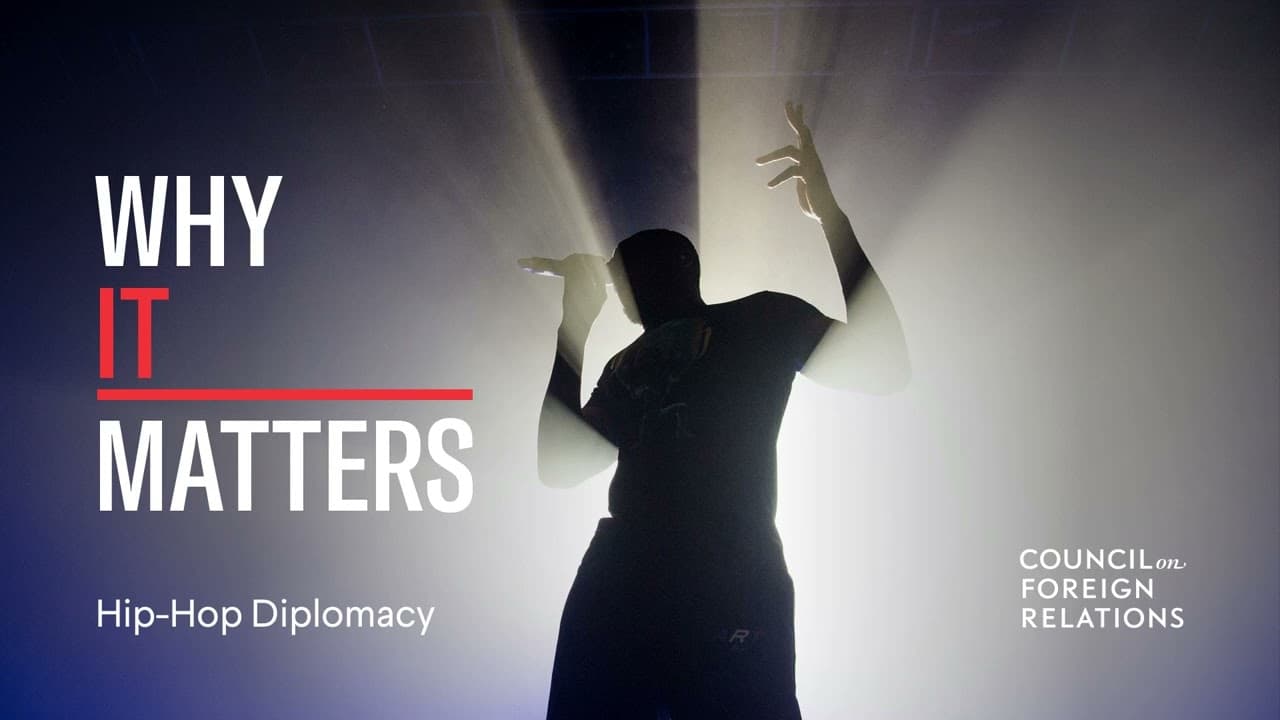
Hip-hop is a powerful tool for U.S. cultural diplomacy worldwide.
Transcript
SIERRA: Hip Hop. We all know it. And we can’t turn on the radio or go to a party without hearing it. It’s an American artform - born in the Bronx, and audible from coast to coast. But in recent decades, hip hop has gone global. And at this point, almost every country on earth has developed its own style of the genre. [Global Hip-hop Montage] SIERRA... Read More
Key Insights
- Hip-hop originated in the Bronx and has become a global cultural phenomenon, with nearly every country developing its own style.
- The U.S. State Department has used hip-hop as a diplomatic tool, sending artists abroad to foster connections and improve America's image.
- Hip-hop diplomacy builds relationships subtly, influencing foreign policy and perceptions of the U.S. through cultural exchange.
- American music, including jazz and hip-hop, has historically been used as a soft power tool to promote U.S. interests globally.
- Hip-hop resonates globally due to its themes of self-expression, protest, and celebration, connecting deeply with diverse audiences.
- The genre has been influential in global protest movements, providing a voice for marginalized communities and promoting solidarity.
- Hip-hop's global popularity contributes to positive perceptions of American culture, despite criticisms of U.S. policies.
- Cultural diplomacy through hip-hop creates people-to-people connections, offering a more nuanced view of America beyond its government.
Install to Summarize YouTube Videos and Get Transcripts
Explore YouTube Video Summarizer or Get YouTube Transcript Extractor
Questions & Answers
Q: How does hip-hop function as a tool for U.S. diplomacy?
Hip-hop serves as a diplomatic tool by fostering cultural exchange and building relationships subtly through music. The U.S. State Department sends hip-hop artists abroad to connect with foreign audiences, promoting a positive image of America and creating mutual understanding. This approach leverages the global appeal of hip-hop to influence perceptions and improve international relations.
Q: What historical precedents exist for using music in U.S. diplomacy?
Historically, the U.S. has used music as a diplomatic tool, notably during the Cold War when jazz musicians like Louis Armstrong were sent abroad as cultural ambassadors. These efforts aimed to showcase American culture, counter Soviet influence, and demonstrate the country's cultural richness and commitment to freedom, despite domestic racial tensions. Hip-hop diplomacy continues this tradition of using music for soft power.
Q: Why is hip-hop particularly effective in global cultural diplomacy?
Hip-hop is effective in cultural diplomacy because of its universal themes of self-expression, protest, and celebration. These resonate with people worldwide, transcending language and cultural barriers. Hip-hop's grassroots origins and connection to marginalized communities make it relatable and powerful, enabling it to foster solidarity and dialogue in diverse contexts, contributing to a positive perception of American culture.
Q: Can love for hip-hop influence perceptions of the U.S. abroad?
While love for hip-hop does not directly equate to love for the U.S., it can soften perceptions of American culture. Hip-hop's global popularity highlights America's cultural influence and openness to criticism, as many hip-hop songs critique American society. This artistic freedom can enhance U.S. credibility abroad, contrasting with more restrictive regimes and fostering a more balanced view of the U.S.
Q: What challenges do hip-hop artists face as cultural ambassadors?
Hip-hop artists face the challenge of representing a country whose policies they may personally critique or oppose. They must navigate their role as cultural ambassadors, balancing their artistic integrity and the opportunity to foster dialogue and understanding. Artists may also confront stereotypes or misconceptions about hip-hop and American culture, requiring them to educate and engage with diverse audiences authentically.
Q: How has hip-hop been used in global protest movements?
Hip-hop has been a powerful tool in global protest movements, providing a voice for marginalized communities and highlighting social injustices. Songs by artists like Public Enemy and Kendrick Lamar have become anthems for movements like Black Lives Matter, while international artists have used hip-hop to criticize oppressive regimes and inspire change, demonstrating the genre's potential to influence and mobilize people worldwide.
Q: What role does hip-hop play in shaping global perceptions of American culture?
Hip-hop plays a significant role in shaping global perceptions of American culture by showcasing its diversity, creativity, and openness to critique. The genre's global popularity highlights America's cultural influence and ability to resonate with diverse audiences. Through hip-hop, people worldwide gain insights into American life, values, and social issues, contributing to a more nuanced understanding of the U.S. beyond its government policies.
Q: Why is hip-hop considered a form of soft power for the U.S.?
Hip-hop is considered a form of soft power for the U.S. because it attracts and influences people worldwide through its cultural appeal. By fostering connections and dialogue, hip-hop enhances America's image and credibility, offering a counter-narrative to negative perceptions of U.S. policies. This cultural diplomacy tool leverages the genre's global reach to promote mutual understanding and goodwill toward the U.S.
Summary & Key Takeaways
-
Hip-hop has evolved from its roots in the Bronx to a global cultural force, with almost every country embracing its own style. The U.S. State Department leverages this popularity, sending artists abroad as musical ambassadors to improve international relations through cultural diplomacy.
-
American music, from jazz to hip-hop, has been a powerful tool for soft power diplomacy. By promoting U.S. culture globally, these musical exchanges foster goodwill and offer a more nuanced view of the U.S., countering negative perceptions of its policies.
-
Hip-hop's universal appeal lies in its themes of self-expression and protest, resonating with diverse audiences worldwide. It has played a significant role in global protest movements, highlighting the genre's potential to influence and connect on a human level.
Read in Other Languages (beta)
Share This Summary 📚
Summarize YouTube Videos and Get Video Transcripts with 1-Click
Try YouTube Summary with ChatGPT & Claude or YouTube Transcript Generator
Explore More Summaries from Council on Foreign Relations 📚
Summarize YouTube Videos and Get Video Transcripts with 1-Click
Try YouTube Summary with ChatGPT & Claude or YouTube Transcript Generator