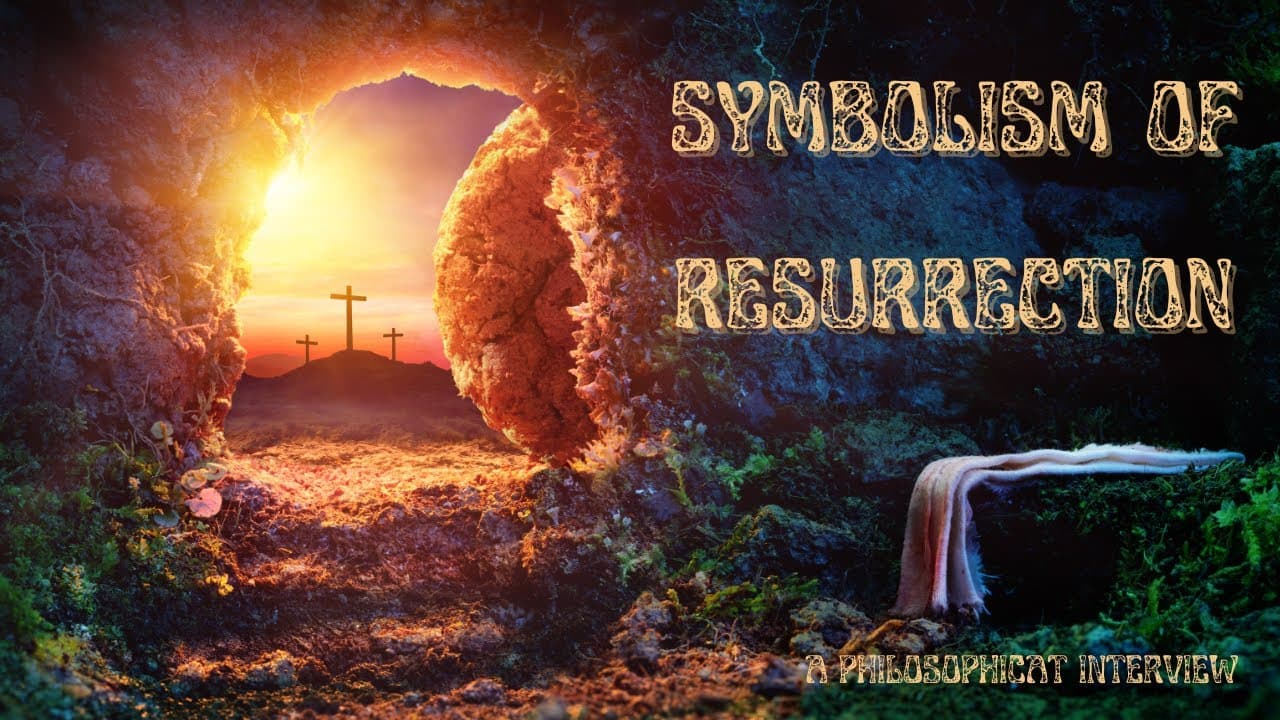
Symbolism of Resurrection
TL;DR
The discussion explores resurrection's esoteric interpretations across cultures and its deeper spiritual implications.
Transcript
thank you philosophy for oh see ya now you've you've tripped me up and i even said it wrong philosophicat uh happy lobster happy lannister to you and i'm sorry about that i jinxed you you did jigs me right before we weren't live um yes so we're going to be talking about resurrection which i'm excited about because i've talked about this subject of ... Read More
Key Insights
- 🛟 The resurrection theme is a common motif across various cultures, suggesting profound metaphysical truths about life and rebirth.
- 🥹 Understanding resurrection allegories can aid in grasping the spiritual message beyond literal interpretations often held by religious institutions.
- ❓ Personal sacrifice is emphasized as a vital element in the journey towards spiritual awakening and transcendence.
- 🛟 The distinction between ‘being’ and ‘becoming’ serves to illustrate the spiritual transformation individuals seek on their paths.
- 💍 Engaging with the sacrificial rites of various traditions reveals deeper meanings of shared rituals and their significance in spiritual development.
- ❓ Acknowledging the shared elements among different religions can enhance one's spiritual journey and understanding beyond rigid dogma.
- 🫵 Modern spirituality benefits from an appreciation of ancient practices, fostering a holistic view of human experience and divine connection.
Install to Summarize YouTube Videos and Get Transcripts
Explore YouTube Video Summarizer or Get YouTube Transcript Extractor
Questions & Answers
Q: What is the significance of resurrection in various cultural contexts?
Resurrection is a prevalent theme across numerous ancient mythologies, often associated with dying god figures like Osiris and Mithras. This recurrence suggests a shared metaphysical truth about life, death, and rebirth, indicating that these narratives convey essential human experiences and spiritual lessons that resonate universally.
Q: How does the discussion differentiate between ‘being’ and ‘becoming’?
‘Being’ represents a state of eternal, unchanging existence associated with the divine, while ‘becoming’ refers to the transient, ever-changing human experience. The spiritual path aims to transition individuals from the chaotic state of becoming to the serene state of being, emphasizing personal growth and the cultivation of inner divinity.
Q: Why do some Christians feel threatened by the idea of shared resurrection narratives?
Many Christians subscribe to a belief in their religion as the singular truth and may view parallels in other traditions as undermining their faith. This perspective often stems from a fear of losing the exclusivity of their sacred narratives, leading to a reluctance to embrace the broader, more universal themes present in human spirituality.
Q: What role does sacrifice play in the resurrection narrative?
Sacrifice is central to the concept of resurrection, as it symbolizes the transcendence of lower, material desires in pursuit of higher spiritual truths. The narratives emphasize that through personal sacrifice and the crossing of ‘death’, individuals can achieve a greater spiritual awakening and connection with the divine.
Q: How does the idea of initiation relate to the resurrection theme?
Initiation often involves symbolic death and rebirth processes, mirroring the resurrection theme. By undergoing trials and sacrifices, initiates emerge transformed, embodying a new state of spiritual awareness. This rite of passage reflects the broader journey toward achieving enlightenment and becoming aligned with divine principles.
Q: What is the modern implication of engaging with ancient spirituality?
In a contemporary context, re-engaging with ancient spiritual practices encourages individuals to explore the timeless wisdom underlying religious narratives, nurturing a deeper understanding of themselves and the universe. This exploration fosters personal growth and a sense of connectedness that transcends dogmatic boundaries.
Summary & Key Takeaways
-
The content delves into the concept of resurrection, asserting it as a common theme in various dying god myths, highlighting its symbolic significance beyond Christianity.
-
It emphasizes that the resurrection narrative should not be viewed solely through a literal lens, but rather as a complex allegory reflecting deeper metaphysical truths relevant to humanity's spiritual journey.
-
The conversation also touches on the importance of personal sacrifice and the journey of spiritual becoming, aligning it with concepts from various religious traditions, suggesting that true spiritual understanding transcends dogmatic boundaries.
Read in Other Languages (beta)
Share This Summary 📚
Summarize YouTube Videos and Get Video Transcripts with 1-Click
Try YouTube Summary with ChatGPT & Claude or YouTube Transcript Generator
Explore More Summaries from PhilosophiCat 📚
Summarize YouTube Videos and Get Video Transcripts with 1-Click
Try YouTube Summary with ChatGPT & Claude or YouTube Transcript Generator