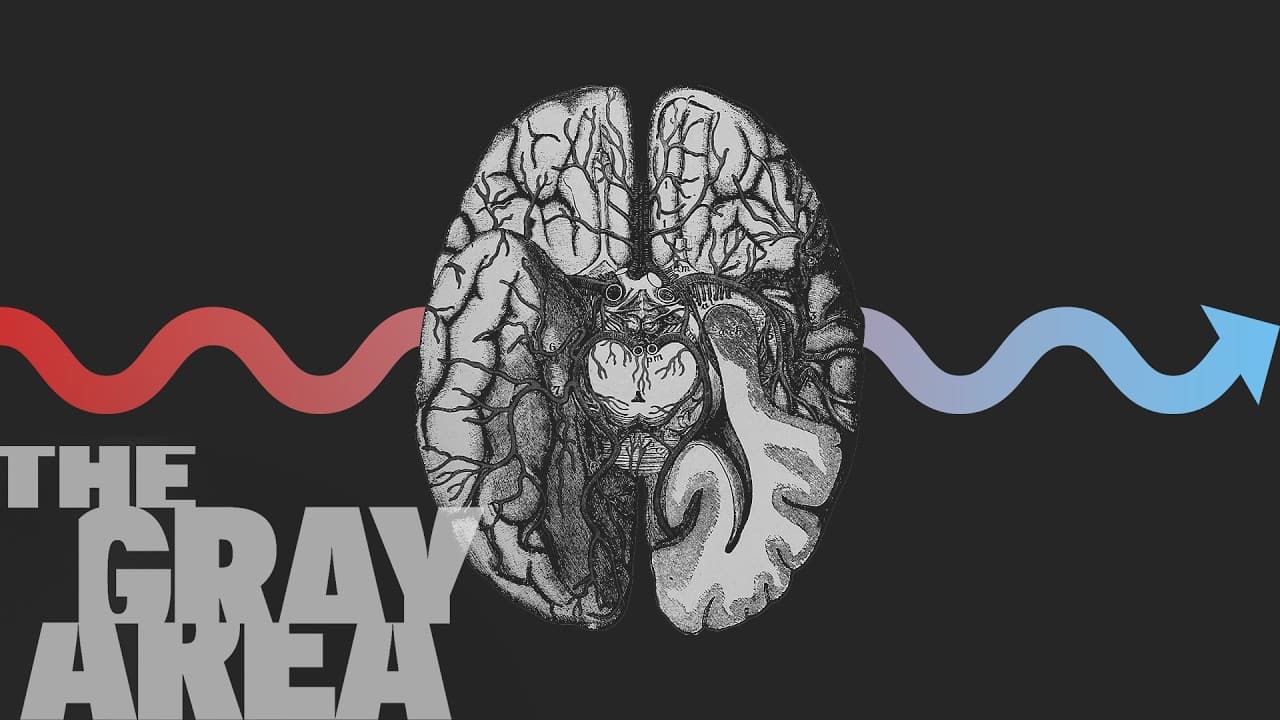
Your brain's role in your politics | The Gray Area
TL;DR
Ideological beliefs are influenced by both biology and cognitive flexibility.
Transcript
a word you hear a lot these days is ideology In fact you could argue this is the political term of the moment When Trump is denouncing the left he's talking about gender ideology or critical race theory or DEI When the left is denouncing Trump they're talking about fascism or project 2025 Wherever you look ideology is being used to explain or justi... Read More
Key Insights
- Ideologies often serve as a coping mechanism for our brains, offering structured narratives in a complex world, but can lead to rigid thinking with harmful side effects.
- Cognitive rigidity can be assessed through tasks like the Wisconsin card sorting test, revealing how individuals respond to change and uncertainty.
- Ideological extremity can manifest across the political spectrum, with both left and right-wing ideologies attracting cognitively rigid individuals.
- Stress and adversity can make individuals more susceptible to rigid, dogmatic thinking, highlighting the importance of stable environments for cognitive flexibility.
- Ideologies can condition physiological responses, affecting how individuals react to injustice or inequality at a biological level.
- Genetic predispositions can influence cognitive rigidity, but environmental factors and personal choices play a significant role in shaping ideological beliefs.
- The pursuit of cognitive flexibility involves challenging habitual thinking patterns and being open to evidence-based belief updates.
- Education systems and parenting can foster anti-ideological thinking by encouraging creativity, critical thinking, and openness to change.
Install to Summarize YouTube Videos and Get Transcripts
Explore YouTube Video Summarizer or Get YouTube Transcript Extractor
Questions & Answers
Q: What is the main argument of Leor Zmigrod's book, The Ideological Brain?
Leor Zmigrod's book argues that our political beliefs are not just abstract ideas but are deeply intertwined with our neurological processes. She suggests that cognitive flexibility or rigidity, influenced by both biology and environment, determines how we adopt and cling to ideologies. The book emphasizes understanding these processes to bridge societal divides.
Q: How is cognitive rigidity assessed, according to the podcast?
Cognitive rigidity is assessed using tasks like the Wisconsin card sorting test. In this test, participants sort cards based on changing rules, and their ability to adapt to new rules without resistance indicates cognitive flexibility. Those who struggle to adapt and insist on old rules despite negative feedback are considered cognitively rigid.
Q: What role does stress play in ideological thinking?
Stress plays a significant role in promoting rigid ideological thinking. When individuals experience stress, whether social or physical, their cognitive processes become more rigid. This rigidity makes them more susceptible to authoritarian and dogmatic ideologies, as stress limits their capacity to adapt to new information and embrace change.
Q: Can ideologies affect physiological responses?
Yes, ideologies can condition physiological responses. For example, individuals who view inequalities as unjust may experience increased heart rates and arousal when confronted with injustice. Conversely, those who justify inequalities may remain physiologically unmoved. This demonstrates how deeply ideologies can influence unconscious, biological reactions.
Q: Are certain ideologies more appealing to rigid thinkers?
Rigid thinkers are drawn to extreme ideologies across the political spectrum, not just far-right authoritarianism. Experiments show that cognitive rigidity can be found in both left and right-wing extremism. This challenges the assumption that only conservative ideologies attract rigid minds, highlighting the need for introspection across all political beliefs.
Q: How do genetic predispositions and environment interact in shaping ideology?
Genetic predispositions can influence cognitive rigidity, with certain traits making individuals more prone to dogmatic thinking. However, environment and personal choices significantly shape ideological beliefs. Individuals raised in non-ideological environments but who later choose dogmatic ideologies are often more rigid, illustrating the complex interplay between biology and environment.
Q: What educational strategies can promote anti-ideological thinking?
To promote anti-ideological thinking, education should focus on fostering creativity, critical thinking, and openness to change. Encouraging students to think outside the box and question habitual patterns can cultivate cognitive flexibility. By teaching adaptability and evidence-based belief updates, education can help individuals resist dogmatic ideologies.
Q: What is the potential impact of understanding ideological rigidity on societal polarization?
Understanding ideological rigidity can help reduce societal polarization by highlighting the psychological similarities between extremists on both sides. Recognizing that rigid thinking transcends specific ideologies can foster empathy and dialogue. Additionally, promoting cognitive flexibility can empower individuals to engage with diverse perspectives, potentially bridging divides in polarized societies.
Summary & Key Takeaways
-
The podcast explores how ideologies shape our thinking and the role of cognitive flexibility in political beliefs. Leor Zmigrod argues that our brains are wired to seek certainty, making ideologies attractive but potentially harmful.
-
Cognitive rigidity is assessed through tasks like the Wisconsin card sorting test, revealing how individuals handle change. Stress and adversity heighten susceptibility to rigid thinking, impacting political extremism.
-
Genetic predispositions influence cognitive rigidity, but personal choices and environments significantly shape ideological beliefs. Education and parenting can promote anti-ideological thinking through creativity and critical thinking.
Read in Other Languages (beta)
Share This Summary 📚
Summarize YouTube Videos and Get Video Transcripts with 1-Click
Try YouTube Summary with ChatGPT & Claude or YouTube Transcript Generator
Explore More Summaries from Vox 📚



Summarize YouTube Videos and Get Video Transcripts with 1-Click
Try YouTube Summary with ChatGPT & Claude or YouTube Transcript Generator