Process and it's State and Threads - Process Management - Operating System
TL;DR
This video explains the concept of processes in computer operating systems, including their states and transitions between them.
Transcript
click the Bell icon to get latest videos from equator hello friends today we are going to discuss about what is a process what are the steps of a process what are the states our process transits and water threads a process is simply a program in execution it is more than a mere program code sometimes known as an X section it also contains many othe... Read More
Key Insights
- 👨💻 A process consists of code, stack, data, and heap sections.
- ❓ Multiple processes can execute in the same program, but they are treated as separate entities.
- 👶 Processes traverse through different states like new, ready, running, waiting, and terminated.
- 🇰🇼 Transitions between states involve allocation of CPU, interrupts, and waiting for events.
- ❓ Process management is crucial for efficient utilization of system resources.
- 👻 Single-threaded processes execute one task at a time, while multi-threaded processes allow for concurrent execution.
- ✖️ Modern operating systems in a multiprocessor environment support multi-threaded execution.
Install to Summarize YouTube Videos and Get Transcripts
Explore YouTube Video Summarizer or Get YouTube Transcript Extractor
Questions & Answers
Q: What is a process in operating systems?
A process is a program in execution, which includes code, stack, data, and heap sections. It represents the current state of a running program.
Q: How do multiple processes execute in the same program?
Multiple processes can execute in the same program, but they are considered either as the same program with multiple instances (if used by multiple users) or as separate programs (if used by one user with multiple copies).
Q: What are the different states of a process?
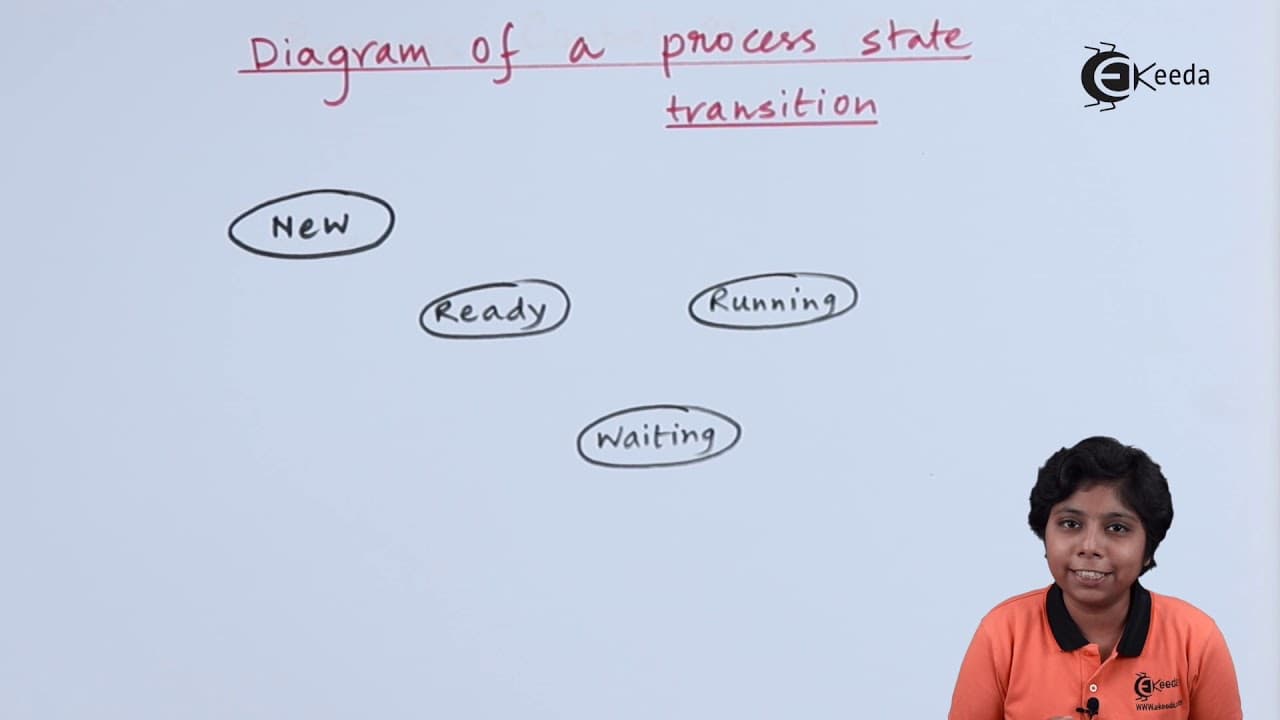
The different process states include new (just created), ready (waiting for CPU allocation), running (currently executing), waiting (waiting for an event or interrupt), and terminated (execution completed).
Q: How does a process transition between different states?
A process starts in the new state, moves to the ready state after being admitted to main memory, transitions to the running state when CPU is allocated, and can move back to the ready state from the running state after an interrupt or waiting for an event. Finally, it reaches the terminated state after completing execution.
Summary & Key Takeaways
-
A process is a program in execution and consists of code, stack, data, and heap sections.
-
Multiple processes can execute in the same program but are considered separate entities.
-
Processes go through different states such as new, ready, running, waiting, and terminated, depending on their current activity.
Read in Other Languages (beta)
Share This Summary 📚
Summarize YouTube Videos and Get Video Transcripts with 1-Click
Try YouTube Summary with ChatGPT & Claude or YouTube Transcript Generator
Explore More Summaries from Ekeeda 📚






Summarize YouTube Videos and Get Video Transcripts with 1-Click
Try YouTube Summary with ChatGPT & Claude or YouTube Transcript Generator