How Trump's Tariff Pause Affects Global Markets
TL;DR
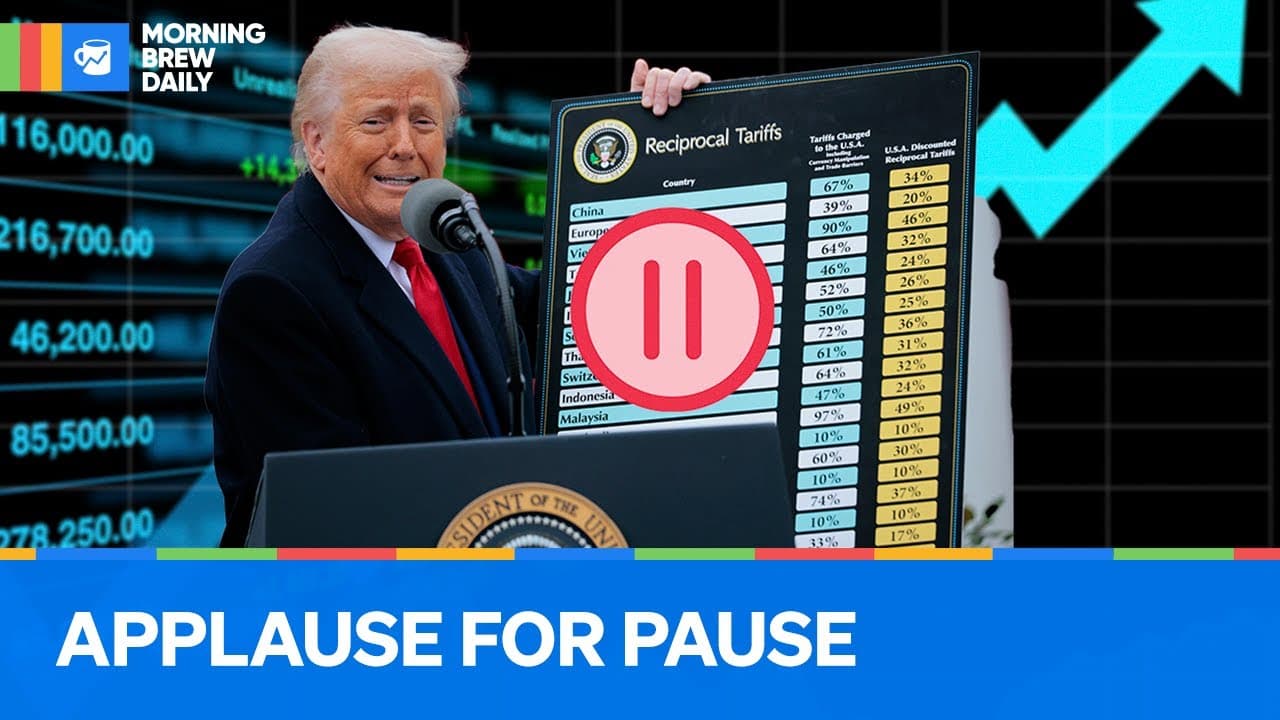
Trump paused tariffs on most countries, excluding China, leading to a significant market rally. The S&P 500 experienced its best day since 2008, while tariffs on China increased to 125%. This decision was influenced by instability in the bond market, which threatened a financial crisis. The pause provides temporary relief, but uncertainty remains.
Transcript
Good Morning Brew Daily Show. I'm Neal Freyman. and I'm Toby Howell. Today Trump parsed most tariffs. And the S&P 500 had its best day since 2008. Hope you bought the dip. Then what the heck is going on in the bond market that has investors so spooked? It's Thursday, April 10th. Let's ride. Who among us hasn't left something valuable in an Uber? Ma... Read More
Key Insights
- Trump paused tariffs on most countries for 90 days, excluding China, to negotiate trade terms.
- The S&P 500 had its best day since 2008, rising 9% after the tariff pause announcement.
- Tariffs on Chinese imports were increased to 125%, highlighting strained US-China relations.
- Bond market instability, with spiking Treasury yields, influenced Trump's decision to pause tariffs.
- The bond market selloff was driven by various factors, including hedge fund trades and foreign retaliation.
- Despite the market rally, economists warn that uncertainty remains a significant economic burden.
- The tariff pause offers temporary relief, but long-term economic impacts persist due to unpredictability.
- US dollar dominance and Treasury yields are crucial to global financial stability, influencing policy decisions.
Install to Summarize YouTube Videos and Get Transcripts
Explore YouTube Video Summarizer or Get YouTube Transcript Extractor
Questions & Answers
Q: How did Trump's tariff pause affect the stock market?
Trump's tariff pause led to a significant rally in the stock market. The S&P 500 experienced its best day since 2008, rising 9% following the announcement. Major companies saw substantial gains, with Apple and Tesla experiencing notable increases. The pause provided temporary relief to investors, though long-term economic uncertainty remains.
Q: Why did Trump increase tariffs on Chinese imports?
Trump increased tariffs on Chinese imports to 125% due to perceived disrespect from China towards global markets. This move highlights ongoing tensions between the US and China, as the US seeks to pressure China into more favorable trade terms. The increased tariffs are part of a broader strategy to address trade imbalances.
Q: What caused instability in the bond market?
Instability in the bond market was caused by spiking Treasury yields, which run inversely to prices. Factors contributing to the selloff included highly leveraged hedge fund trades, potential foreign retaliation from countries like China and Japan, and concerns over the US's perceived stability as a safe haven for investors.
Q: What are the potential long-term impacts of the tariff pause?
The tariff pause offers temporary relief to markets, but long-term impacts include continued economic uncertainty and unpredictability. Economists warn that unless a major course correction occurs, the pause may not reverse the damage done to the global economy. The increased tariffs on China further strain US-China relations.
Q: How does the US dollar's role affect global financial stability?
The US dollar's role as the world's reserve currency is crucial for global financial stability. It facilitates international trade and finance, with central banks and investors holding dollars to pay for imports and repay debts. This status supports US Treasury bonds as a safe haven asset, influencing global economic policies.
Q: Why is the bond market important to global finance?
The bond market is vital to global finance as it provides a stable investment option during economic uncertainty. US Treasury bonds, in particular, are seen as a safe haven asset due to their reliability. Instability in the bond market can signal broader economic issues, prompting policy interventions to maintain financial stability.
Q: What role did Treasury yields play in Trump's decision?
Spiking Treasury yields played a crucial role in Trump's decision to pause tariffs. The bond market's instability threatened a financial crisis, as yields rise inversely to bond prices. This dynamic pressured Trump to act, as a full-blown crisis would have required intervention from the Federal Reserve, impacting economic stability.
Q: How do tariffs impact the US economy?
Tariffs impact the US economy by affecting trade relationships, consumer prices, and business costs. High tariffs can lead to increased prices for imported goods, affecting consumers and businesses reliant on global supply chains. While intended to protect domestic industries, tariffs can also lead to retaliatory measures from trading partners, affecting economic growth.
Summary & Key Takeaways
-
Trump's decision to pause tariffs on most countries, except China, led to a significant market rally, with the S&P 500 experiencing its best day since 2008. The pause is intended to allow for negotiations, but tariffs on Chinese imports increased to 125%, indicating ongoing US-China tensions.
-
The bond market's instability, with spiking Treasury yields, played a crucial role in Trump's decision to pause tariffs, as it threatened a financial crisis. The market relief is temporary, as economic uncertainty remains a significant concern for analysts.
-
Economists warn that despite the market rally, the long-term economic impacts of the tariffs and trade tensions persist due to unpredictability. The US dollar's role as a global reserve currency and Treasury yields remain vital to global financial stability, influencing policy decisions.
Read in Other Languages (beta)
Share This Summary 📚
Summarize YouTube Videos and Get Video Transcripts with 1-Click
Try YouTube Summary with ChatGPT & Claude or YouTube Transcript Generator
Explore More Summaries from Morning Brew Daily 📚




Summarize YouTube Videos and Get Video Transcripts with 1-Click
Try YouTube Summary with ChatGPT & Claude or YouTube Transcript Generator