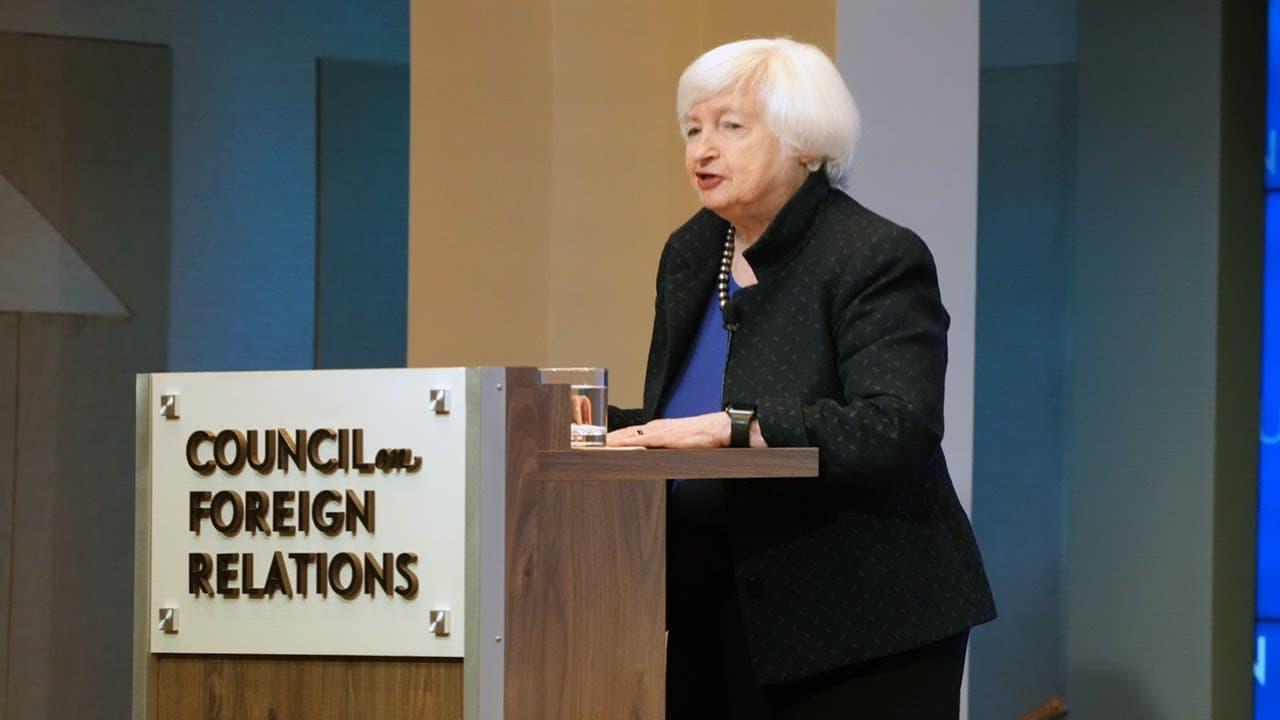
A Conversation With Janet Yellen on U.S. Economic Outlook
TL;DR
Janet Yellen discusses U.S. economic policies and global economic challenges.
Transcript
FROMAN: Well, good afternoon, everybody, and welcome. My name is Mike Froman. I’m president of the Council on Foreign Relations. And it’s great to be able to welcome Janet Yellen, the U.S. secretary of treasury, to be here for the Stephen C. Friedheim Symposium on Global Economics. Secretary Yellen is the 78th Treasury secretary. She’s also se... Read More
Key Insights
- Yellen highlights the Biden administration's international economic policy aimed at complementing domestic agendas and benefiting American businesses and families.
- The U.S. has experienced significant economic recovery with strong GDP growth, low unemployment, and declining inflation, driven by modern supply-side economics.
- Yellen emphasizes the importance of U.S. global economic leadership, urging policies that support global growth and tackle challenges like climate change and pandemics.
- The administration is focused on strengthening supply chains through 'friendshoring' and partnerships to enhance economic security and competitiveness.
- Yellen criticizes broad-based tariffs, emphasizing their negative impact on American consumers and businesses, while supporting targeted tariffs on strategic sectors.
- The U.S. is engaging with China to address unfair trade practices and overcapacity in critical industries, while maintaining cooperation in areas like financial stability.
- Yellen underscores the need for strategic global engagement to counter threats from countries like Russia and Iran, and to address conflicts and fragility abroad.
- The administration is promoting industrial policies in sectors like semiconductors and clean energy, balancing efficiency with national security and technological leadership.
Install to Summarize YouTube Videos and Get Transcripts
Explore YouTube Video Summarizer or Get YouTube Transcript Extractor
Questions & Answers
Q: How does the Biden administration address the high cost of living?
Yellen acknowledges the burdens American families face due to high costs in areas like housing, childcare, and health care. The administration is focused on addressing these issues through measures like capping insulin prices, stabilizing health insurance costs, and promoting energy efficiency. Tariffs are also a concern, as broad-based tariffs can raise living costs, especially for low-income households.
Q: What is the administration's stance on tariffs and trade policy?
Yellen criticizes broad-based tariffs for their negative impact on consumers and competitiveness. The Biden administration has retained some tariffs from the Trump era to address China's unfair trade practices but supports targeted tariffs on strategic sectors like semiconductors and clean energy to enhance supply chain resilience and technological leadership.
Q: How does the U.S. engage with China economically?
Yellen highlights efforts to strengthen U.S.-China relations through dialogue, addressing grievances, and cooperating on financial stability. She points out the challenges posed by China's high savings rate and overcapacity in key industries, which threaten global markets. The U.S. is working with partners to address these concerns and promote fair competition.
Q: What are the U.S.'s priorities in global economic leadership?
Yellen emphasizes the need for U.S. leadership in promoting global growth, tackling climate change, and addressing pandemics. The administration is focused on engaging with international partners to enhance economic security and competitiveness, while countering threats from countries like Russia and Iran.
Q: How does industrial policy fit into the U.S. economic strategy?
The administration supports targeted industrial policies in sectors like semiconductors and clean energy to enhance supply chain resilience and technological leadership. These policies aim to balance efficiency with national security and promote investments in areas critical to future growth and innovation.
Q: What role does trade policy play in the U.S. economic strategy?
Yellen suggests there is still a place for affirmative trade policy aimed at strengthening trade and investment ties. While the focus has been less on lowering tariffs, initiatives like the Indo-Pacific Framework and America's Partnership for Economic Prosperity aim to deepen engagement and support global economic stability.
Q: How does the U.S. approach climate change in its economic policy?
Yellen underscores the importance of addressing climate change through domestic actions like the Inflation Reduction Act and international cooperation. The U.S. is working with multilateral development banks to increase climate financing and mobilize private capital for climate investments, recognizing the global nature of climate-related challenges.
Q: What are the U.S.'s strategies for engaging with countries like Russia and Iran?
The U.S. is focused on strategic global engagement to counter threats from countries like Russia and Iran. This includes imposing sanctions, supporting allies, and working through international coalitions to address conflicts and promote stability, recognizing the interconnectedness of global economic and security challenges.
Summary & Key Takeaways
-
Janet Yellen discusses the Biden administration's international economic policy, which aims to complement domestic agendas and benefit American businesses and families. She highlights the U.S.'s strong economic recovery, driven by modern supply-side economics, and emphasizes the importance of U.S. global economic leadership.
-
Yellen outlines the administration's focus on strengthening supply chains through 'friendshoring' and partnerships to enhance economic security and competitiveness. She criticizes broad-based tariffs, emphasizing their negative impact on American consumers and businesses, while supporting targeted tariffs on strategic sectors.
-
The discussion covers U.S. engagement with China to address unfair trade practices and overcapacity in critical industries, while maintaining cooperation in areas like financial stability. Yellen also highlights the need for strategic global engagement to counter threats from countries like Russia and Iran, and to address conflicts and fragility abroad.
Read in Other Languages (beta)
Share This Summary 📚
Summarize YouTube Videos and Get Video Transcripts with 1-Click
Try YouTube Summary with ChatGPT & Claude or YouTube Transcript Generator
Explore More Summaries from Council on Foreign Relations 📚


Summarize YouTube Videos and Get Video Transcripts with 1-Click
Try YouTube Summary with ChatGPT & Claude or YouTube Transcript Generator