Creep Testing - Failure Mechanisms - Material Technology
TL;DR
Creep testing, also known as stress relaxation testing, is used to determine the amount of deformation a material experiences over time under a constant temperature and load, providing insights on its ability to resist cracking.
Transcript
hi i am krishna kishore so today we are going to discuss the creep testing as a mechanical engineering processor so it is customary to speak a lot of things especially creep testing in my material technology subjects so today we are going to discuss the very important topic that is creep testing in material technology now let me discuss the details... Read More
Key Insights
- ❓ Creep testing is used to determine the deformation and resistance of a material under constant temperature and load.
- 🏋️ The test is conducted on a tensile specimen with a controlled stress applied through weights.
- 🎮 Temperature control in an environmental chamber is critical for accurate measurements and analysis.
- ☠️ Creep testing provides information on dimensional changes, strain rates, and predicts the life expectancy of a material.
- 🈸 Turbine blades are a common application of creep testing.
- ⌛ Results are recorded on a strain versus time graph, with strain typically being less than 0.5.
- 🥳 A minimum duration of around 17 days is recommended for creep testing.
Install to Summarize YouTube Videos and Get Transcripts
Explore YouTube Video Summarizer or Get YouTube Transcript Extractor
Questions & Answers
Q: What is creep testing?
Creep testing is a mechanical engineering process used to measure the amount of deformation a material undergoes over time under a constant load and temperature. It helps determine the material's resistance to cracking.
Q: How is creep testing performed?
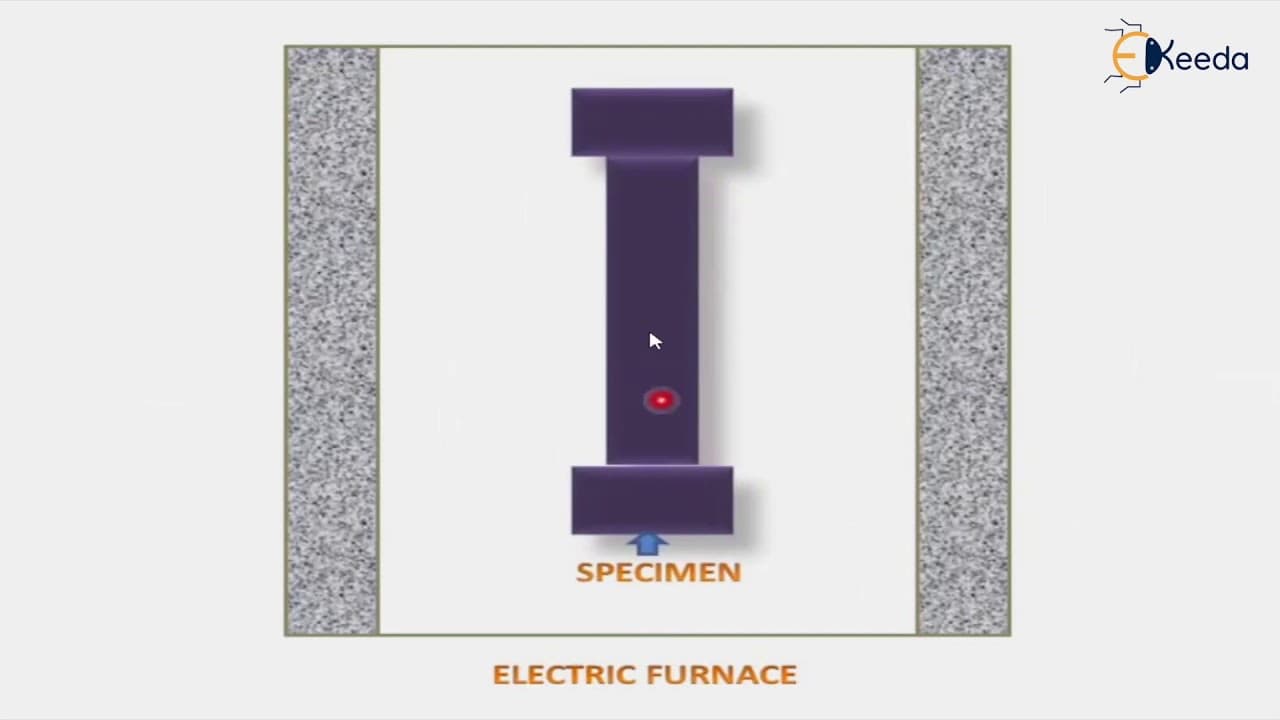
Creep testing is conducted using a tensile specimen, with a constant stress applied through weights. The specimen is placed in an environmental chamber to control the temperature. The length changes of the specimen are measured using a telescope and recorded over time.
Q: Why is temperature control critical in creep testing?
Temperature control is essential in creep testing to minimize the effects of thermal expansion on the specimen. Precise heating or cooling control is achieved using an environmental chamber, which allows for accurate measurements and analysis.
Q: What can creep testing reveal about a material?
Creep testing provides valuable insights into dimensional changes, strain rates, and the material's ability to withstand long-term applications. It helps predict the life expectancy of a material, making it an important test in material technology.
Summary & Key Takeaways
-
Creep testing is a time-dependent strain test that measures the deformation of a material under a continuous load at a constant temperature.
-
The test is conducted on a tensile specimen, with a constant stress applied using weights and temperature controlled in an environmental chamber.
-
The results of creep testing provide valuable information on dimensional changes, strain rates, and predict the life expectancy of a material.
Read in Other Languages (beta)
Share This Summary 📚
Summarize YouTube Videos and Get Video Transcripts with 1-Click
Try YouTube Summary with ChatGPT & Claude or YouTube Transcript Generator
Explore More Summaries from Ekeeda 📚






Summarize YouTube Videos and Get Video Transcripts with 1-Click
Try YouTube Summary with ChatGPT & Claude or YouTube Transcript Generator