Knowing Every Child Through Index Card Rosters
TL;DR
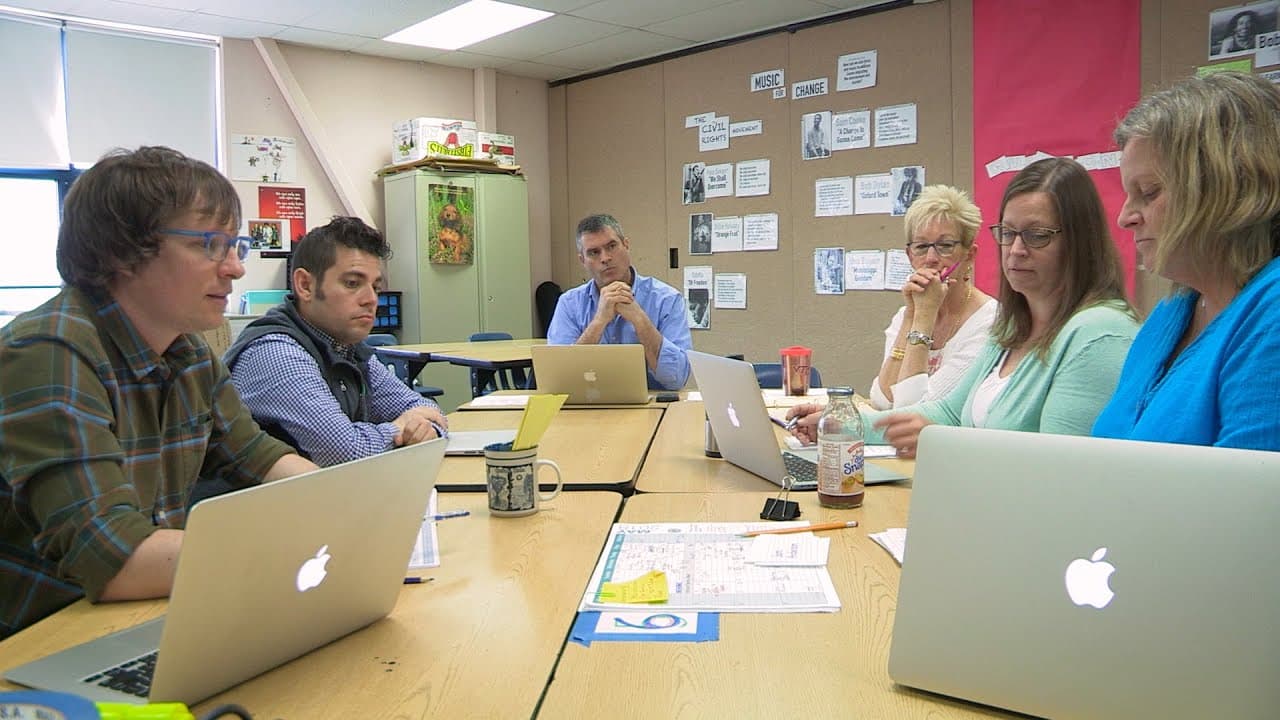
Collaborative teacher meetings using a deck of cards with each student's name helps identify and support individual needs.
Transcript
Darling-Hammond: Being aware of the fact that every child is on their own developmental pathway and will need different supports and scaffolds is part of what the teacher needs to be able to do. >>Cantor: We don't only want to be talking the kids that disrupt a class, which is very often the case, we want to talk about every child and be able to ... Read More
Key Insights
- 🧑🎓 Collaborative teacher meetings using the deck of cards technique prioritize the individual needs of every student.
- 😊 Pro-child language, specificity, and avoiding assumptions are important norms followed during these meetings.
- 🎨 Identifying the connection between behavior and academics helps design effective interventions and support strategies.
- 🧑🎓 The collaborative practice ensures cohesive support for students emotionally and academically.
- 🧑🎓 Students' behavior can indicate underlying issues that need to be addressed to help them develop necessary skills.
- 👶 Engaging with a child's development and providing targeted support can prevent them from falling through the cracks.
- 🤭 This technique ensures that quiet children and those who need extra help receive attention.
Install to Summarize YouTube Videos and Get Transcripts
Explore YouTube Video Summarizer or Get YouTube Transcript Extractor
Questions & Answers
Q: How does the deck of cards technique help identify students who need support?
The deck of cards technique allows teachers to focus on each student individually, considering whether they need discussion or support. By pulling specific cards, teachers can identify students who may have concerns or require help.
Q: What are some of the norms followed during the collaborative teacher meetings?
The teacher meetings follow norms such as using pro-child language, avoiding assumptions, and being specific in discussions. These norms create a positive and effective environment for supporting students.
Q: How does this collaborative practice benefit student learning and growth?
By having a deep knowledge of every student in the classroom, teachers can produce more learning and growth for all students. This practice ensures each child is valued and receives the necessary support for their academic and emotional well-being.
Q: How does discussing student behavior and academics help in identifying issues?
Discussing student behavior and academics helps identify links between academic struggles and behavior. This allows teachers to address underlying issues and make informed decisions, such as reaching out to parents or implementing targeted interventions.
Summary & Key Takeaways
-
Teachers use a deck of cards with each student's name to discuss and consider individual needs during weekly meetings.
-
This collaborative practice ensures all students, not just disruptive ones, receive the support they need.
-
By discussing student behavior and academics, teachers can provide targeted emotional and academic support.
Read in Other Languages (beta)
Share This Summary 📚
Summarize YouTube Videos and Get Video Transcripts with 1-Click
Try YouTube Summary with ChatGPT & Claude or YouTube Transcript Generator
Explore More Summaries from Edutopia 📚

Summarize YouTube Videos and Get Video Transcripts with 1-Click
Try YouTube Summary with ChatGPT & Claude or YouTube Transcript Generator