What Are Key Kubernetes Interview Questions?
TL;DR
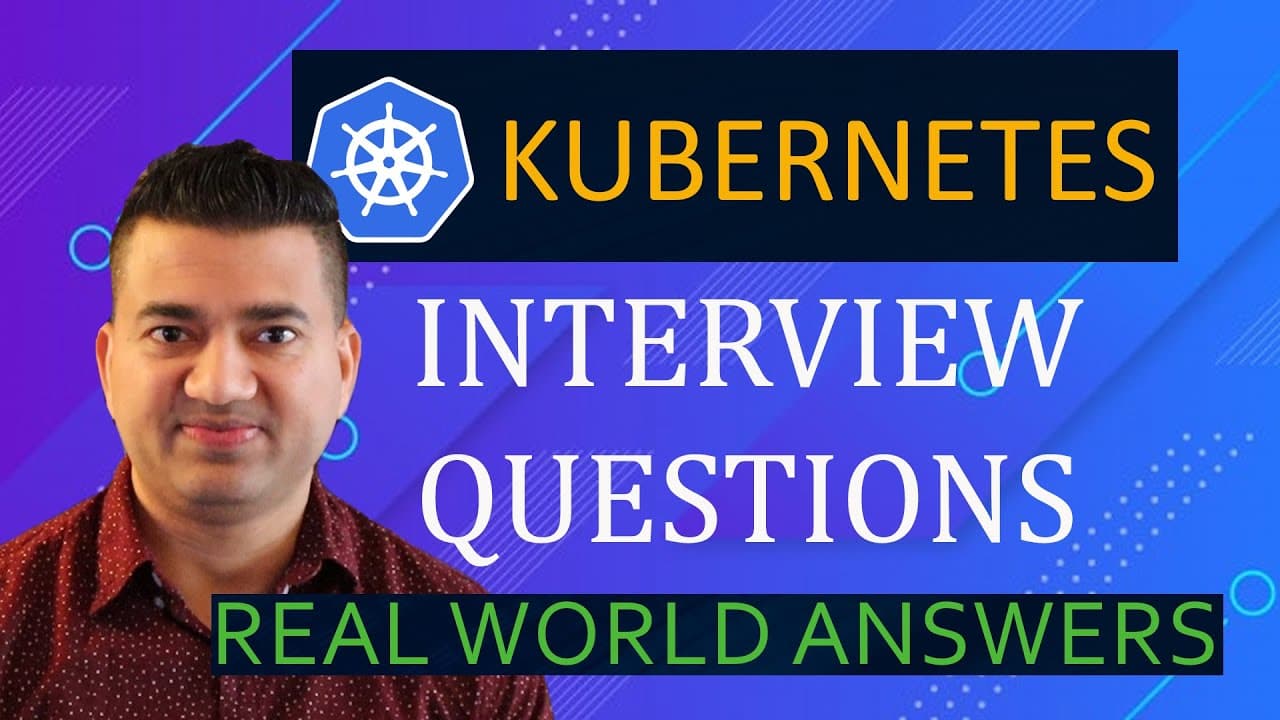
This video covers essential Kubernetes interview questions and provides comprehensive answers on topics such as deployment automation, application security, cost optimization, and scaling methods. Viewers will gain insights into real-world challenges and solutions, including best practices for exposing microservices and optimizing resource usage.
Transcript
hello guys and girls raj here back with another video so kubernetes is super hot right now in job market so in this video we are going to go over some kubernetes interview questions and answers uh i have given timestamps with the video for your viewing convenience so let's jump into it so the questions we are going to cover is how do you automate k... Read More
Key Insights
- 💐 Understanding the DevOps flow is essential for automating Kubernetes deployment.
- 🔒 Kubernetes application security involves considering both application security and DevSecOps practices.
- 🇨🇷 Cost and performance optimization of Kubernetes applications require detecting CPU and memory waste and utilizing tools for actionable cost and performance insights.
- 👥 Challenges in Kubernetes applications can be overcome with solutions like managed node groups and adding additional subnets.
- 🚗 Scaling Kubernetes applications can be achieved through horizontal pod auto-scaling, cluster auto-scaling, or cluster over-provisioning.
- 😒 The use of Ingress is essential for exposing Kubernetes microservices to consumers with the ability to route traffic to different services based on paths.
Install to Summarize YouTube Videos and Get Transcripts
Explore YouTube Video Summarizer or Get YouTube Transcript Extractor
Questions & Answers
Q: How do you automate Kubernetes deployment?
Automating Kubernetes deployment involves understanding the DevOps flow, such as containerizing the application, saving the container image, and deploying it to a Kubernetes cluster using tools like Jenkins, GitLab, and Helm or kubectl commands.
Q: How do you secure a Kubernetes application?
Securing a Kubernetes application involves two aspects. Application security can be achieved by using RBAC and IRSA to secure pods, namespaces, and nodes. The security of the DevOps lifecycle includes authorization, vulnerability scanning, and continuous monitoring using tools like Sysdig Falco, Elastic Container Registry, and third-party tools like Twistlock.
Q: How do you cost or performance optimize a Kubernetes application?
To optimize the cost and performance of a Kubernetes application, it is important to detect CPU and memory waste by utilizing tools like Metric Server, CloudWatch Container Insights, and third-party tools like Kubecost. Unused CPU and memory allocation should be minimized by optimizing pod resource specifications.
Q: Can you provide an example of a challenge faced in a Kubernetes application and how you solved it?
One challenge could be upgrading a Kubernetes cluster to a new version while keeping the application highly available. This can be solved by using managed node groups in services like Amazon EKS, which automate patching and maintain application availability. Adding additional subnets in EKS clusters can also solve challenges related to IP address exhaustion.
Key Insights:
- Understanding the DevOps flow is essential for automating Kubernetes deployment.
- Kubernetes application security involves considering both application security and DevSecOps practices.
- Cost and performance optimization of Kubernetes applications require detecting CPU and memory waste and utilizing tools for actionable cost and performance insights.
- Challenges in Kubernetes applications can be overcome with solutions like managed node groups and adding additional subnets.
- Scaling Kubernetes applications can be achieved through horizontal pod auto-scaling, cluster auto-scaling, or cluster over-provisioning.
- The use of Ingress is essential for exposing Kubernetes microservices to consumers with the ability to route traffic to different services based on paths.
- Kubernetes is not the only container orchestrator available; other options include Amazon ECS, Docker Swarm, and Apache Mesos.
Summary & Key Takeaways
-
The video addresses common interview questions about Kubernetes, including topics like automation, security, cost optimization, challenges faced in applications, scaling, and exposing microservices.
-
It explains the DevOps flow for Kubernetes deployment, emphasizing the importance of understanding the build and deploy phases.
-
It discusses the security aspects of Kubernetes, focusing on application security and DevSecOps practices.
Read in Other Languages (beta)
Share This Summary 📚
Summarize YouTube Videos and Get Video Transcripts with 1-Click
Try YouTube Summary with ChatGPT & Claude or YouTube Transcript Generator
Explore More Summaries from Cloud With Raj 📚


Summarize YouTube Videos and Get Video Transcripts with 1-Click
Try YouTube Summary with ChatGPT & Claude or YouTube Transcript Generator