Expression, Creativity, and Culture in Putin’s Russia
TL;DR
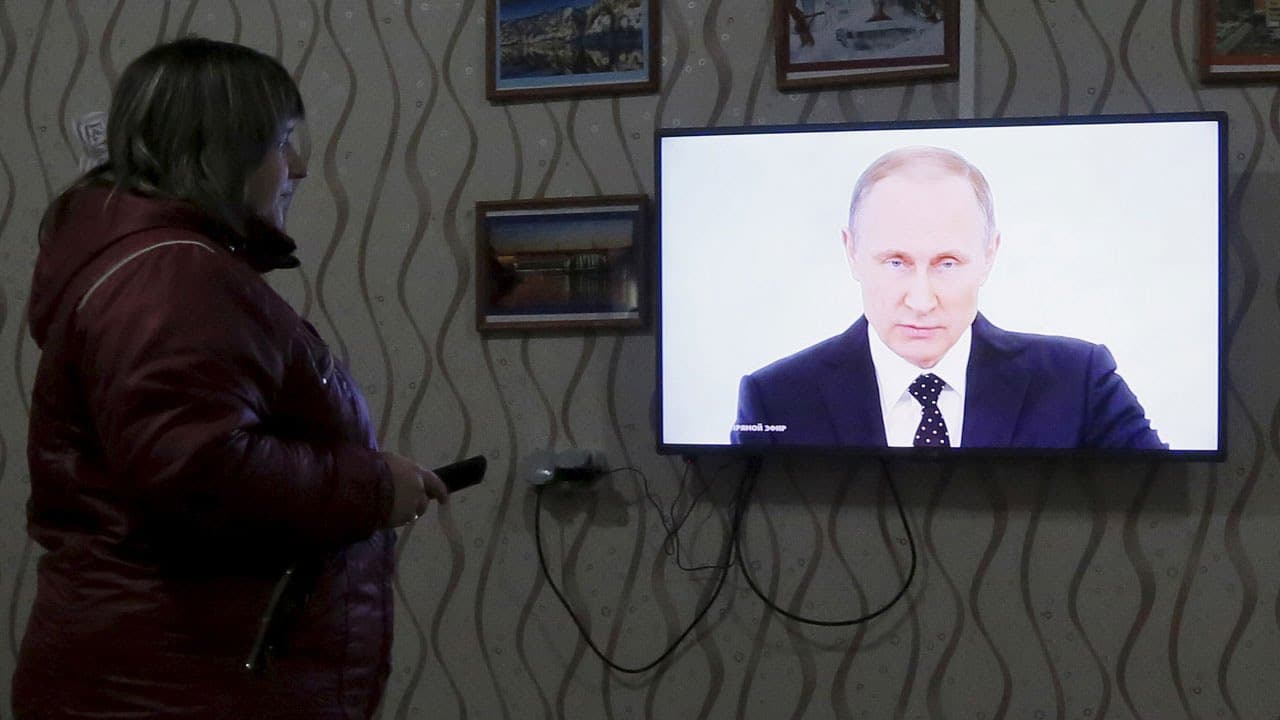
Russian intellectuals discuss challenges of creative expression under Putin's regime.
Transcript
(Note: Ms. Ulitskaya�s and Mr. Danishevsky�s remarks are made through an interpreter.) NOSSEL: Good afternoon, everyone. I�m Suzanne Nossel. I�m the executive director of PEN American Center. Welcome to the Council on Foreign Relations. So pleased to see all of you. I have been a member of CFR for almost 20 years. I started as a term member right a... Read More
Key Insights
- The discussion highlights the cultural challenges in Russia, focusing on the limited freedom of expression under Putin's regime, as shared by prominent Russian intellectuals and writers.
- Ludmila Ulitskaya emphasizes the generational divide in perceptions of dissidents, noting younger Russians' skepticism towards past dissident movements.
- Maria Stepanova discusses the global trend of viewing the future with fear rather than hope, relating it to Russia's historical catastrophes and its impact on Putin's popularity.
- Anna Nemzer shares the struggles faced by independent media like Dozhd, illustrating the indirect censorship mechanisms and societal pressures in Russia.
- Ilya Danishevsky talks about the self-censorship prevalent in Russian culture, where cultural outputs are sanitized to align with state propaganda.
- The panelists express concerns about the emigration of Russian intelligentsia, fearing the loss of creative and scientific talents due to the oppressive environment.
- The conversation touches upon the role of minorities and the lack of discourse on LGBT and women's rights in Russia, highlighting societal conservatism.
- The session underscores the importance of international cultural exchanges and educational programs in fostering understanding and supporting freedom of expression in Russia.
Install to Summarize YouTube Videos and Get Transcripts
Explore YouTube Video Summarizer or Get YouTube Transcript Extractor
Questions & Answers
Q: What challenges does Dozhd face in Russia?
Anna Nemzer explains that Dozhd, the independent television station, faces significant challenges due to indirect censorship. After publishing an opinion poll about the siege of Leningrad, cable operators turned off Dozhd, advertisements disappeared, and landlords refused to renew contracts. This illustrates how censorship in Russia operates through societal pressures rather than direct government orders.
Q: How does Maria Stepanova view the future for Russians?
Maria Stepanova argues that Russians, like many globally, view the future with disillusionment and fear rather than hope. This perspective is shaped by a history of constant catastrophes, leading people to seek comfort in the past rather than looking forward. This mindset affects Putin's popularity, as it aligns with conservative narratives that romanticize past glories.
Q: What is the significance of the 14 percent figure mentioned in the discussion?
The 14 percent figure represents the minority of Russians who do not support Putin, according to polls. Suzanne Nossel and the panelists emphasize the importance of this minority, noting that even a small percentage translates to millions of people. This group is crucial for fostering change, as minorities often drive societal progress and challenge the status quo.
Q: What role does self-censorship play in Russian culture?
Ilya Danishevsky highlights that self-censorship is a significant issue in Russian culture. Cultural outputs, such as books and films, are often sanitized to avoid controversy and align with state propaganda. This self-imposed restraint stifles creativity and limits the diversity of voices and perspectives in Russian literature and media.
Q: How does the panel view the emigration of Russian intelligentsia?
The panelists express concern about the emigration of Russian intelligentsia, fearing the loss of creative and scientific talents. Ludmila Ulitskaya notes that while emigration today is less final than in the past, the oppressive environment in Russia drives many intellectuals to seek opportunities abroad, potentially depriving the country of future innovators and leaders.
Q: What is the panel's perspective on minority rights in Russia?
The panel discusses the lack of discourse on minority rights in Russia, particularly regarding LGBT and women's rights. Ilya Danishevsky notes that these topics are not part of the official cultural agenda, and societal conservatism often marginalizes these groups. Maria Stepanova adds that the majority's conservative views exacerbate the challenges faced by minorities.
Q: What international support do the panelists seek?
The panelists seek international support for cultural exchanges and educational programs to foster understanding and support freedom of expression in Russia. They emphasize the importance of cultural diplomacy, where writers and artists can bridge gaps and introduce diverse perspectives, contributing to a more open and informed society.
Q: How does Ludmila Ulitskaya compare current times to Soviet-era repression?
Ludmila Ulitskaya reflects that while current times in Russia are challenging, they are not as repressive as the Stalin era. Although there are targeted repressions and occasional violence against dissidents, mass repressions are absent. She appreciates the relative freedom to express dissenting views, despite the risks involved, and highlights the role of organizations like PEN in protecting writers.
Summary & Key Takeaways
-
The panel discussion at the Council on Foreign Relations explores the challenges faced by Russian intellectuals in expressing creativity under Putin's regime. The speakers, including Ludmila Ulitskaya and Maria Stepanova, share their experiences and insights on the cultural dynamics in Russia, highlighting the constraints on freedom of expression.
-
The dialogue delves into the generational differences in perceptions of dissidents, the impact of historical catastrophes on current societal fears, and the role of media in shaping public discourse. Anna Nemzer and Ilya Danishevsky discuss the indirect censorship and self-censorship that stifle independent media and literature in Russia.
-
The conversation addresses the emigration of Russian intelligentsia and the lack of discourse on minority rights, emphasizing the need for cultural exchanges and international support for freedom of expression. The discussion concludes with reflections on the potential for change and the importance of cultural and educational initiatives.
Read in Other Languages (beta)
Share This Summary 📚
Summarize YouTube Videos and Get Video Transcripts with 1-Click
Try YouTube Summary with ChatGPT & Claude or YouTube Transcript Generator
Explore More Summaries from Council on Foreign Relations 📚
Summarize YouTube Videos and Get Video Transcripts with 1-Click
Try YouTube Summary with ChatGPT & Claude or YouTube Transcript Generator