What Are Resonance Structures and How Do They Work?
TL;DR
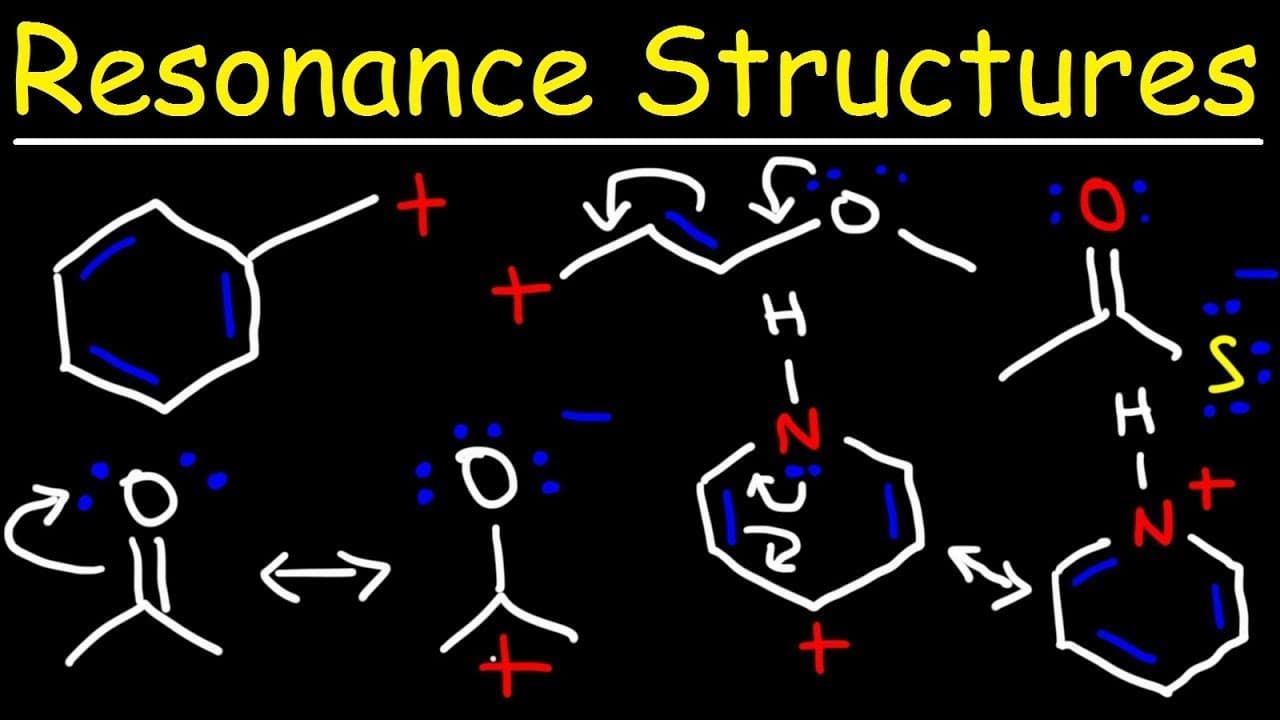
Resonance structures show how electrons can be rearranged within molecules, highlighting alternative bonding configurations. The major resonance contributor is the most stable structure, often influenced by factors like the stability of carbocations and adherence to the octet rule. It’s crucial to understand that placing charges appropriately, such as on larger atoms, can enhance overall stability.
Transcript
in this lesson we're going to talk about resonance structures how can we draw the resonance structure for this allylic carbocation the first thing you should do is you should start the arrow from the double bond and it's going to flow towards the positive charge electrons will flow from a region of high negative charge towards a region of low negat... Read More
Key Insights
- 🤨 Resonance structures involve the movement of pi electrons and rearrangement of charges.
- 🎚️ The major resonance contributor is the most stable structure, while primary, secondary, and tertiary carbocations have different stability levels.
- 👥 Methyl groups in a carbocation donate electron density and increase the stability of the carbocation.
- 🫀 Placing a negative charge on a larger atom, like sulfur instead of oxygen, enhances stability.
Install to Summarize YouTube Videos and Get Transcripts
Explore YouTube Video Summarizer or Get YouTube Transcript Extractor
Questions & Answers
Q: How are resonance structures drawn in organic chemistry?
Resonance structures are drawn by starting the arrow from the double bond and flowing it towards the positive charge. The movement of pi electrons and rearrangement of charges creates different resonance forms.
Q: What determines the major resonance contributor?
The major resonance contributor is the most stable resonance structure. In the case of allylic carbocations, primary, secondary, and tertiary structures have varying stability levels. Methyl groups in carbocations increase stability.
Q: How does the stability of a carbocation change with different substituents?
Methyl groups in a carbocation donate electron density, making the carbocation more stable. Tertiary carbocations with more methyl groups are more stable than secondary ones, which are more stable than primary ones.
Q: How do resonance structures for benzylic and carboxylate ions differ?
Resonance structures for benzylic and carboxylate ions involve moving pi bonds. The major resonance contributor has more stable charges. In the case of benzylic ions, a secondary carbocation is more stable than a primary one.
Summary & Key Takeaways
-
Resonance structures are drawn by starting the arrow from the double bond and flowing it towards the positive charge.
-
The major resonance contributor is the most stable structure, while primary, secondary, and tertiary carbocations have different stability levels.
-
Methyl groups in a carbocation donate electron density, making the carbocation more stable.
-
Resonance structures for benzylic and carboxylate ions can be drawn by moving pi bonds. The major resonance contributor has more stable charges.
-
Putting a negative charge on a larger atom, like sulfur instead of oxygen, stabilizes the ion more effectively.
-
Octet rule violation can affect the stability of resonance contributors, prioritizing placing positive charges on more electronegative atoms.
Read in Other Languages (beta)
Share This Summary 📚
Summarize YouTube Videos and Get Video Transcripts with 1-Click
Try YouTube Summary with ChatGPT & Claude or YouTube Transcript Generator
Explore More Summaries from The Organic Chemistry Tutor 📚





Summarize YouTube Videos and Get Video Transcripts with 1-Click
Try YouTube Summary with ChatGPT & Claude or YouTube Transcript Generator