Concavity, Inflection Points, and Second Derivative
TL;DR
Learn how to find inflection points and identify the intervals where a function is concave up and concave down.
Transcript
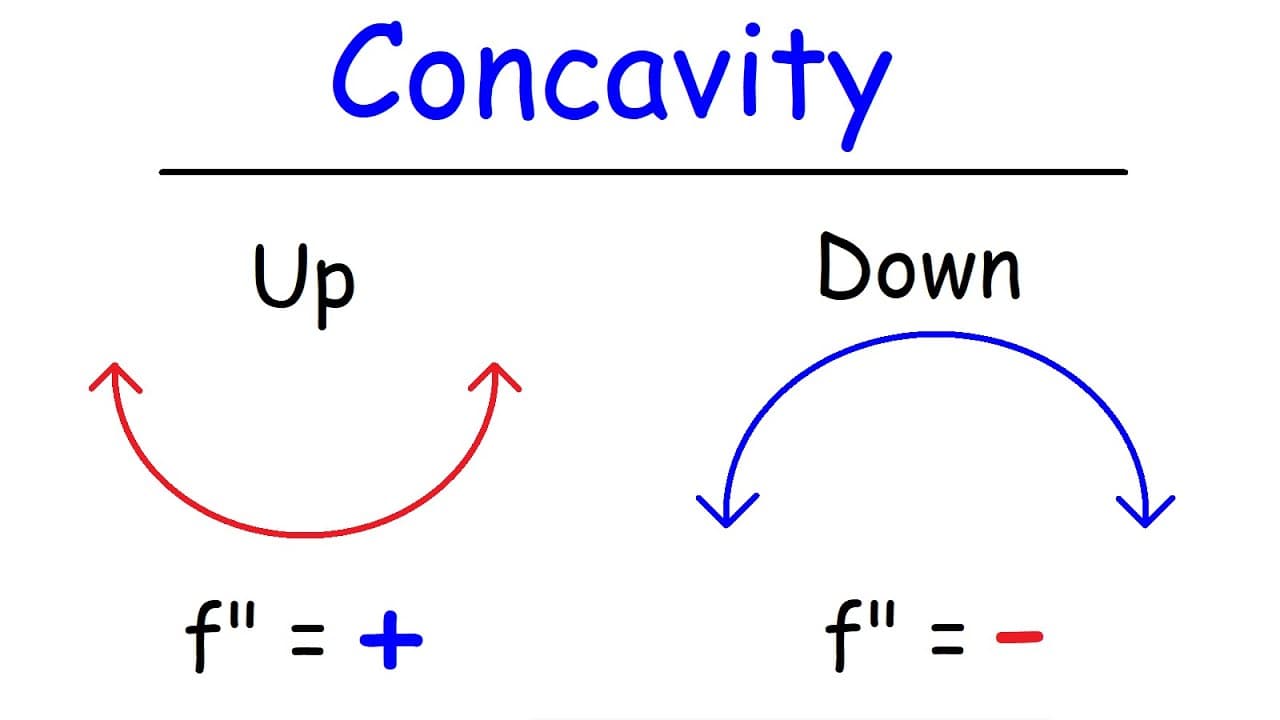
in this video we're going to talk about how to determine the inflection points of a function and the intervals where the function is concave up and concave down so let's talk about concavity first so in this picture the function is concave up everywhere so that's how it looks like and this is the shape of a graph that's concave down now whenever th... Read More
Key Insights
- 💠 Concavity refers to the shape of a function, with concave up and concave down representing different patterns.
- ❎ The second derivative of a function can determine its concavity, with positive indicating concave up and negative indicating concave down.
- 😥 Inflection points occur when the second derivative is zero and the concavity changes.
- 🟰 To find inflection points and intervals of concavity, the second derivative is set equal to zero and a sign chart is created.
- 😥 Inflection points are typically found between two relative extrema.
- ❣️ The y-coordinate of an inflection point can be found by plugging in the x-coordinate into the original function.
- 😥 If the concavity does not change across a point, it is not an inflection point.
Install to Summarize YouTube Videos and Get Transcripts
Explore YouTube Video Summarizer or Get YouTube Transcript Extractor
Questions & Answers
Q: What does concavity represent in a function?
Concavity describes the shape of a function, with concave up looking like a U shape and concave down resembling an upside-down U shape.
Q: How is concavity related to the derivatives of a function?
The second derivative of a function determines its concavity. A positive second derivative indicates concave up, while a negative second derivative indicates concave down.
Q: What causes an inflection point in a function?
An inflection point occurs when the second derivative is zero and the concavity of the function changes from positive to negative or vice versa.
Q: How are inflection points and relative extrema related?
Inflection points are typically found between two relative extrema. The concavity changes from negative to positive between a maximum and minimum values.
Summary & Key Takeaways
-
Concavity refers to the shape of a function, with concave up being a U shape and concave down being an upside-down U shape.
-
The concavity of a function can be determined by the sign of the second derivative, with positive indicating concave up and negative indicating concave down.
-
Inflection points occur when the second derivative equals zero and the concavity changes from positive to negative or vice versa.
-
To find inflection points and intervals of concavity, the second derivative is set equal to zero and a sign chart is created.
Read in Other Languages (beta)
Share This Summary 📚
Summarize YouTube Videos and Get Video Transcripts with 1-Click
Try YouTube Summary with ChatGPT & Claude or YouTube Transcript Generator
Explore More Summaries from The Organic Chemistry Tutor 📚
Summarize YouTube Videos and Get Video Transcripts with 1-Click
Try YouTube Summary with ChatGPT & Claude or YouTube Transcript Generator