What Is the Dynamical Systems Approach to Skill Acquisition?

TL;DR
The dynamical systems approach to skill acquisition emphasizes that motor behaviors emerge from individual, environmental, and task constraints rather than being pre-programmed. It highlights how skills develop through self-organization and stable patterns, with changes in constraints influencing learning and performance. Notably, walking in infants illustrates how variability and control parameters play critical roles in skill development.
Transcript
today on this bonus episode of the perception and action podcast an overview of the dynamical systems approach to becoming skillful linking motor development and skill acquisition so it's time for a call to action hi everyone this is Rob gray from Arizona State University in perception action calm welcome to the perception and action podcast where ... Read More
Key Insights
- The dynamical systems approach links motor development with skill acquisition, emphasizing the influence of individual, environmental, and task constraints.
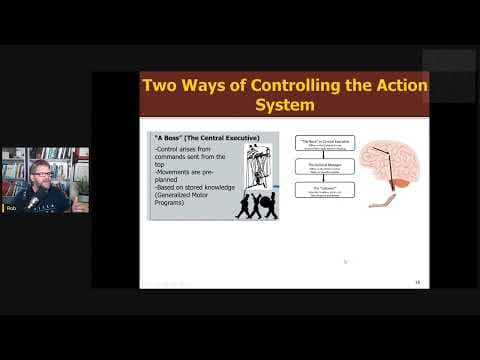
- Traditional information processing models are insufficient for explaining skill acquisition due to their reliance on a metaphor of a central executive.
- The dynamical systems approach views skilled movement as an emergent phenomenon resulting from the elements of a complex system.
- Key components of the dynamical systems approach include constraints, self-organization, patterns, and stability.
- Motor behavior emerges from a system surrounded by constraints, which limit possible movement solutions.
- Self-organization allows the components of a perception-action system to spontaneously develop organization under certain constraints.
- Patterns in the dynamical systems approach refer to low-dimensional descriptions that emerge from complex systems, such as the phase relationship in walking.
- Stability in dynamical systems is represented by attractors, which are stable states resilient to small environmental perturbations.
Install to Summarize YouTube Videos and Get Transcripts
Explore YouTube Video Summarizer or Get YouTube Transcript Extractor
Questions & Answers
Q: What is the main focus of Jane Clark's 1995 article?
Jane Clark's 1995 article focuses on providing an overview of the dynamical systems approach to skill acquisition and motor control. It emphasizes the strong connection between motor development and skill acquisition, arguing that skilled movement is an emergent phenomenon arising from the elements of a complex dynamical system, rather than being pre-programmed or controlled by a central executive.
Q: How does the dynamical systems approach differ from traditional information processing models?
The dynamical systems approach differs from traditional information processing models by rejecting the metaphor of a central executive that selects motor programs. Instead, it views skilled movement as an emergent phenomenon resulting from the interaction of constraints. This approach emphasizes the role of self-organization, patterns, and stability in understanding motor behavior, offering a more comprehensive explanation for the adaptability and versatility observed in skill acquisition.
Q: What are the key components of the dynamical systems approach?
The key components of the dynamical systems approach include constraints, self-organization, patterns, and stability. Constraints limit possible movement solutions and come in three types: individual, environmental, and task. Self-organization allows the components of a perception-action system to spontaneously develop organization under certain constraints. Patterns refer to low-dimensional descriptions that emerge from complex systems, and stability is represented by attractors, which are stable states resilient to small environmental perturbations.
Q: How do constraints influence motor behavior in the dynamical systems approach?
In the dynamical systems approach, motor behavior emerges from a system surrounded by constraints, which limit or set boundaries for possible movement solutions. Constraints come in three types: individual, environmental, and task. They play a crucial role in shaping the behavior observed, as changes in constraints can lead to changes in the pattern of self-organization, influencing the emergence of new movement solutions and driving the stabilization of motor skills.
Q: What is the role of self-organization in the dynamical systems approach?
Self-organization in the dynamical systems approach refers to the process by which the components of a perception-action system spontaneously develop organization or patterns based on governing dynamical principles. It is a critical process that allows movement to emerge without the need for a central executive or pre-programmed instructions. Self-organization enables the system to adapt to constraints and find stable solutions, facilitating the acquisition of motor skills.
Q: How does the dynamical systems approach explain the emergence of new movement patterns?
The dynamical systems approach explains the emergence of new movement patterns as a result of changes in constraints, known as control parameters. When a constraint is systematically altered, it can lead to a change in the pattern of self-organization, resulting in the emergence of a new movement solution. This approach emphasizes the adaptability of the system and the role of variability in the learning process, highlighting the dynamic and flexible nature of skill acquisition.
Q: What example is used to illustrate the dynamical systems approach in the podcast?
The podcast uses the example of infant walking to illustrate the dynamical systems approach. Jane Clark identifies critical components necessary for walking to emerge and discusses how changes in constraints, such as postural support, can drive the stabilization of walking. The example highlights the principles of constraints, self-organization, patterns, and stability in the context of motor skill development, demonstrating the applicability of the dynamical systems approach to understanding complex behaviors.
Q: What is the significance of variability in the dynamical systems approach?
In the dynamical systems approach, variability is seen as a critical property of the system rather than a source of error. It indicates periods of instability when the system is transitioning between stable states. Variability allows for adaptability and flexibility in skill acquisition, enabling the system to explore different movement solutions and adapt to changing constraints. This perspective contrasts with traditional views that see variability as undesirable, emphasizing its importance in the learning process.
Summary & Key Takeaways
-
The podcast episode provides an overview of the dynamical systems approach to skill acquisition, as discussed in Jane Clark's 1995 article. It highlights the limitations of traditional information processing models and introduces key concepts such as constraints, self-organization, patterns, and stability in the context of motor skill development.
-
Clark's article emphasizes the connection between motor development and skill acquisition, illustrating how individual constraints influence learning in both infants and adults. It argues that skilled movement arises from the elements of a complex dynamical system, rather than being pre-programmed or controlled by a central executive.
-
The dynamical systems approach is further explored through the example of infant walking, where Clark identifies critical components necessary for walking to emerge. The podcast discusses how changes in constraints, known as control parameters, can drive the stabilization of walking and highlights the importance of variability in the learning process.
Read in Other Languages (beta)
Share This Summary 📚
Summarize YouTube Videos and Get Video Transcripts with 1-Click
Try YouTube Summary with ChatGPT & Claude or YouTube Transcript Generator
Explore More Summaries from Rob Gray 📚



Summarize YouTube Videos and Get Video Transcripts with 1-Click
Try YouTube Summary with ChatGPT & Claude or YouTube Transcript Generator