How Can AI Transform Healthcare Safely and Ethically?
TL;DR
AI has the potential to revolutionize healthcare, but its applications must be approached with a solid understanding of the healthcare system. The discussion highlights the importance of data science, model evaluation, and regulatory considerations in using AI responsibly. Emphasizing clinical utility and fairness, the speakers outline how to effectively integrate AI into healthcare practices.
Transcript
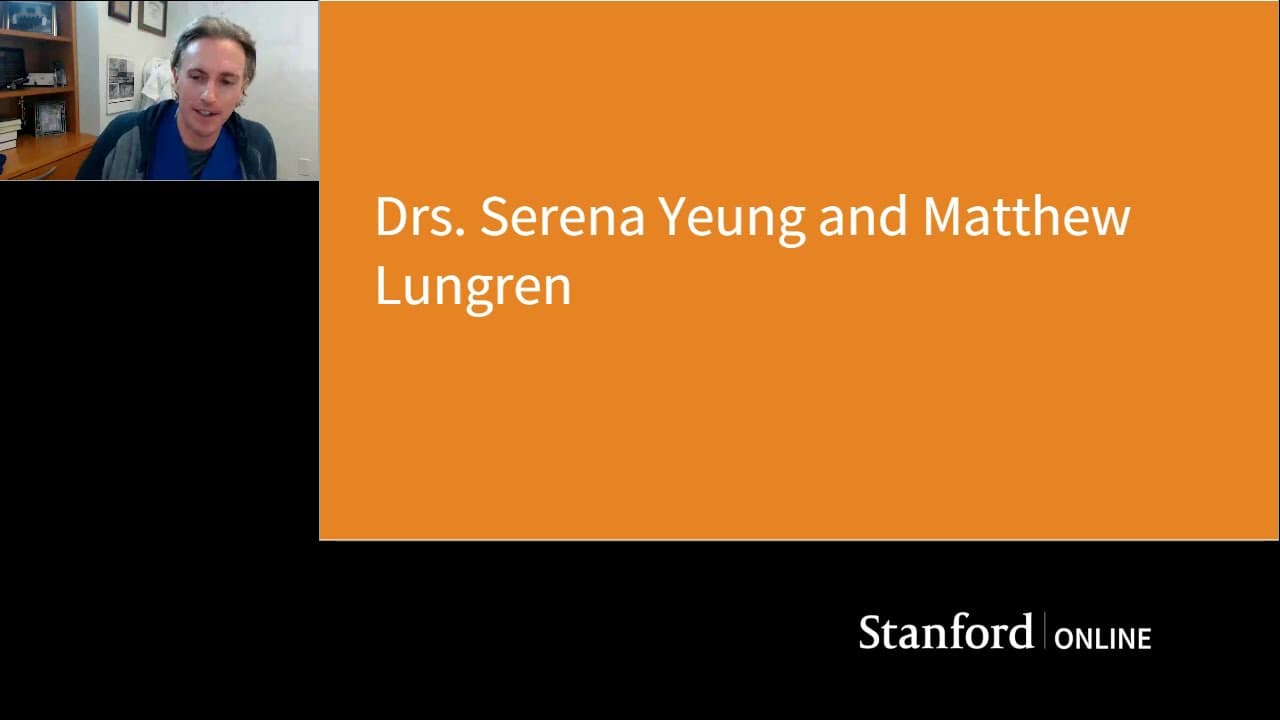
i want to thank you all for joining me on our fantastic speakers today i have negan shawn lauren baker matthew lundgren serena young and tina hernandez wissart from the ai and healthcare specialization here with me thank you all for being with us today dr negan shaw is an associate professor of medicine biomedical informatics at stanford university... Read More
Key Insights
- 🈸 Understanding the healthcare system is crucial for AI applications in healthcare.
- 😷 AI shows promise in various medical specialties, particularly in imaging analysis.
- 🚙 Model evaluation and deployment require considering clinical utility, feasibility, and impact.
- 🧚 Data cleaning and evaluation of biases are essential for ensuring reliable and fair AI models.
- ❓ Generalizability across populations is a challenge that requires careful evaluation and mitigation strategies.
Install to Summarize YouTube Videos and Get Transcripts
Explore YouTube Video Summarizer or Get YouTube Transcript Extractor
Questions & Answers
Q: Can someone join the program even if they don't have a healthcare background?
Yes, the program is open to individuals with various backgrounds, and the courses provide foundational knowledge of the healthcare system and specific applications of AI in healthcare.
Q: Do the courses cover data cleaning and preliminary analysis?
The courses focus on concepts and principles related to AI in healthcare rather than specific data cleaning techniques. Data cleaning is acknowledged as an important topic, but it is not extensively covered.
Q: Are there successful prediction models for cardiovascular events like congestive heart failure (CHF)?
Yes, there have been successful prediction models developed for cardiovascular events, including CHF. The courses provide examples of such models and their deployment in healthcare settings.
Q: Is the course focused on the US healthcare system or does it cover global healthcare systems?
The courses primarily focus on the US healthcare system, but they also provide insights into healthcare systems in other countries. The goal is to provide foundational knowledge applicable to different systems.
Q: How do you address the challenge of generalizing AI models across different populations?
Generalizability is an important consideration, and the courses provide strategies for evaluating biases and ensuring fairness in AI models. Understanding population diversity and using robust evaluation techniques can help address this challenge.
Q: Are there resources available to learn more after completing the program?
The instructors recommend exploring articles and reports from sources like the National Academy of Medicine. Additionally, enrollment in Stanford's SCPD programs can provide hands-on training and deeper technical knowledge.
Summary & Key Takeaways
-
The webinar introduces the speakers and their expertise in AI and healthcare.
-
Professor Baker discusses the importance of understanding the healthcare system and how AI and data science interact with it.
-
Dr. Lundgren highlights the role of AI in the healthcare system, focusing on data analysis and machine learning.
-
Professor Young discusses the fundamentals of machine learning algorithms and their application in healthcare.
-
Dr. Hernandez Broussard discusses model evaluation, deployment, and regulation, emphasizing the importance of clinical impact and fairness.
Read in Other Languages (beta)
Share This Summary 📚
Summarize YouTube Videos and Get Video Transcripts with 1-Click
Try YouTube Summary with ChatGPT & Claude or YouTube Transcript Generator
Explore More Summaries from Stanford Online 📚
Summarize YouTube Videos and Get Video Transcripts with 1-Click
Try YouTube Summary with ChatGPT & Claude or YouTube Transcript Generator