Ecology introduction | Ecology | Khan Academy
TL;DR
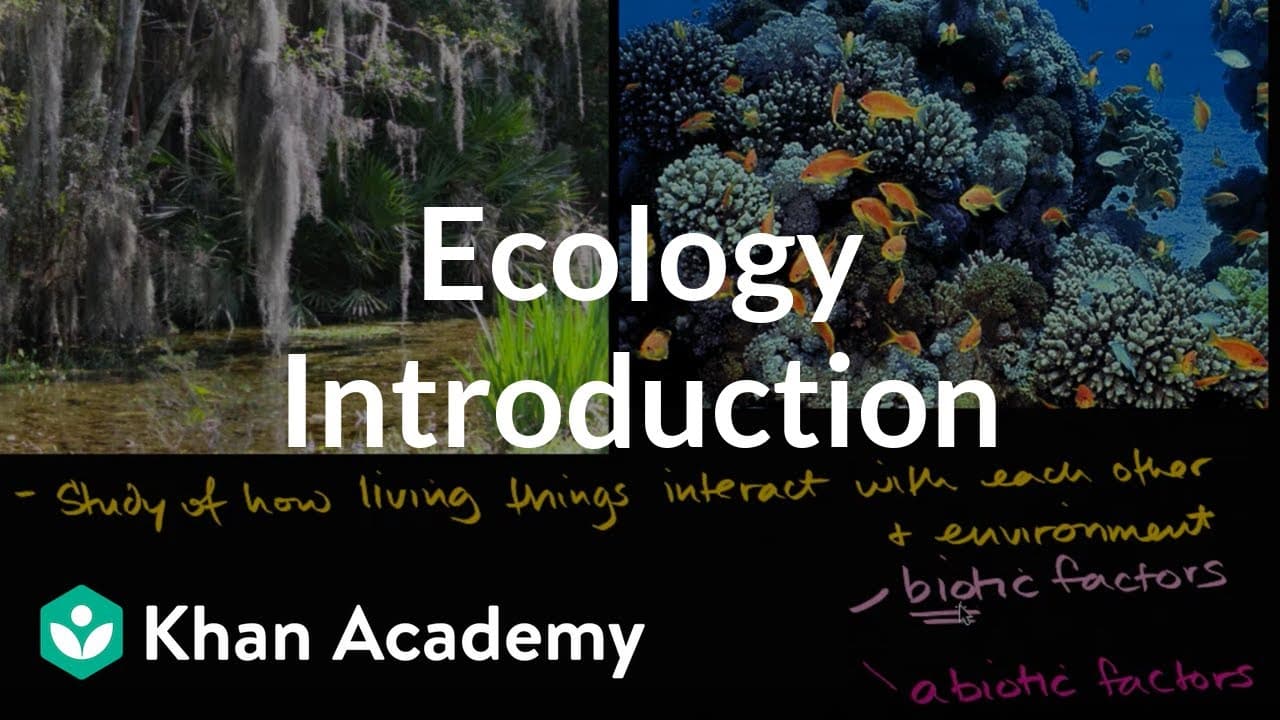
Ecology is the study of how living things interact with each other and their environment, and ecosystems encompass all living and non-living components within an area.
Transcript
- [Voiceover] We're now going to start looking at ecology, which is just the study of how life interacts with other life or how living things interact with each other and their environment. And you you could think of it well how is life interacting with living beings? So that's the technical term often given as biotic factors, biotic factors, you h... Read More
Key Insights
- 🫒 Ecology studies the interactions between living and non-living components in an environment.
- 🧑🏭 Biotic factors are living things, while abiotic factors are non-living elements that influence ecosystems.
- 🫒 Ecosystems include communities of living organisms and their abiotic environment.
- 🤳 The biosphere encompasses all ecosystems on Earth and is a self-contained system.
- 🧑🏭 Biotic and abiotic factors have reciprocal effects on each other.
- 🔶 Ecosystems can range in scale from small, localized areas to large, global systems.
- ❓ The study of ecology is complex due to the interconnectedness and emergent properties of ecosystems.
Install to Summarize YouTube Videos and Get Transcripts
Explore YouTube Video Summarizer or Get YouTube Transcript Extractor
Questions & Answers
Q: What is the difference between biotic and abiotic factors?
Biotic factors are living things that interact with each other, while abiotic factors are non-living elements that affect living organisms. Examples of biotic factors include plants, animals, and microorganisms, while abiotic factors include temperature, water availability, and sunlight.
Q: How do biotic and abiotic factors interact in an ecosystem?
Biotic factors, such as plants producing oxygen through photosynthesis, can directly impact abiotic factors like the composition of the atmosphere. Conversely, abiotic factors like temperature and water availability can affect the distribution and behavior of biotic factors within an ecosystem.
Q: What are the different scales within an ecosystem?
The scales within an ecosystem include the individual (a single organism), population (members of the same species in a defined area), community (all living things in an area), ecosystem (living and non-living components in a community), and biosphere (all ecosystems on Earth).
Q: How are ecosystems and biospheres related?
Ecosystems are smaller units within the biosphere, which encompasses all ecosystems on Earth. The biosphere is a self-contained, fully enclosed ecosystem, and it includes all living and non-living components interconnected on a global scale.
Summary & Key Takeaways
-
Ecology is the study of the interactions between living things (biotic factors) and non-living things (abiotic factors) in an environment.
-
Biotic factors include plants, animals, and microorganisms, while abiotic factors include temperature, water availability, and sunlight.
-
Ecosystems consist of communities of living organisms and their abiotic environment, and they can range from small-scale, like a coral reef, to large-scale, like our entire biosphere.
Read in Other Languages (beta)
Share This Summary 📚
Summarize YouTube Videos and Get Video Transcripts with 1-Click
Try YouTube Summary with ChatGPT & Claude or YouTube Transcript Generator
Explore More Summaries from Khan Academy 📚



Summarize YouTube Videos and Get Video Transcripts with 1-Click
Try YouTube Summary with ChatGPT & Claude or YouTube Transcript Generator