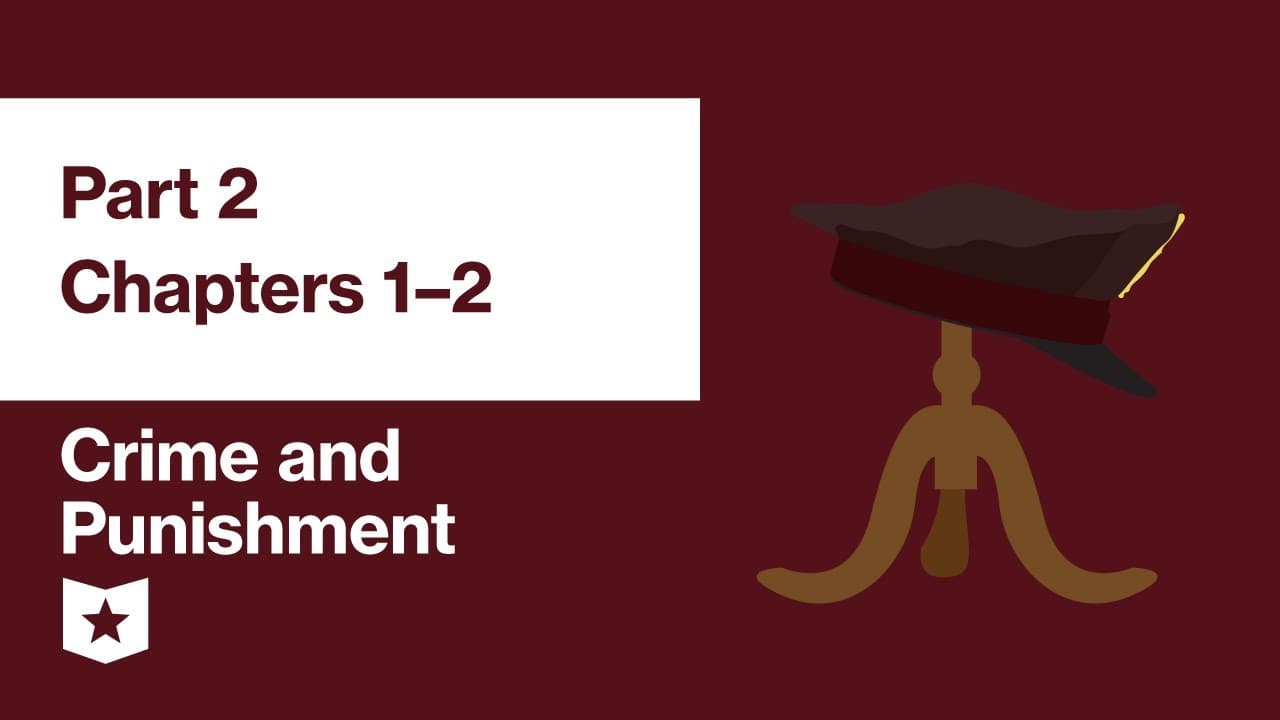
Crime and Punishment by Fyodor Dostoevsky | Part 2, Chapters 1–2
TL;DR
Raskolnikov faces paranoia and potential discovery of his crime, battling an internal urge to confess.
Transcript
in part two chapter one of crime and punishments panicked and feverish rest Kanaka flies in bed for hours but he suddenly realizes he forgot to hide the evidence from the crime he stuffs the stolen items in a hole behind the wall of his room then tears pieces of blood-stained fabric from his clothes and discovers a bloody sock in his boots but by t... Read More
Key Insights
- 🥺 Raskolnikov struggles with paranoia and guilt, leading to erratic behavior and hallucinations.
- 😨 The fear of being discovered drives Raskolnikov's actions and intensifies his internal turmoil.
- 🍽️ Raskolnikov's inner conflict between confessing and avoiding punishment creates a sense of suspense and tension.
- 🥺 Illness exacerbates Raskolnikov's mental state, leading to hallucinations and irrational behavior.
- ❓ The theme of isolation and alienation is prominent in Raskolnikov's interactions with others.
- 🫷 The pressure of guilt and paranoia pushes Raskolnikov to the brink of confession but is deterred by external factors.
- ❓ Razumikhin's concern for Raskolnikov highlights the contrast between their characters and mental states.
Install to Summarize YouTube Videos and Get Transcripts
Explore YouTube Video Summarizer or Get YouTube Transcript Extractor
Questions & Answers
Q: How does Raskolnikov react when he realizes he forgot to hide the evidence of his crime?
Raskolnikov panics and hastily conceals the stolen items, torn fabric, and bloody sock behind a wall, fearing discovery by the police.
Q: What prompts Raskolnikov to consider confessing his crime at the police station?
While at the police station, Raskolnikov's guilt intensifies, but hearing about the release of the two men suspected in the crime deters him from confessing.
Q: How does Raskolnikov's interaction with Razumikhin reflect his internal turmoil?
Raskolnikov's erratic behavior and refusal of help from Razumikhin, followed by accepting and then abruptly leaving, showcase his inner conflict and alienation.
Q: How does Raskolnikov's deteriorating mental state manifest in Chapter 2?
Raskolnikov's illness and paranoia lead to hallucinations, erratic behavior, and a sense of disconnect from reality as he battles with guilt and isolation.
Summary & Key Takeaways
-
Raskolnikov panics over hidden evidence, fears discovery by police.
-
Struggles with guilt and paranoia lead to hallucinations and erratic behavior.
-
Internal conflict over confessing his crime intensifies as Raskolnikov battles illness and isolation.
Read in Other Languages (beta)
Share This Summary 📚
Summarize YouTube Videos and Get Video Transcripts with 1-Click
Try YouTube Summary with ChatGPT & Claude or YouTube Transcript Generator
Explore More Summaries from Course Hero 📚





Summarize YouTube Videos and Get Video Transcripts with 1-Click
Try YouTube Summary with ChatGPT & Claude or YouTube Transcript Generator