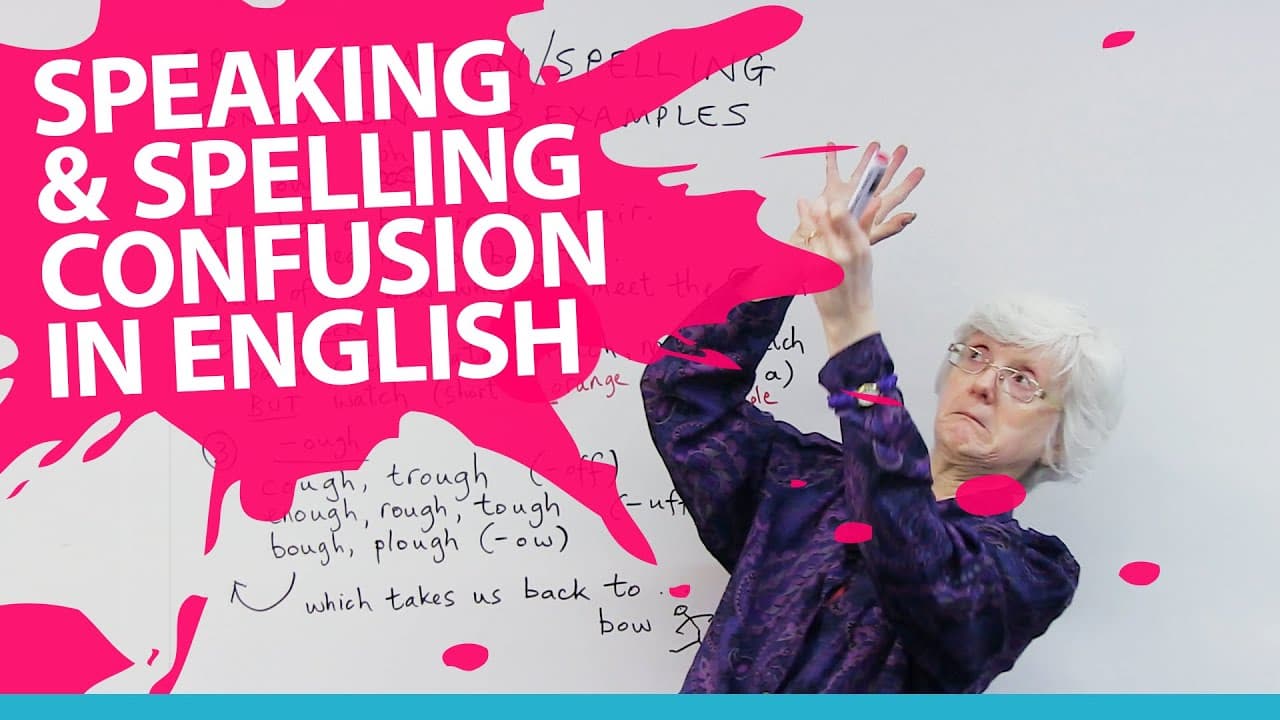
Fix these 3 common pronunciation mistakes in English!
TL;DR
Different words spelled the same but pronounced differently can cause confusion in English pronunciation.
Transcript
Hi. I'm Gill at www.engvid.com, and today we're having a lesson on confusing pronunciations and spellings. Okay? I've got three main examples for you of confusion, because sometimes they... They're spelt in the same way, but they are pronounced differently. Okay. So, let's start. So, the first one is this word "bow", which can be pronounced in two ... Read More
Key Insights
- 🔑 English words can have confusing pronunciations due to spelling inconsistencies, as seen with words like "bow".
- 🖐️ Context plays a significant role in determining the correct pronunciation of words with spelling similarities.
- 📏 Understanding English pronunciation requires familiarity with various pronunciation rules and exceptions.
- 👀 Words ending in "atch" can have different vowel sounds, with "watch" being a unique exception.
- ❤️🩹 The pronunciation of words ending in "ough" varies, showcasing the complexity of English phonetics.
- 🔑 Mastering English pronunciation involves learning and practicing the pronunciation of words with similar spellings but different pronunciations.
- ❓ Differentiating between homophones and homographs is essential for accurate pronunciation in English.
Install to Summarize YouTube Videos and Get Transcripts
Explore YouTube Video Summarizer or Get YouTube Transcript Extractor
Questions & Answers
Q: How does the lesson differentiate between the two pronunciations of "bow"?
The word "bow" can be pronounced differently based on context: as a hair accessory ("bow") or a gesture of bending ("bow").
Q: What is the unique pronunciation rule associated with "watch" among other "atch" words?
"Watch" is pronounced with a short "o" sound ("aw"), unlike other "atch" words pronounced with a short "ah" sound.
Q: How does the lesson explain the pronunciation variations of words ending in "ough"?
The lesson highlights the different pronunciations of "ough" endings, such as "off" in "cough", "uff" in "tough", and "ow" in "plough".
Q: Why are words spelled the same but pronounced differently in English?
English has numerous pronunciation rules and exceptions, leading to words spelled identically having different pronunciations based on context and origin.
Summary & Key Takeaways
-
The lesson covers three examples of confusing pronunciations: "bow" (hair accessory vs. bending gesture), "atch" words (with "ah" or "aw" sounds), and "ough" endings (with various "off", "uff", and "ow" sounds).
-
Pronunciations of words can vary based on context and spelling similarities, leading to potential confusion.
-
Understanding the correct pronunciation of words in English can require learning multiple pronunciation rules and exceptions.
Read in Other Languages (beta)
Share This Summary 📚
Summarize YouTube Videos and Get Video Transcripts with 1-Click
Try YouTube Summary with ChatGPT & Claude or YouTube Transcript Generator
Explore More Summaries from Learn English with Gill · engVid 📚




Summarize YouTube Videos and Get Video Transcripts with 1-Click
Try YouTube Summary with ChatGPT & Claude or YouTube Transcript Generator