My first in person conference presentation as a PhD Student - ICCBR 2023
TL;DR
This study explores the use of case-based reasoning and training features to predict marathon performance, with promising results.
Transcript
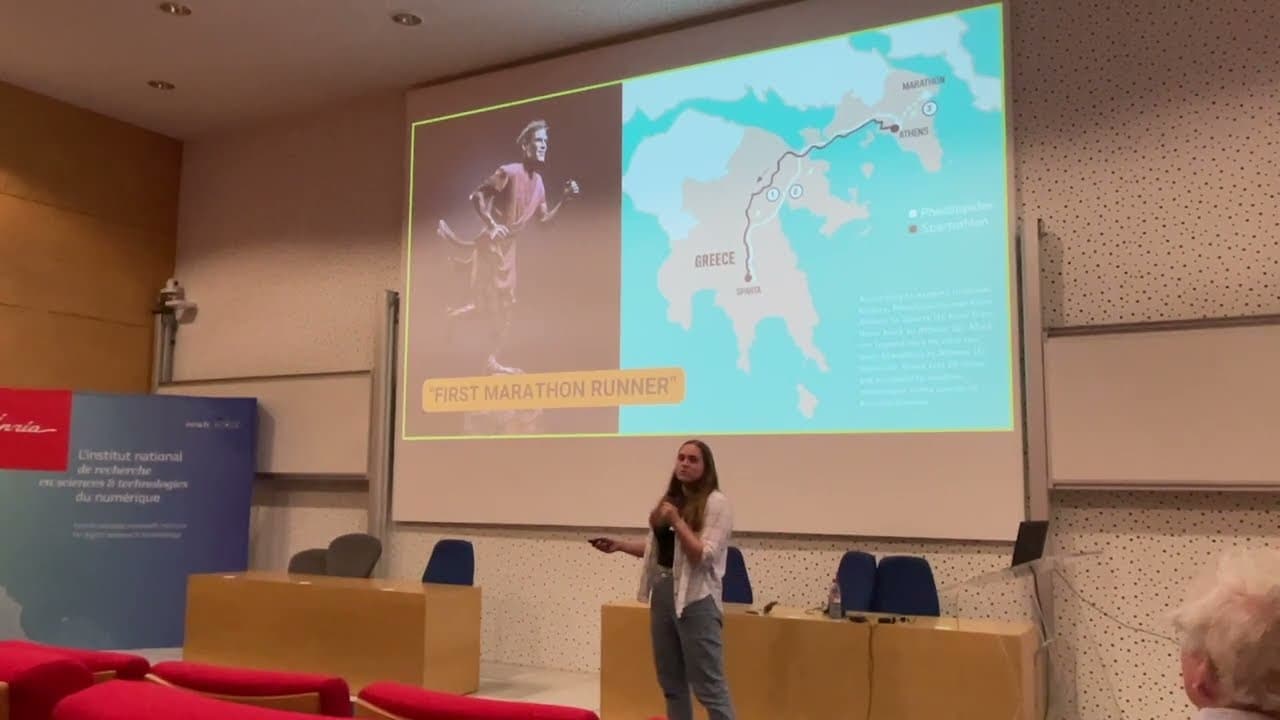
so this has sort of inspired lots of people to take on the iconic distance and millions of people participate in marathons every year and there's been a big increase in people participating in recent years but it's interesting to note that the sort of story that a lot of people know about marathons is technically not true back in Greek times there ... Read More
Key Insights
- 😀 The story of Fidipides running 25 miles in Greek times is technically incorrect; he actually ran 300 miles over four days.
- 🏃 Traditional marathon training involves multiple types of training sessions with specific goals, such as speed, endurance, and fitness.
- 🏃 Previous models for predicting marathon performance have limitations due to small sample sizes and lack of data on elite runners.
- 🏃 Combining case-based reasoning with training features shows promising results in predicting marathon performance.
- 🍳 The fastest 10K pace is an important feature for prediction but hasn't been widely studied in sports science literature.
- 🥳 Training features become more accurate in predicting marathon performance as race day approaches.
- 🐎 The combination of previous race times and training features yields the most accurate predictions.
Install to Summarize YouTube Videos and Get Transcripts
Explore YouTube Video Summarizer or Get YouTube Transcript Extractor
Questions & Answers
Q: How long should a marathon training program last?
A traditional marathon training program typically lasts 12 to 16 weeks, allowing for intensive training sessions to improve speed, endurance, and fitness.
Q: How accurate are existing models in predicting marathon performance?
Previous models have limitations due to small sample sizes and lack of data on elite runners. However, this study aims to improve predictions using case-based reasoning and a larger dataset.
Q: What features are considered in the training program for prediction?
The training features include distance-based features (total weekly distance, longest run distance), activity-based features (number of active days per week), and pace-based features (weekly pace, fastest 10K pace).
Q: Can this prediction model be applied to other endurance sports?
The study suggests that the case-based reasoning approach may also be applicable to other endurance sports such as cycling and swimming, as long as there is access to training data.
Summary & Key Takeaways
-
Marathons have been popularized by the story of Fidipides, but the common belief of a 25-mile run is technically incorrect.
-
Traditional marathon training involves 12 to 16 weeks of intensive training, including tempo runs, long runs, interval runs, and recovery runs.
-
Previous models to predict marathon performance have limitations, such as small sample sizes and lack of data on elite runners.
Read in Other Languages (beta)
Share This Summary 📚
Summarize YouTube Videos and Get Video Transcripts with 1-Click
Try YouTube Summary with ChatGPT & Claude or YouTube Transcript Generator
Explore More Summaries from PhD and Productivity 📚






Summarize YouTube Videos and Get Video Transcripts with 1-Click
Try YouTube Summary with ChatGPT & Claude or YouTube Transcript Generator