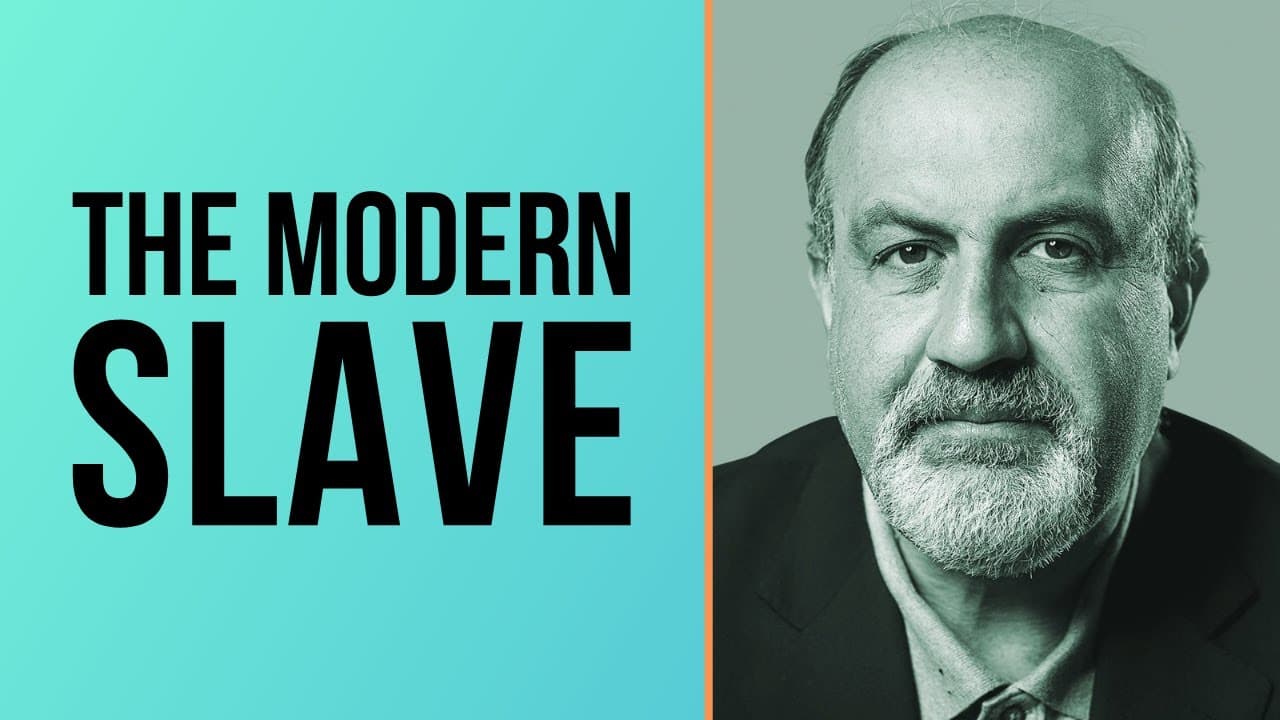
Nassim Taleb - The TRUTH About Employment [w/ Russ Roberts]
TL;DR
Employees offer stability but sacrifice freedom, akin to modern slavery.
Transcript
let's talk a little bit about employment we may have talked about this in the last episode but it's so interesting I just love it talk about the example of um flying to um Germany for October Fest and with I've contracted out my private plane and I've got a pilot coming and he informs me the day before that he... Read More
Key Insights
- Employees provide stability and reliability for employers, as they have more to lose than contractors, making them a good risk management tool.
- The concept of 'skin in the game' is central to understanding why employees are preferred over contractors; they have more at stake.
- Taleb compares modern employees to slaves, arguing that the constraints and lack of freedom make them similar in many ways.
- The Romans used slaves as stewards to ensure reliability and control, highlighting the importance of having someone with more to lose.
- Employment is seen as a trade-off between freedom and security, where employees sacrifice autonomy for job stability.
- The analogy of the dog and the wolf illustrates the false sense of security in employment, as freedom is sacrificed for perceived stability.
- Taleb suggests that the modern system is complex and requires reliable people, making employees akin to slaves in terms of dependence.
- The education system is criticized for conditioning individuals to accept the lack of freedom associated with traditional employment.
Install to Summarize YouTube Videos and Get Transcripts
Explore YouTube Video Summarizer or Get YouTube Transcript Extractor
Questions & Answers
Q: Why does Taleb compare employees to slaves?
Taleb compares employees to slaves to emphasize the lack of freedom and autonomy they experience. He argues that employees trade their freedom for job security and stability, making them reliable but constrained. This comparison highlights the significant stakes employees have, as losing their job can have severe consequences, similar to the control and punishment dynamics seen in slavery.
Q: What is the significance of 'skin in the game' in employment?
'Skin in the game' refers to having a personal stake or risk in an outcome. In employment, this concept is significant because employees, unlike contractors, have more to lose if things go wrong. This personal risk makes them more reliable and committed, as they are motivated to protect their job and reputation, providing employers with a form of risk management.
Q: How does Taleb view the education system's role in employment?
Taleb criticizes the education system for conditioning individuals to accept the constraints of traditional employment. He argues that schools train people to follow schedules and relinquish freedom, preparing them for the structured and controlled environment of employment. This conditioning perpetuates the cycle of trading freedom for job stability, aligning with his views on modern employment as akin to slavery.
Q: What historical examples does Taleb use to explain employment dynamics?
Taleb references the Romans' use of slaves as stewards to illustrate the importance of having individuals with more to lose for reliability and control. He also discusses the story of Joseph in Genesis, highlighting how having a stake in outcomes affects behavior. These historical examples underscore the trade-offs between freedom and security in employment, drawing parallels to modern dynamics.
Q: What is the dog and wolf analogy in Taleb's discussion?
The dog and wolf analogy illustrates the trade-off between perceived stability and freedom. The dog, representing employees, enjoys comfort and security but lacks freedom due to reliance on an owner. The wolf, symbolizing independence, may face uncertainty but retains autonomy. Taleb uses this analogy to question whether individuals prefer the security of employment or the freedom of self-reliance.
Q: Why does Taleb believe modern employees are like slaves?
Taleb believes modern employees are like slaves because they are highly dependent on their jobs for survival, sacrificing freedom and autonomy. He argues that the structured nature of employment, where individuals must adhere to schedules and cannot freely express themselves, mirrors the control and lack of freedom historically associated with slavery, despite the absence of physical punishment.
Q: How does the concept of risk aversion relate to employment?
Risk aversion in employment is related to the fear of losing one's job and the associated consequences. Taleb discusses how employees, like sports coaches, act cautiously to avoid mistakes that could jeopardize their positions. This cautious behavior stems from the high stakes involved, as losing a job can have significant long-term impacts, encouraging risk-averse decision-making.
Q: What does Taleb suggest about the complexity of modern systems?
Taleb suggests that modern systems are complex and require reliable individuals, which is why employees are akin to slaves in terms of dependence. The complexity of these systems demands consistency and control, making employees valuable for their reliability. However, this dependence also means they sacrifice freedom, reinforcing the parallels Taleb draws between modern employment and historical slavery.
Summary & Key Takeaways
-
Nassim Taleb discusses the nature of employment, emphasizing that employees offer stability due to their higher stakes compared to contractors. He draws parallels between modern employment and slavery, suggesting that employees sacrifice freedom for job security, making them reliable but constrained.
-
Taleb argues that the concept of 'skin in the game' is crucial for understanding employment dynamics. Employees, unlike contractors, have more to lose, which makes them a preferred choice for employers seeking reliability and risk management.
-
The conversation explores historical perspectives, such as the Roman use of slaves for reliability, and modern analogies like the dog and wolf dilemma, to highlight the trade-offs between freedom and security in employment. Taleb critiques the education system for perpetuating this lack of freedom.
Read in Other Languages (beta)
Share This Summary 📚
Summarize YouTube Videos and Get Video Transcripts with 1-Click
Try YouTube Summary with ChatGPT & Claude or YouTube Transcript Generator
Explore More Summaries from Picking Nuggets 📚
![Daniel Kahneman - The 4 BIGGEST BIASES That Are Blinding You From Reality [w/ Nassim Taleb] thumbnail](/_next/image?url=https%3A%2F%2Fi.ytimg.com%2Fvi%2FEDyOS69w720%2Fhqdefault.jpg&w=750&q=75)

![Naval Ravikant | The Most Important Skill To Get Rich - And Debunking The Lies [with Charlie Munger] thumbnail](/_next/image?url=https%3A%2F%2Fi.ytimg.com%2Fvi%2F4AXTmL4TC6c%2Fhqdefault.jpg&w=750&q=75)


Summarize YouTube Videos and Get Video Transcripts with 1-Click
Try YouTube Summary with ChatGPT & Claude or YouTube Transcript Generator