How coronavirus charts can mislead us
TL;DR
Coronavirus charts can mislead due to data visualization choices.
Transcript
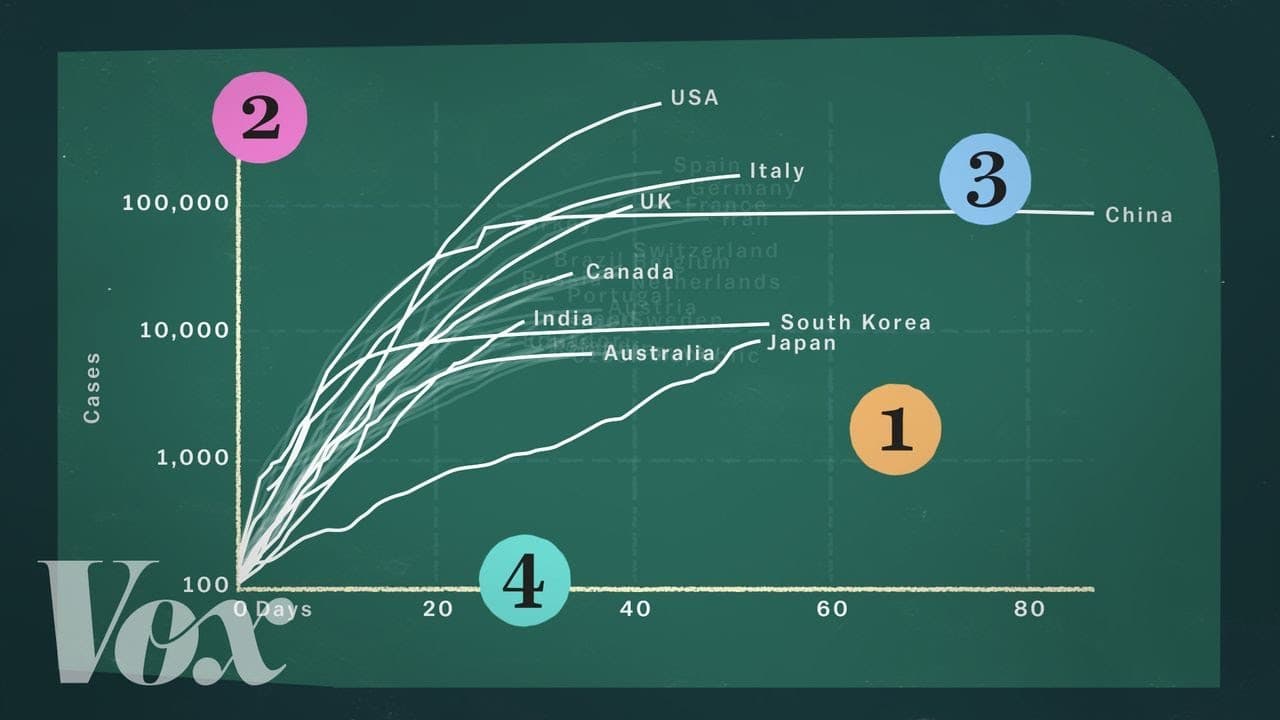
You may have seen this chart since the start of the coronavirus pandemic. In one image, it appears to capture the state of each nation’s battle in the global war against the virus. But like all data visualizations, its design tends to emphasize some things and hides others. So here are 4 things we need to know to understand this chart. First, this... Read More
Key Insights
- The chart only shows confirmed coronavirus cases, not all cases, influencing how we perceive the outbreak's severity in each country.
- Testing levels significantly affect the chart's representation; countries testing more will appear to have larger outbreaks.
- The chart uses a logarithmic scale, which compresses data at higher values, potentially downplaying the seriousness of large numbers.
- A linear scale might show a misleadingly optimistic view of some countries' situations compared to a log scale.
- Population size is not accounted for, skewing the perception of outbreak severity in smaller versus larger countries.
- The chart's x-axis is based on days since 100 cases, which can obscure the timeline of the pandemic's spread across countries.
- Data visualization choices can shape public perception, emphasizing the need for careful interpretation of charts.
- Early action is crucial in a pandemic, and the chart's design may obscure how quickly different countries responded.
Install to Summarize YouTube Videos and Get Transcripts
Explore YouTube Video Summarizer or Get YouTube Transcript Extractor
Questions & Answers
Q: Why does the chart only show confirmed cases?
The chart focuses on confirmed cases because they are the most reliable data available, but this approach has limitations. It means the chart reflects not only the outbreak's severity but also a country's testing capacity. Countries with more extensive testing will appear to have larger outbreaks, potentially skewing perceptions of the situation.
Q: How does the logarithmic scale affect the chart's interpretation?
The logarithmic scale compresses data at higher values, which can make large numbers of cases appear less severe. This scale is useful for showing exponential growth, a key feature of infectious disease spread, but it can downplay the seriousness of large outbreaks by making them visually less prominent on the chart.
Q: What is the impact of not accounting for population size in the chart?
Not accounting for population size can skew perceptions of outbreak severity. Smaller countries may appear to have larger outbreaks relative to their size, while larger countries might seem less affected. This can lead to misunderstandings about which countries are struggling more with the pandemic, as the raw numbers are not normalized by population.
Q: Why is the x-axis based on days since 100 cases?
The x-axis is based on days since 100 cases to allow for a direct comparison of outbreak trajectories across countries. However, this approach can obscure the timeline of the pandemic's spread, as it does not account for when the pandemic began in each country, potentially misleading viewers about the speed and effectiveness of responses.
Q: How can testing levels influence the chart's depiction of outbreaks?
Testing levels can greatly influence the chart's depiction of outbreaks because countries with more aggressive testing will report more confirmed cases. This can make their outbreaks appear larger, even if the actual spread of the virus is not as severe, leading to potential misinterpretations of the data.
Q: What are the limitations of using confirmed case data in visualizations?
Using confirmed case data in visualizations limits the understanding of the pandemic's true scope, as it does not capture unreported or asymptomatic cases. This reliance on confirmed cases can lead to underestimations of the virus's spread and mislead policymakers and the public about the severity of the situation.
Q: Why might the chart's design obscure the effectiveness of early interventions?
The chart's design, particularly its x-axis based on days since 100 cases, might obscure the effectiveness of early interventions by not clearly showing when the pandemic began in each country. This can lead to misunderstandings about how quickly countries responded and the impact of those early actions on controlling the virus's spread.
Q: What is the significance of understanding data visualization choices?
Understanding data visualization choices is crucial because these choices shape public perception and can influence decision-making. Misinterpretations due to design elements like scales and axes can lead to incorrect conclusions about the pandemic's severity and the effectiveness of responses, highlighting the need for critical analysis of visual data.
Summary & Key Takeaways
-
The video explains the potential for misinterpretation of a popular coronavirus chart due to its design choices, such as focusing on confirmed cases and using a logarithmic scale. These choices can obscure the true scope of the pandemic and the effectiveness of countries' responses.
-
The chart's use of a logarithmic scale compresses data at higher values, potentially downplaying the number of cases in countries with large outbreaks. Additionally, the chart does not account for population size, which can skew the perceived severity of outbreaks in smaller countries.
-
The x-axis of the chart plots days since 100 confirmed cases, which can obscure the timeline of the pandemic's spread and the impact of early interventions. The video emphasizes the importance of understanding these visualization choices to avoid misleading conclusions.
Read in Other Languages (beta)
Share This Summary 📚
Summarize YouTube Videos and Get Video Transcripts with 1-Click
Try YouTube Summary with ChatGPT & Claude or YouTube Transcript Generator
Explore More Summaries from Vox 📚




Summarize YouTube Videos and Get Video Transcripts with 1-Click
Try YouTube Summary with ChatGPT & Claude or YouTube Transcript Generator