Stanford Seminar - Considerations for Human-Robot Collaboration
TL;DR
This comprehensive analysis explores the considerations for effective human-robot collaboration, including the use of wearables, sensor technologies, and intelligent robotics.
Transcript
today we're going to talk about considerations for human robot collaboration so i direct the assistive robotics and manipulation laboratory the arm lab where our mission is to develop assistive robotics uh that are intelligent assistive collaborative and are able to improve human life the main area of our focus covers robotic assistance which you c... Read More
Key Insights
- 🤖 Collaborative robots represent a pinnacle point in the evolution of robotics, enabling robots to work alongside humans in uncertain environments.
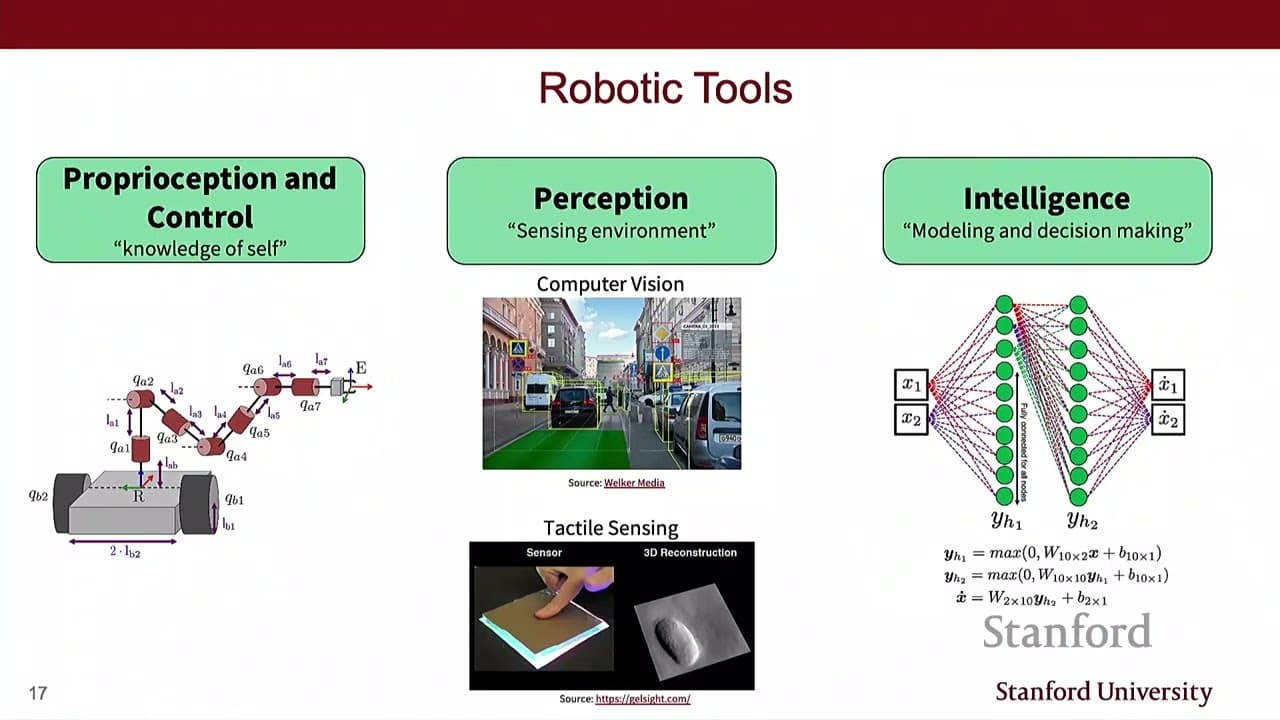
- 🎮 Sensor technologies, such as vision-based sensors and tactile sensors, play a crucial role in improving human-robot collaboration by providing perception and control capabilities.
- 🤖 Effective communication, task understanding, and modeling of human behavior are essential for successful human-robot collaboration.
- 🤖 Augmented reality can enhance the collaboration between humans and robots by providing a visual interface for communication, task demonstration, and feedback.
- 🦾 Intelligent prosthetic arms and wearable sensors have the potential to augment human abilities and enhance quality of life.
- 🤖 Modeling human behavior and intent can improve the prediction and adaptability of robots in collaborative tasks.
- 🤖 The development of advanced sensor technologies, such as high-resolution tactile sensors, can further enhance the capabilities of robots in human-robot collaboration.
Install to Summarize YouTube Videos and Get Transcripts
Explore YouTube Video Summarizer or Get YouTube Transcript Extractor
Questions & Answers
Q: What are the main areas of focus in the study of human-robot collaboration?
The main areas of focus are robotic assistance, intelligent wearables, and connected devices. These areas aim to improve human life by developing robots that can work alongside humans and provide situational awareness.
Q: How does the evolution of robotics contribute to collaborative robotics?
The evolution of robotics has led to the rise of collaborative robots that can operate in uncertain environments and work alongside humans. These robots have the ability to adapt to changing conditions, collaborate with teammates, and complete complex tasks efficiently.
Q: What are the key challenges in human-robot collaboration?
Some key challenges include effective communication between humans and robots, the development of sensor technologies for perception and control, and the modeling of human behavior and task understanding for effective collaboration.
Q: How can tactile sensing be used to improve human-robot collaboration?
Tactile sensing can provide valuable information about forces and contact with the environment. It can help robots interact with the environment and humans, anticipate actions, and enhance their ability to perform complex tasks in collaboration with humans.
Summary & Key Takeaways
-
The focus of the content is on considerations for human-robot collaboration, including robotic assistance, intelligent wearables, and connected devices.
-
The evolution of robotics has led to the rise of collaborative robots that can operate in uncertain environments and work alongside humans.
-
The content explores the challenges and opportunities of human-robot collaboration, highlighting the importance of effective communication, perception, and modeling of tasks and teammates.
Read in Other Languages (beta)
Share This Summary 📚
Summarize YouTube Videos and Get Video Transcripts with 1-Click
Try YouTube Summary with ChatGPT & Claude or YouTube Transcript Generator
Explore More Summaries from Stanford Online 📚





Summarize YouTube Videos and Get Video Transcripts with 1-Click
Try YouTube Summary with ChatGPT & Claude or YouTube Transcript Generator