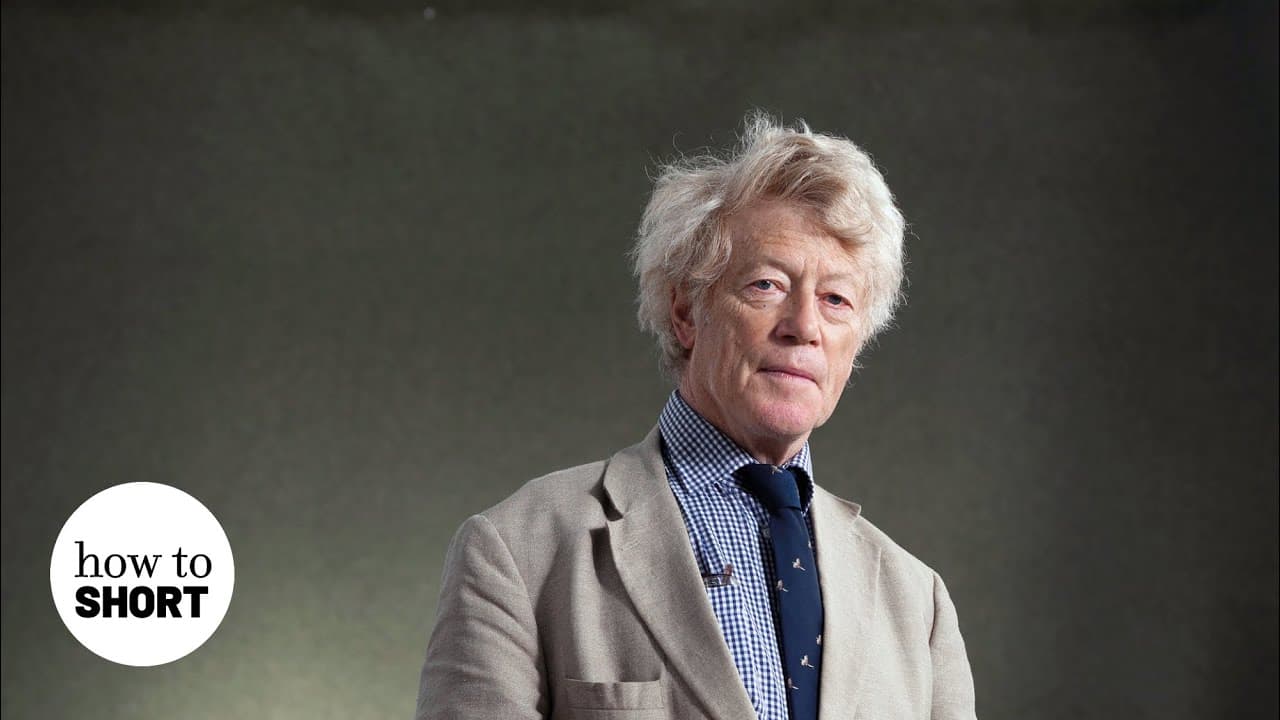
Why Roger Scruton Wants Brexit
TL;DR
A philosophical analysis of Brexit focusing on trust, sovereignty, identity, and migration.
Transcript
now before just interjection we're now going to have Roger taking us back onto a far higher plane Rogers as daniel says probably Britain's top flight intellectual and philosopher he took one asked him how I should describe him tonight he wanted me to tell you that he's just written the definitive study of vogner's Ring cycle thank you very much and... Read More
Key Insights
- 🔌 Democracy should be represented through elected officials, not by plebiscites like referendums.
- 🌍 National identity and trust are closely linked to the nation-state and its legal system.
- 🛃 Migration can challenge trust and community cohesion by disrupting common customs and languages.
- 🍝 The legacy of past treaties and decisions can impact current political realities and sovereignty.
- 🌍 The nation-state provides a unifying force despite differences in religion, class, and ideals.
- 🙈 The common law legal system in the UK is seen as a form of rule from below, fostering trust and adaptability.
- 🧠 The impact of migration on infrastructure and brain drain in Eastern European countries highlights the complexities of EU membership.
Install to Summarize YouTube Videos and Get Transcripts
Explore YouTube Video Summarizer or Get YouTube Transcript Extractor
Questions & Answers
Q: Why does the speaker criticize the use of referendums to decide complex political issues like Brexit?
The speaker believes referendums are not the appropriate way to make decisions in a representative democracy, as they bypass the expertise and accountability of elected officials.
Q: How does the speaker connect national identity and belonging to the concept of the nation-state?
The speaker argues that the nation-state, with its unique legal system like common law, is essential for fostering a sense of belonging and trust among its citizens.
Q: What role does migration play in the erosion of trust within communities?
The speaker suggests that massive migration can disrupt trust by challenging common customs and language, leading to a breakdown of the shared sense of identity and belonging.
Q: How does the speaker view the impact of EU membership, particularly in Eastern European countries like Poland?
The speaker highlights the economic and social challenges faced by countries like Poland due to freedom of movement within the EU, resulting in brain drain and infrastructure strain.
Summary & Key Takeaways
-
The speaker argues that democracy should be represented through parliament, not by referendums, and the issue of EU membership has been neglected by elected officials for decades.
-
The discussion shifts to long-term questions of national identity and belonging, emphasizing trust in institutions like the nation-state and common law.
-
The impact of migration on trust and the erosion of a collective sense of community is highlighted, drawing parallels with totalitarian control tactics.
Read in Other Languages (beta)
Share This Summary 📚
Summarize YouTube Videos and Get Video Transcripts with 1-Click
Try YouTube Summary with ChatGPT & Claude or YouTube Transcript Generator
Explore More Summaries from How To Academy Mindset 📚
Summarize YouTube Videos and Get Video Transcripts with 1-Click
Try YouTube Summary with ChatGPT & Claude or YouTube Transcript Generator