Allied soldiers Crucified by Germans in WW1
TL;DR
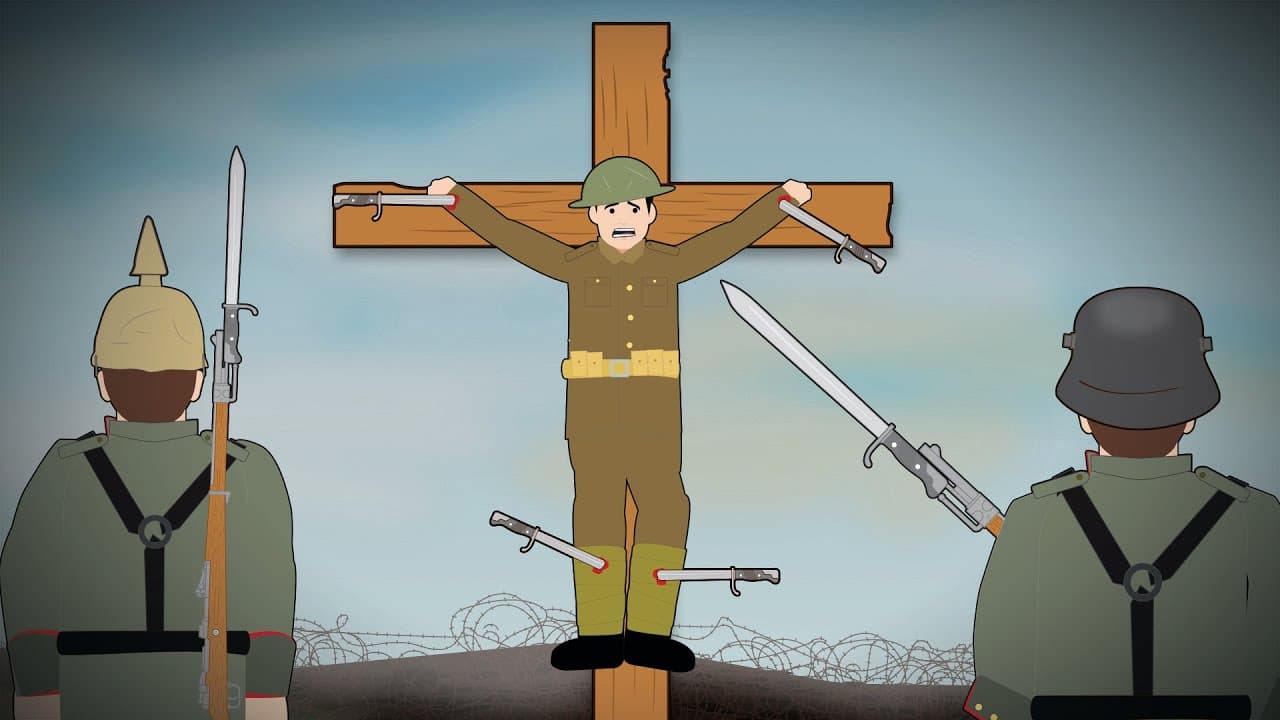
During World War One, rumors of a Canadian Soldier being crucified by the Germans circulated, serving as effective propaganda for the British and Allied Forces.
Transcript
the World War One crucifixion 1915 World War One ran from 1914 to 1918 and was one of the bloodiest conflicts in history it was also one of the most brutal employing the very latest high-tech weapons capable of lethal destruction such as tanks deadly poisoned gas rapid firing machine guns that could fire as many as 10 rounds per second and giant Ra... Read More
Key Insights
- 🇪🇭 World War One was characterized by brutal warfare, resulting in a stalemate on the Western Front.
- ▶️ Rumors and propaganda played a significant role in shaping public opinion during the war.
- 🛟 The crucifixion myth served as a potent propaganda tool that stirred emotions and rallied support for the Allied Forces.
- 🛄 Despite extensive investigations, no concrete evidence was found to support the crucifixion claims.
- 🫱 The myth continued to be perpetuated even after the war, with a sculpture depicting the crucifixion being created and widely publicized.
- 🥺 The crucifixion myth caused tensions between the Canadian and German governments, leading to investigations and demands for evidence.
- 😒 The myth's use as propaganda showcased how perception and misinformation could influence public sentiment and support for the war effort.
Install to Summarize YouTube Videos and Get Transcripts
Explore YouTube Video Summarizer or Get YouTube Transcript Extractor
Questions & Answers
Q: How did the myth of the World War One crucifixion originate?
The myth emerged amidst the chaos of combat on the Western Front, with vague rumors of a captured Canadian Soldier being crucified by the Germans. These rumors gained traction through media coverage and propaganda efforts.
Q: How did the British government respond to the crucifixion allegations?
While the British government initially claimed to have no information, they promised to investigate the claims urgently. The Times published articles featuring witnesses to the event, amplifying the outcry.
Q: Did any evidence support the crucifixion claims?
Multiple versions of the story emerged, but none could be verified. Witnesses' accounts varied, and even the identified soldier denied his involvement. Despite investigations, no evidence was found to substantiate the myth.
Q: How was the crucifixion myth used as propaganda?
The crucifixion became a powerful propaganda tool for the British and Allied Forces. It was utilized to incite public outrage, gain support, and sell war bonds in the United States.
Summary & Key Takeaways
-
World War One was a brutal conflict employing advanced weaponry and trench warfare, resulting in a devastating stalemate on the Western Front.
-
Early on, fantastical stories of supernatural angels and a captured Canadian Soldier's crucifixion emerged, serving as propaganda to rally public support.
-
The British government responded to the outcry, promising to investigate the alleged atrocities, but the crucifixion was never substantiated.
Read in Other Languages (beta)
Share This Summary 📚
Summarize YouTube Videos and Get Video Transcripts with 1-Click
Try YouTube Summary with ChatGPT & Claude or YouTube Transcript Generator
Explore More Summaries from Simple History 📚
Summarize YouTube Videos and Get Video Transcripts with 1-Click
Try YouTube Summary with ChatGPT & Claude or YouTube Transcript Generator