The growing North Korean nuclear threat, explained [Updated]
TL;DR
North Korea's ICBM could reach the US, escalating tensions.
Transcript
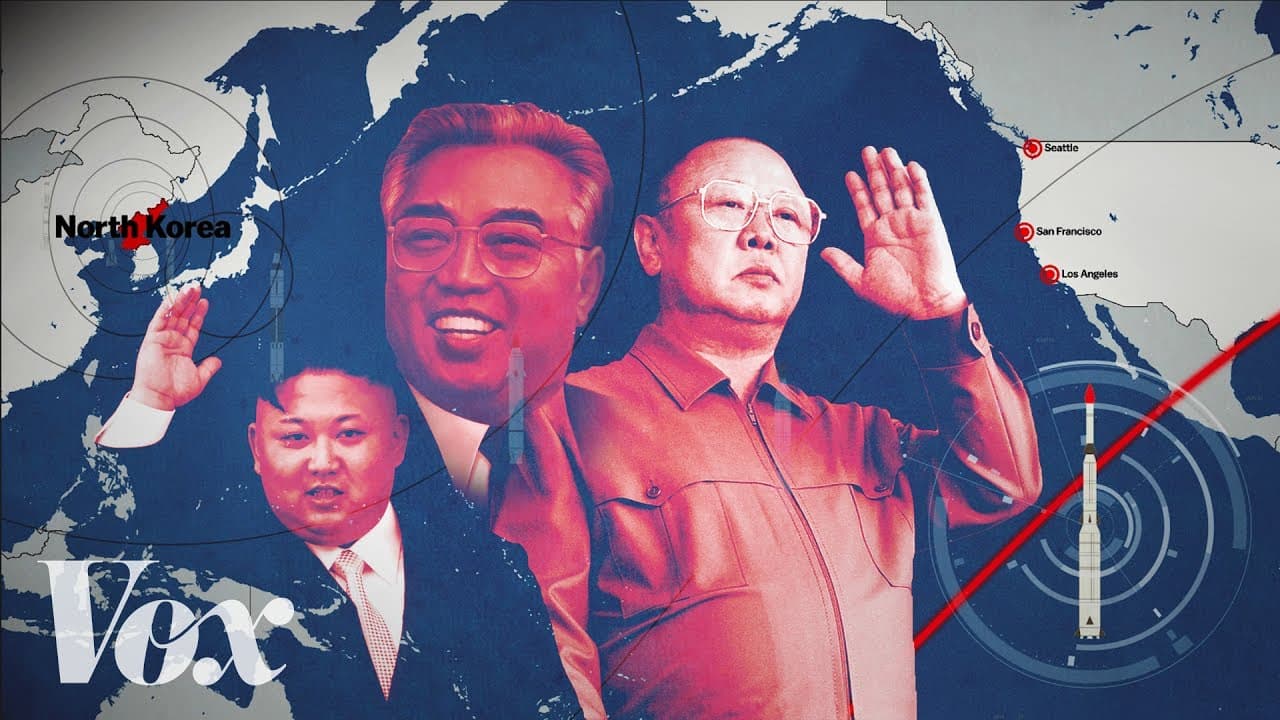
In the last year, North Korea has been launching a lot of missiles. They're all just tests, but they're meant to send a message. North Korea is armed and dangerous. They've demonstrated missiles that can destroy Seoul and Tokyo. Hit US bases in the Pacific. And now one that can reach Alaska. US officials have confirmed that over night North Korea h... Read More
Key Insights
- North Korea has successfully tested the Hwasong-14, its first intercontinental ballistic missile (ICBM), capable of reaching Alaska, marking a significant advancement in its missile technology.
- The development of the Hwasong-14 ICBM is part of North Korea's strategy to ensure its security by having a credible nuclear deterrent, especially after losing the Soviet Union's protection.
- US efforts to curb North Korea's nuclear ambitions have failed under multiple administrations, as North Korea views nuclear weapons as essential for regime survival.
- North Korea's missile tests serve dual purposes: improving their technology and sending a political message of deterrence to South Korea, Japan, and the US.
- The inability to miniaturize nuclear warheads for the Hwasong-14 currently limits North Korea's capability to strike the US, though the ICBM test indicates rapid technological progress.
- North Korea's pursuit of ICBMs aims to shift the balance of power, potentially deterring US intervention by threatening American cities, which could destabilize regional alliances.
- The potential for nuclear proliferation in East Asia increases as South Korea and Japan might consider developing their own nuclear arsenals if North Korea's ICBM threat grows.
- China plays a crucial role in North Korea's economy, and US diplomatic efforts focus on persuading China to leverage its influence to halt North Korea's ICBM development.
Install to Summarize YouTube Videos and Get Transcripts
Explore YouTube Video Summarizer or Get YouTube Transcript Extractor
Questions & Answers
Q: Why is North Korea developing ICBMs?
North Korea is developing ICBMs to ensure its security by establishing a credible nuclear deterrent. The regime sees nuclear capabilities as vital for survival, especially after witnessing the fates of Iraq and Libya, where leaders without nuclear weapons were overthrown. The ICBM program aims to deter US intervention by threatening American cities.
Q: What is the significance of the Hwasong-14 test?
The Hwasong-14 test is significant as it demonstrates North Korea's ability to launch an intercontinental ballistic missile capable of reaching Alaska. This test marks a major advancement in North Korea's missile technology, showcasing its progress toward developing a long-range nuclear strike capability, despite current limitations in warhead miniaturization.
Q: How has the US responded to North Korea's missile tests?
The US has responded to North Korea's missile tests with a combination of diplomatic efforts and sanctions. Multiple administrations have attempted different strategies, including negotiations, threats, and waiting tactics, but none have successfully halted North Korea's nuclear advancements. The US is also pressuring China to use its influence over North Korea to curb its missile development.
Q: What challenges does North Korea face with its ICBM program?
North Korea faces significant challenges with its ICBM program, particularly in miniaturizing nuclear warheads to fit the Hwasong-14 missile. Without this capability, the missile cannot deliver a nuclear payload effectively. Additionally, North Korea must continue improving its missile technology to ensure reliability and accuracy in long-range strikes.
Q: How does North Korea's missile capability affect regional security?
North Korea's missile capability significantly impacts regional security by increasing tensions and the potential for conflict. The ability to target South Korea, Japan, and US bases in the Pacific with short and medium-range missiles serves as a deterrent, while the development of ICBMs threatens to destabilize alliances and prompt nuclear proliferation in East Asia.
Q: What role does China play in North Korea's missile development?
China plays a crucial role in North Korea's missile development as a key economic partner and ally. China's continued trade and diplomatic relations with North Korea provide the regime with resources and support. The US is urging China to leverage its influence to pressure North Korea into halting its ICBM program, which is essential for maintaining regional stability.
Q: What are the potential consequences of North Korea succeeding in its ICBM program?
If North Korea succeeds in its ICBM program, it could alter the regional power balance by deterring US intervention and potentially breaking up alliances with South Korea and Japan. This scenario might lead to nuclear proliferation as these countries could develop their own nuclear arsenals, challenging the global non-proliferation efforts and increasing the risk of nuclear conflict.
Q: Why have US efforts to stop North Korea's nuclear program failed?
US efforts to stop North Korea's nuclear program have failed due to the regime's determination to maintain its nuclear deterrent for security. Diplomatic strategies, including negotiations, threats, and sanctions, have been ineffective as North Korea prioritizes its survival over international pressure. The regime's strategic calculations are influenced by historical events where non-nuclear states faced regime change.
Summary & Key Takeaways
-
North Korea's successful test of the Hwasong-14 ICBM marks a significant milestone in its missile capabilities, potentially allowing it to reach Alaska, although challenges remain in miniaturizing nuclear warheads for delivery.
-
The development of the ICBM is driven by North Korea's desire for a credible nuclear deterrent, a lesson learned from the fates of Iraq and Libya, and aims to shift the regional power balance.
-
Efforts by the US to halt North Korea's nuclear advancements have been unsuccessful, highlighting the need for strategic diplomacy, particularly with China, to prevent further escalation and potential nuclear proliferation in the region.
Read in Other Languages (beta)
Share This Summary 📚
Summarize YouTube Videos and Get Video Transcripts with 1-Click
Try YouTube Summary with ChatGPT & Claude or YouTube Transcript Generator
Explore More Summaries from Vox 📚




Summarize YouTube Videos and Get Video Transcripts with 1-Click
Try YouTube Summary with ChatGPT & Claude or YouTube Transcript Generator