New Science About the Nature of Consciousness
TL;DR
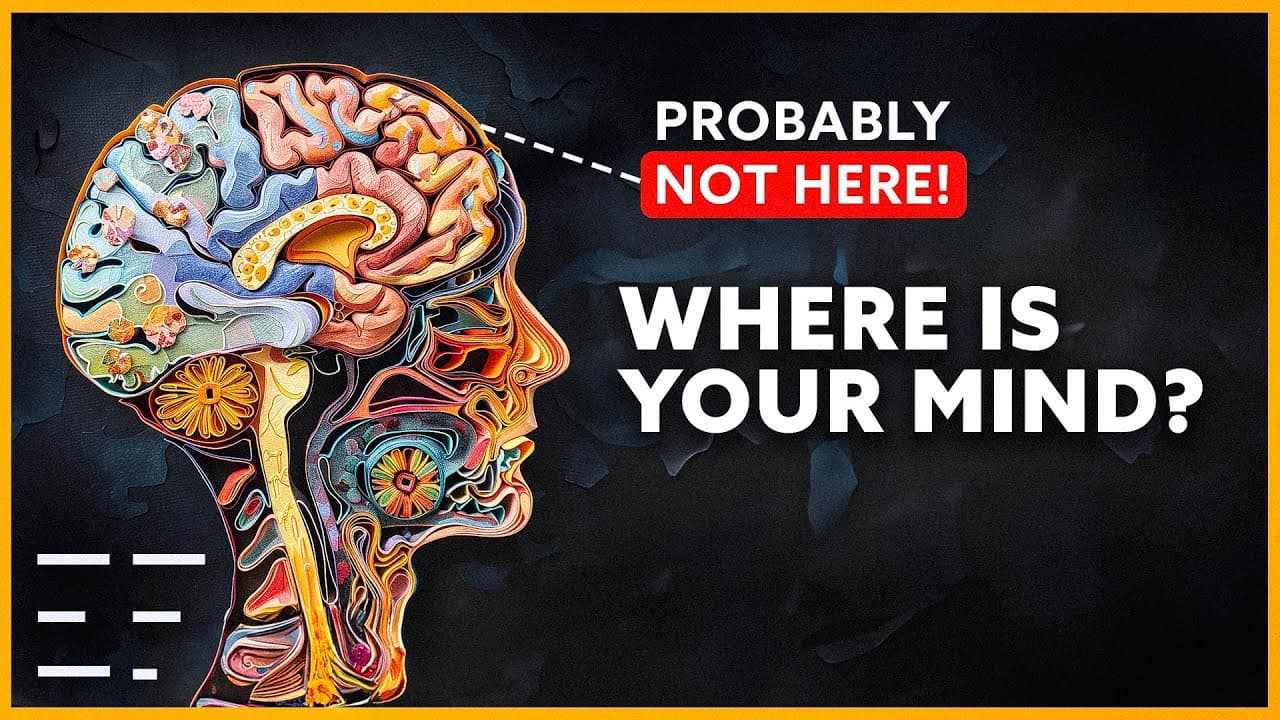
Recent scientific evidence challenges the belief that the brain generates the mind, suggesting a different relationship between the two.
Transcript
. Where is your mind? Is it inside your body? Probably in your head, somewhere behind the eyes, right? It is commonly believed that our experiences are produced by this big organ in our heads called the brain. But recent scientific evidence suggests something else… We’ve known that most experiences correspond to certain patterns of brain activati... Read More
Key Insights
- 🤯 Brain activation patterns correspond to experiences but do not fully explain the richness of the mind.
- 🧠 Reductions in brain activity can result in more intense experiences, challenging the idea that the brain solely generates consciousness.
- 🧠 Near-death experiences and brain injuries have demonstrated rich sensations even with minimal brain activity.
- 😒 The use of psychedelic substances has shown that intense experiences can occur while the brain's activity decreases.
- 🧠 Meditation techniques that reduce brain metabolism can induce trance-like states, suggesting a complex relationship between the brain and consciousness.
- 🧠 The current understanding of the brain as the sole generator of consciousness may need to be reevaluated.
- 🤯 The relationship between the brain and the mind is fundamental to future developments in science, philosophy, and our way of life.
Install to Summarize YouTube Videos and Get Transcripts
Explore YouTube Video Summarizer or Get YouTube Transcript Extractor
Questions & Answers
Q: Is the brain the sole producer of the mind?
While it is commonly believed, scientific evidence suggests a different relationship between the brain and the mind, challenging the idea that the brain is the generator of consciousness.
Q: How are reductions in brain activity related to richer experiences?
Studies have shown that certain reductions or impairments of normal brain activity correlate with intensified experiences, such as the use of psychedelic substances and brain injuries.
Q: How does near-death experiences relate to the brain's role in consciousness?
Despite minimal brain activity during cardiac arrest, individuals who recover from near-death experiences often describe extremely rich and life-changing sensations, suggesting that the brain may not be the sole generator of consciousness.
Q: Can meditation alter the relationship between the brain and the mind?
Some individuals practicing meditation achieve trance-like states by reducing brain metabolism through hyperventilation techniques, further challenging the notion that the brain solely generates consciousness.
Summary & Key Takeaways
-
Experiences correspond to brain activation patterns, but understanding how the brain produces the richness of the mind remains a mystery.
-
Reductions or impairments of normal brain activity can result in richer and intense experiences.
-
Evidence from psychedelic substances, brain injuries, near-death experiences, and meditation suggests an alternative relationship between the brain and the mind.
Read in Other Languages (beta)
Share This Summary 📚
Summarize YouTube Videos and Get Video Transcripts with 1-Click
Try YouTube Summary with ChatGPT & Claude or YouTube Transcript Generator
Explore More Summaries from Essentia Foundation 📚



Summarize YouTube Videos and Get Video Transcripts with 1-Click
Try YouTube Summary with ChatGPT & Claude or YouTube Transcript Generator