Pi is Beautiful - Numberphile
TL;DR
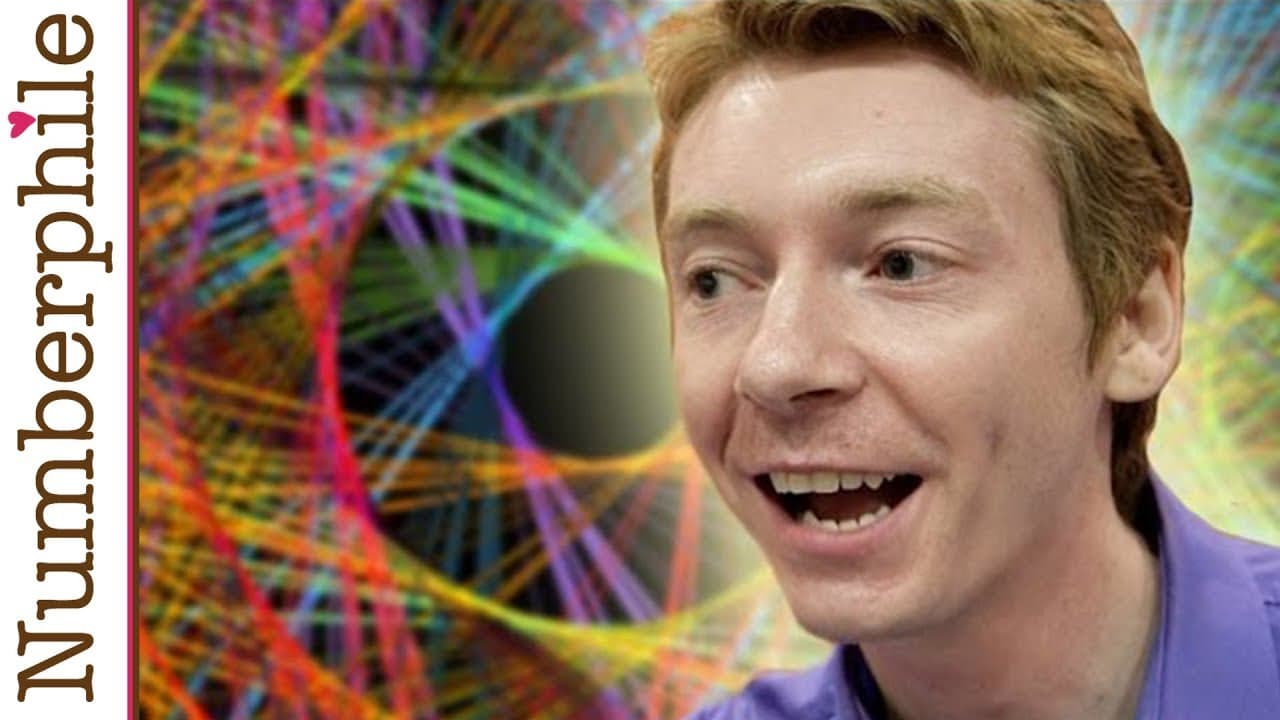
Transforming data into colorful, artistic representations by Martin Krzywinski for visual enjoyment.
Transcript
Today we're gonna have a look at data visualisation. Data visualisation is a way of representing information in a artistic way, in an interesting way; scientists might be happy with scatter plots and black and white boring graphs but if you want to communicate information and data to the public you want it to be fun, you want it to be enjoyable, yo... Read More
Key Insights
- 🥰 Data visualization blends art with information representation, making it visually appealing.
- 🤨 Martin Krzywinski's work showcases the beauty and randomness found in mathematical constants like pi.
- ❓ Connecting digits with colors and patterns in data visualization crafts intricate visual displays.
- 🇲🇫 Martin compares mathematical constants to reveal accidental similarities through art pieces.
- 💁 Data visualization aims to enhance understanding and enjoyment of complex information for broader audiences.
- 🏵️ Rose diagrams by Florence Nightingale are early examples of visually representing statistical data.
- 🥰 Exploring the beauty in randomness through art can lead to intriguing visual insights.
Install to Summarize YouTube Videos and Get Transcripts
Explore YouTube Video Summarizer or Get YouTube Transcript Extractor
Questions & Answers
Q: How does Martin Krzywinski transform the digits of pi into colorful art?
Martin assigns different colors to each digit of pi, creating visually stunning posters that reflect the randomness of the number. He even connects adjacent digits with the same color to form intriguing patterns.
Q: What is the significance of data visualization in communicating information to the public?
Data visualization enhances understanding and enjoyment of information by making it visually engaging. Through artful representation, complex data becomes more accessible to a wider audience.
Q: How does Martin Krzywinski compare pi with randomly generated numbers in his art?
By analyzing the patterns created by pi versus random numbers, Martin showcases how pi's seemingly random sequence aligns with artificially generated ones, all displayed artistically.
Q: What is the concept behind Martin Krzywinski's accidental similarity number art pieces?
Martin explores the alignment of special mathematical numbers like pi, the golden ratio, and e to find accidental similarities among them, creating unique art based on their chance digit alignments.
Summary & Key Takeaways
-
Data visualization involves interpreting information artistically.
-
Martin Krzywinski creates visually appealing representations of numbers, like pi.
-
Connecting digits through colors and patterns adds aesthetic value to data visualization.
Read in Other Languages (beta)
Share This Summary 📚
Summarize YouTube Videos and Get Video Transcripts with 1-Click
Try YouTube Summary with ChatGPT & Claude or YouTube Transcript Generator
Explore More Summaries from Numberphile 📚





Summarize YouTube Videos and Get Video Transcripts with 1-Click
Try YouTube Summary with ChatGPT & Claude or YouTube Transcript Generator