The Native American Struggle for Civil Rights
TL;DR
This video explores the struggle for equality and civil rights faced by Native Americans, focusing on the decline in population, conflicts with European settlers, the erosion of tribal sovereignty, and the fight for recognition of treaty rights and citizenship.
Transcript
hey everyone and welcome back this is one of a series of videos looking at the expansion of civil rights in the United States in this video we're going to explore the struggle for equality and civil rights by Native Americans now a useful starting point is to remember that the Native American population living in what is now the United States prior... Read More
Key Insights
- 🥺 European colonization led to a significant decline in the Native American population through the introduction of diseases, violent conflicts, forced displacement, and disruption of their traditional ways of life.
- 🏈 Native American identities were defined differently than other minority groups, with the US government erasing Native American culture and attempting to diminish the native population over time.
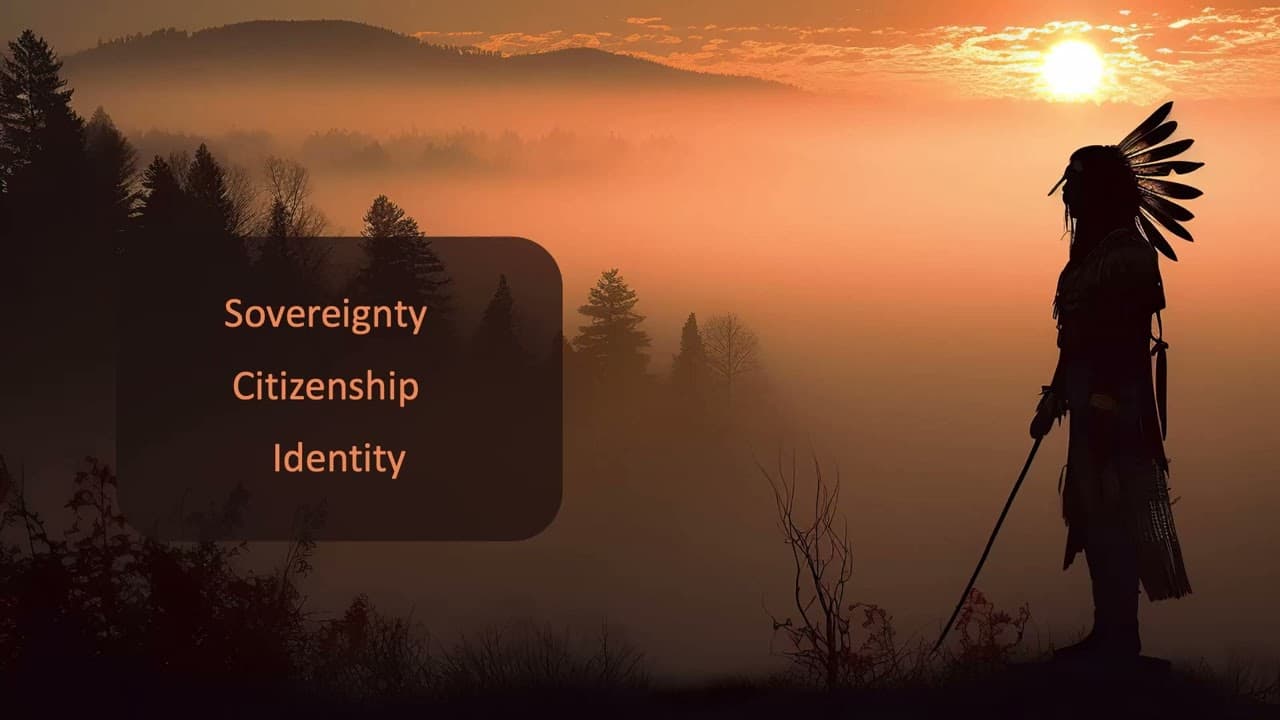
- 🗯️ The struggle for Native American civil rights has focused on sovereignty, treaty rights, citizenship, cultural preservation, political autonomy, and the recognition and protection of tribal land rights.
- 🇦🇸 The American Indian Movement (AIM) played a crucial role in advocating for Native American civil rights through protests, occupations, and lobbying efforts.
- 🇮🇴 Legislation such as the Indian Citizenship Act, Indian Self-Determination and Education Assistance Act, American Indian Religious Freedom Act, and Violence Against Women Reauthorization Act have expanded Native American civil rights and protections.
- 🗯️ Cultural preservation and language revitalization are integral to the Native American civil rights struggle, as it helps maintain cultural identity and community cohesion.
- 😀 Political autonomy and sovereignty are fundamental aspects of Native American civil rights, allowing tribes to govern themselves and make decisions that address the unique needs and challenges faced by their communities.
Install to Summarize YouTube Videos and Get Transcripts
Explore YouTube Video Summarizer or Get YouTube Transcript Extractor
Questions & Answers
Q: What were the main factors that led to the decline of the Native American population?
The decline of the Native American population was primarily caused by the introduction of infectious diseases, violent conflicts with European settlers, forced displacement, and disruption of their traditional ways of life.
Q: How did the US government approach native identities differently compared to other minority groups?
The US government defined black identity through the "one drop rule," considering anyone with African ancestry as black. In contrast, Native American identity was determined based on blood quantum, leading to the gradual erasure of native persons over time.
Q: How did the US government suppress Native American culture?
The US government attempted to erase Native American culture by forcibly sending children to boarding schools to westernize and christianize them, suppressing Indigenous religious and cultural practices, destroying traditional food systems like hunting, and suppressing native languages.
Q: What were some major legal victories and legislation that expanded Native American civil rights?
Some major legal victories include the Supreme Court ruling in "wer v. Georgia" recognizing the sovereignty of the Cherokee Nation and the passage of the Indian Citizenship Act in 1924. Significant legislation includes the Indian Self-Determination and Education Assistance Act, the American Indian Religious Freedom Act, and the Native American Graves Protection and Repatriation Act.
Summary & Key Takeaways
-
Prior to European colonization, Native American tribes and nations were diverse and spread across what is now the United States, with population estimates ranging from 2 million to 7 million people.
-
European colonization led to a decline in the Native American population through the introduction of infectious diseases, violent conflicts, forced displacement, and the disruption of indigenous economies and social structures.
-
Unique aspects of the Native American civil rights struggle include the centrality of sovereignty and treaty rights, and the issue of citizenship, both of which have shaped their fight for equality and recognition.
Read in Other Languages (beta)
Share This Summary 📚
Summarize YouTube Videos and Get Video Transcripts with 1-Click
Try YouTube Summary with ChatGPT & Claude or YouTube Transcript Generator
Explore More Summaries from Noah Zerbe 📚



Summarize YouTube Videos and Get Video Transcripts with 1-Click
Try YouTube Summary with ChatGPT & Claude or YouTube Transcript Generator