The first movie with CGI
TL;DR
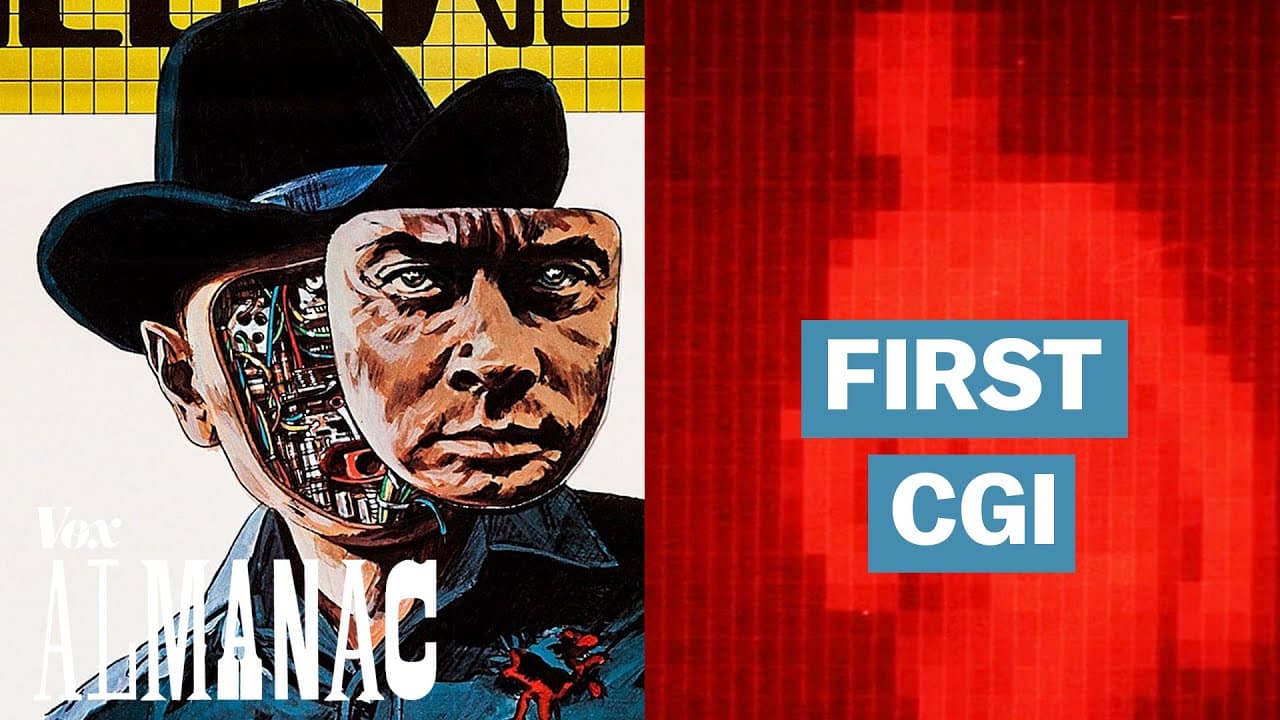
Westworld's CGI was inspired by NASA's Mars photos.
Transcript
Both of these images are groundbreaking. And connected. On the left, you’ve got the world through Yul Brynner’s eyes in Westworld, the 1973 movie where he plays a robot cowboy. This is not a spoiler. I mean, he’s a robot on the poster, and if you’ve seen the HBO series, you know that everything is a robot. It’s this pixelated robot’s-eye-view that ... Read More
Key Insights
- Westworld, a 1973 film, was groundbreaking for using CGI to depict a robot's point of view, inspired by NASA's Mars photos.
- The CGI technique in Westworld was influenced by the data transmission methods used by NASA's Mariner 4 mission to Mars.
- John Whitney Jr. adapted NASA's image processing techniques to create the pixelated robot vision in Westworld, a pioneering CGI effort.
- Creating CGI for Westworld was a labor-intensive process, taking about eight hours to scan a ten-second sequence.
- Actors in Westworld wore contrasting clothing and makeup to enhance the clarity of CGI effects in the film.
- The success of Westworld's CGI was a result of adapting scientific methods from NASA, showcasing the intersection of science and film.
- The Mariner program's influence on Westworld highlights how non-Hollywood innovations can drive cinematic advancements.
- Futureworld, the sequel to Westworld, continued to explore CGI, contributing to the development of 3D CGI faces.
Install to Summarize YouTube Videos and Get Transcripts
Explore YouTube Video Summarizer or Get YouTube Transcript Extractor
Questions & Answers
Q: What inspired the CGI used in Westworld?
The CGI in Westworld was inspired by the images transmitted by NASA's Mariner 4 mission to Mars. The mission sent back digital photos of Mars, which were processed using a complex system of computers. This method of converting numerical data into images served as a technical model for Westworld's CGI.
Q: How did John Whitney Jr. contribute to the CGI in Westworld?
John Whitney Jr. played a crucial role in developing CGI for Westworld by adapting the image processing techniques used by NASA's Jet Propulsion Laboratory. He utilized the scanning and digitizing methods from the Mariner Mars flybys to create the pixelated robot vision seen in the film, marking a historic first for CGI in cinema.
Q: What challenges were faced in creating CGI for Westworld?
Creating CGI for Westworld was a laborious process, requiring about eight hours to scan a ten-second sequence. The designers had to ensure the CGI action was clear by having actors wear contrasting clothing and makeup. Additionally, the technology of the time was limited, making the process time-consuming and expensive.
Q: How did NASA's Mariner program influence Westworld's CGI?
NASA's Mariner program influenced Westworld's CGI by providing a method for converting digital data into images. The Mariner 4 mission transmitted Mars photos as binary code, which were then processed into images. This technique inspired Westworld's creators to use similar methods to depict a robot's perspective, pioneering CGI in film.
Q: Why was CGI chosen over practical effects for Westworld?
CGI was chosen for Westworld to create a unique robot's-eye-view that practical effects couldn't achieve. Inspired by NASA's scientific advancements, the filmmakers wanted to explore new possibilities in visual effects, paving the way for future innovations and demonstrating the potential of CGI to transform cinematic storytelling.
Q: What role did clothing and makeup play in Westworld's CGI?
In Westworld, clothing and makeup played a vital role in enhancing CGI clarity. Actors wore contrasting outfits and makeup to stand out against the background, ensuring that the pixelated CGI effects were visible and effective. This attention to detail was crucial in successfully depicting the robot's perspective in the film.
Q: How did Westworld's CGI impact future films?
Westworld's CGI had a lasting impact on future films by demonstrating the potential of computer-generated imagery in storytelling. It inspired filmmakers to explore new visual effects techniques and paved the way for more advanced CGI applications, influencing the evolution of film technology and expanding the possibilities for cinematic creativity.
Q: What is the significance of Futureworld in CGI history?
Futureworld, the sequel to Westworld, is significant in CGI history as it continued to explore computer-generated imagery, contributing to the development of 3D CGI faces. Its influence on CGI technology highlights the ongoing impact of Westworld's innovations and the continued exploration of digital effects in cinema.
Summary & Key Takeaways
-
Westworld's use of CGI was inspired by the Mars Mariner flyby, which transmitted the first close-up photos of Mars using digital data. This method was adapted to create a robot's perspective in the film, marking a significant milestone in visual effects.
-
John Whitney Jr., a designer for Westworld, utilized techniques from NASA's Jet Propulsion Laboratory to develop CGI. This involved scanning production footage and converting it into numerical data to create the film's iconic pixelated robot vision.
-
Despite the availability of practical effects, Westworld's creators pursued CGI, inspired by scientific achievements. This decision paved the way for future innovations in film technology, demonstrating the impact of external scientific advancements on Hollywood.
Read in Other Languages (beta)
Share This Summary 📚
Summarize YouTube Videos and Get Video Transcripts with 1-Click
Try YouTube Summary with ChatGPT & Claude or YouTube Transcript Generator
Explore More Summaries from Vox 📚


Summarize YouTube Videos and Get Video Transcripts with 1-Click
Try YouTube Summary with ChatGPT & Claude or YouTube Transcript Generator