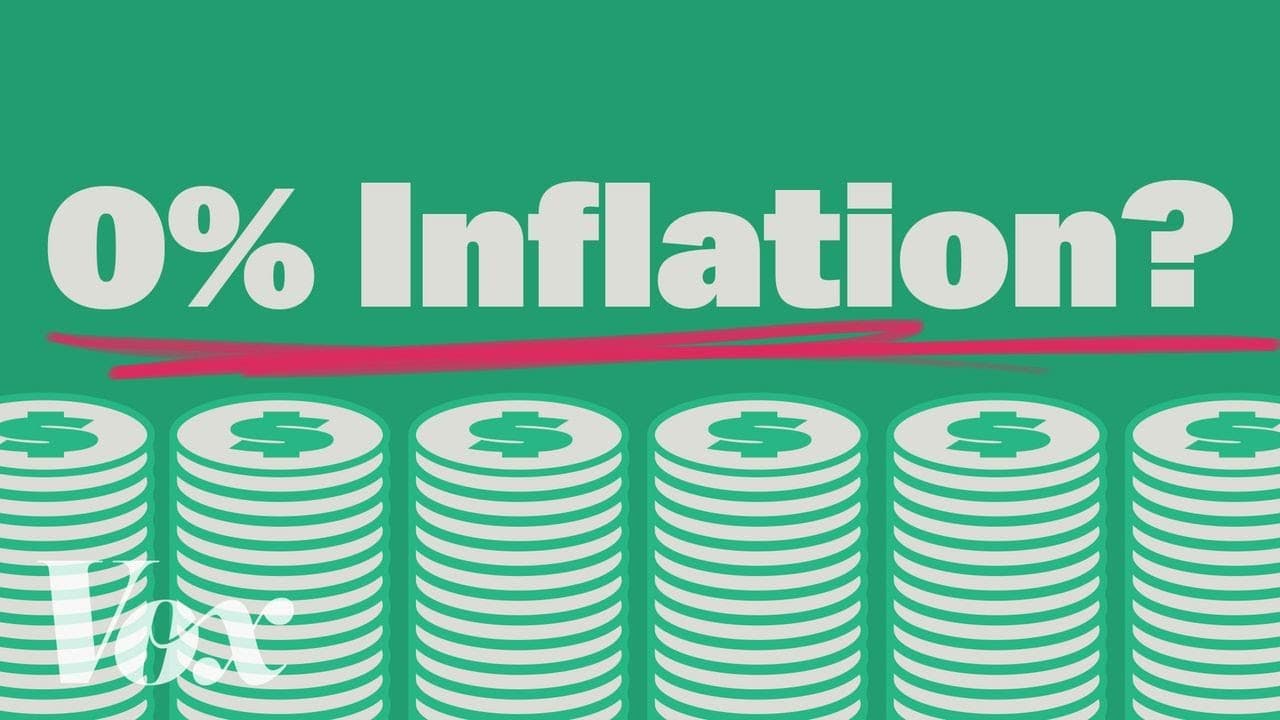
Why can’t prices just stay the same?
TL;DR
Zero inflation may cause economic instability, despite inflation's drawbacks.
Transcript
ARCHIVE: “Inflation is causing stress.” ARCHIVE: “Bad news about prices in the grocery store.” ARCHIVE: “...historically high inflation.” In 2022, much of the world experienced a period of uncommonly high inflation. With the U.S., U.K. and Eurozone all peaking at around 10%. Meaning that prices on average were a full 10% higher than one year before... Read More
Key Insights
- Inflation peaked at around 10% in 2022 in the U.S., U.K., and Eurozone, causing stress for consumers and businesses.
- Governments aim for a small inflation rate, typically around 2%, to encourage spending and economic growth.
- A virtuous cycle of inflation involves rising prices and wages, maintaining purchasing power if wages keep pace.
- Supply chain issues and corporate price hikes disrupted the inflation cycle, leading to high inflation recently.
- Interest rates are a tool used by central banks to control inflation, but they also increase borrowing costs for consumers.
- Deflation, or falling prices, can lead to reduced spending, economic slowdown, and job losses, causing a deflationary spiral.
- Historically, deflation has been rare but challenging to resolve, often requiring significant economic interventions.
- Inflation targets help prevent deflation, ensuring economic stability by maintaining a buffer against price drops.
Install to Summarize YouTube Videos and Get Transcripts
Explore YouTube Video Summarizer or Get YouTube Transcript Extractor
Questions & Answers
Q: Why can't inflation be zero?
Zero inflation might seem ideal, but it can lead to deflation, causing consumers to delay purchases, reducing spending, and slowing economic growth. This can result in a deflationary spiral, where companies cut costs and lay off employees, further decreasing demand and causing economic instability.
Q: What is the purpose of an inflation target?
Inflation targets, typically around 2%, are set by governments and central banks to maintain economic stability. They ensure a small, steady rise in prices, encouraging spending and investment. This prevents deflation, which can lead to reduced demand, job losses, and economic stagnation.
Q: How do interest rates affect inflation?
Central banks use interest rates to control inflation. Raising rates makes borrowing more expensive, reducing consumer spending and slowing economic growth. This helps bring inflation down. However, it can also increase financial strain on families needing to borrow, affecting their purchasing power.
Q: What is a deflationary spiral?
A deflationary spiral occurs when falling prices lead consumers to delay purchases, expecting further price drops. This reduces spending, causing companies to earn less, cut costs, and lay off employees. The resulting job losses further decrease demand, perpetuating the cycle and slowing economic growth.
Q: How did supply chain issues affect inflation?
Supply chain disruptions caused product shortages, leading to price increases as demand outpaced supply. Some companies took advantage of this by artificially raising prices to increase profits. These factors disrupted the virtuous cycle of inflation, contributing to the high inflation rates experienced recently.
Q: What is the impact of wage growth on inflation?
Wage growth is crucial in maintaining purchasing power during inflation. If wages rise with prices, consumers can afford the same goods, sustaining demand. However, if wages lag behind inflation, purchasing power decreases, causing economic stress. Recent trends show wage growth surpassing inflation, especially at lower income levels.
Q: Why is deflation challenging to resolve?
Deflation is difficult to address because it reduces consumer spending and demand, leading to economic stagnation. Traditional tools like interest rate adjustments have limited effectiveness when rates are near zero. Historical cases, like the Great Depression, required significant economic interventions to overcome deflationary periods.
Q: What historical examples illustrate the challenges of deflation?
The Great Depression is a notable example of a deflationary spiral, resolved only by the economic shock of World War II. Japan also faced decades of deflation, emerging partly due to recent global inflation. These examples show that deflation requires significant interventions for economic recovery, highlighting the importance of inflation targets.
Summary & Key Takeaways
-
In 2022, global inflation reached historically high levels, causing economic stress. Governments aim for a small inflation rate to stimulate spending and economic growth. Zero inflation could lead to economic instability, as deflation can cause reduced spending and job losses.
-
Central banks use interest rates to control inflation, but this can increase consumer borrowing costs. Deflation is rare but difficult to fix, often requiring major economic interventions. Inflation targets prevent deflation and maintain stability by keeping prices from dropping too low.
-
A virtuous cycle of inflation involves rising prices and wages, maintaining purchasing power if wages keep pace. Disruptions like supply chain issues can turn this cycle vicious, causing high inflation. Historical deflation cases highlight the challenges of economic recovery without inflation.
Read in Other Languages (beta)
Share This Summary 📚
Summarize YouTube Videos and Get Video Transcripts with 1-Click
Try YouTube Summary with ChatGPT & Claude or YouTube Transcript Generator
Explore More Summaries from Vox 📚



Summarize YouTube Videos and Get Video Transcripts with 1-Click
Try YouTube Summary with ChatGPT & Claude or YouTube Transcript Generator