Voltmeters, Ammeters, Galvanometers, and Shunt Resistors - DC Circuits Physics Problems
TL;DR
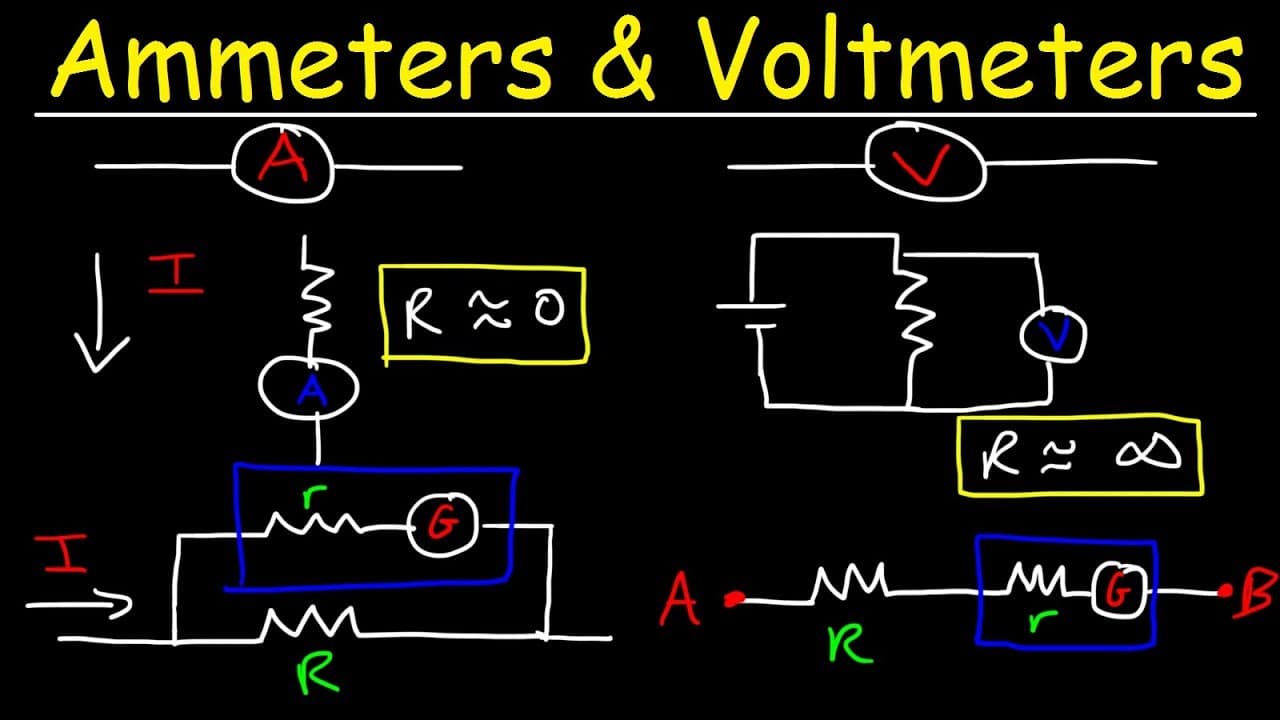
Ammeters measure current in a circuit, while voltmeters measure voltage. Ammeters are connected in series with the device, while voltmeters are connected in parallel. The internal resistance of an ammeter should be low, while the internal resistance of a voltmeter should be high.
Transcript
in this video we're going to talk about ammeters and voltmeters now if you want to measure the current in a circuit you want to use an ammeter and the symbol for that is an a in a circle if you want to measure the voltage across the device you need to use a voltmeter with the symbol v so let's say if you have a resistor and you want to calculate th... Read More
Key Insights
- 💐 An ammeter is connected in series with a device to measure current flow.
- ⚡ A voltmeter is connected in parallel with a device to measure voltage across it.
- 😘 The internal resistance of an ammeter should be low to avoid affecting the measured current.
- ⚡ The internal resistance of a voltmeter should be high to minimize the decrease in voltage across the device.
- ❓ Shunt resistors are used to convert a galvanometer into an ammeter or voltmeter.
- 🥰 The value of the shunt resistor can be calculated using the formula: R = (Ig * r) / (I - Ig) for an ammeter and V = (I * (R + r)) for a voltmeter.
- 😘 The shunt resistor for an ammeter should have a low value, while for a voltmeter it should match the desired voltage range.
- 🥇 Practical resistors with standard values are used in place of calculated resistor values.
Install to Summarize YouTube Videos and Get Transcripts
Explore YouTube Video Summarizer or Get YouTube Transcript Extractor
Questions & Answers
Q: What is the difference between an ammeter and a voltmeter?
An ammeter measures current in a circuit, while a voltmeter measures voltage across a device.
Q: How are ammeters and voltmeters connected in a circuit?
Ammeters are connected in series with the device, while voltmeters are connected in parallel.
Q: Why should the internal resistance of an ammeter be low?
The internal resistance of an ammeter should be low to avoid affecting the current flowing in the circuit being measured.
Q: Why should the internal resistance of a voltmeter be high?
The internal resistance of a voltmeter should be high to minimize the decrease in voltage across the device being measured.
Summary & Key Takeaways
-
Ammeters are used to measure current in a circuit and are connected in series with the device.
-
Voltmeters measure voltage across a device and are connected in parallel.
-
The internal resistance of an ammeter should be low, while the internal resistance of a voltmeter should be high.
Read in Other Languages (beta)
Share This Summary 📚
Summarize YouTube Videos and Get Video Transcripts with 1-Click
Try YouTube Summary with ChatGPT & Claude or YouTube Transcript Generator
Explore More Summaries from The Organic Chemistry Tutor 📚





Summarize YouTube Videos and Get Video Transcripts with 1-Click
Try YouTube Summary with ChatGPT & Claude or YouTube Transcript Generator