How Do Nervous and Endocrine Systems Communicate?
TL;DR
The nervous and endocrine systems coordinate the body's responses to internal and external stimuli. The nervous system provides fast, short-term responses using neurons, while the endocrine system offers slower, long-lasting effects through hormones. Together, they regulate processes like the fight or flight response, helping organisms adapt and survive.
Transcript
Your heart is racing. Your breathing is fast. Are you stressing over a big test? Rooting for your favorite team? Getting ready for the most epic rap battle in history!? As it turns out, our bodies have pretty similar responses for both anxiety and excitement, which is why you might feel tense during any of those situations. Those physical reacti... Read More
Key Insights
- The nervous system uses neurons to send fast, short-term signals throughout the body.
- Neurons communicate by sending signals across synapses using neurotransmitters.
- The endocrine system relies on hormones, which are slower but have longer-lasting effects.
- Hormones travel through the bloodstream to reach target cells anywhere in the body.
- Adrenaline is a hormone that prepares the body for stress by increasing heart rate and energy.
- The nervous and endocrine systems work together, with some hormones acting as neurotransmitters.
- The fight or flight response is a coordinated effort of both systems to handle perceived threats.
- Understanding these systems can help manage stress and anxiety by reframing nervous situations as exciting.
Install to Summarize YouTube Videos and Get Transcripts
Explore YouTube Video Summarizer or Get YouTube Transcript Extractor
Questions & Answers
Q: How do the nervous and endocrine systems communicate within the body?
The nervous system communicates through neurons, which send fast, short-term signals across synapses using neurotransmitters. The endocrine system uses hormones, which travel through the bloodstream to reach target cells, providing slower but longer-lasting effects. Together, they coordinate the body's responses to stimuli.
Q: What role do neurotransmitters play in the nervous system?
Neurotransmitters are chemical messengers that neurons release to transmit signals across synapses to other neurons or target cells. This process allows the nervous system to quickly communicate and coordinate rapid responses to stimuli, such as reflex actions or immediate reactions to sensory input.
Q: How does the endocrine system differ from the nervous system in communication?
The endocrine system communicates through hormones, which are released into the bloodstream and can reach any target cell with the appropriate receptors. This system is slower to activate than the nervous system but provides more prolonged effects, regulating long-term processes like metabolism, growth, and stress response.
Q: What is the fight or flight response and how is it regulated?
The fight or flight response is a physiological reaction to perceived threats, involving both the nervous and endocrine systems. The nervous system initiates immediate actions like increased heart rate, while the endocrine system releases hormones like adrenaline to sustain readiness for action, preparing the body for rapid response.
Q: Why is the endocrine system important for long-term bodily functions?
The endocrine system regulates long-term bodily functions by releasing hormones that affect metabolism, growth, and stress responses. Unlike the nervous system's rapid signals, hormonal effects are slower to manifest but last longer, ensuring sustained regulation of processes essential for maintaining homeostasis and adaptation.
Q: How do hormones travel through the body?
Hormones are secreted by glands into the bloodstream, allowing them to travel throughout the body. They reach target cells that have specific receptors for those hormones, triggering responses that regulate various physiological processes, such as growth, metabolism, and stress management, over extended periods.
Q: What is the role of adrenaline in the body's response to stress?
Adrenaline, a hormone released by the adrenal glands, prepares the body for stress by increasing heart rate, boosting energy, and enhancing alertness. It facilitates the body's readiness for rapid action, such as during the fight or flight response, and helps sustain physical exertion during stressful situations.
Q: How can understanding the nervous and endocrine systems help manage stress?
Understanding these systems can help manage stress by recognizing how physiological responses are triggered and sustained. Techniques like reframing anxiety as excitement can leverage the body's natural responses, using knowledge of these systems to reduce stress and improve coping strategies in challenging situations.
Summary & Key Takeaways
-
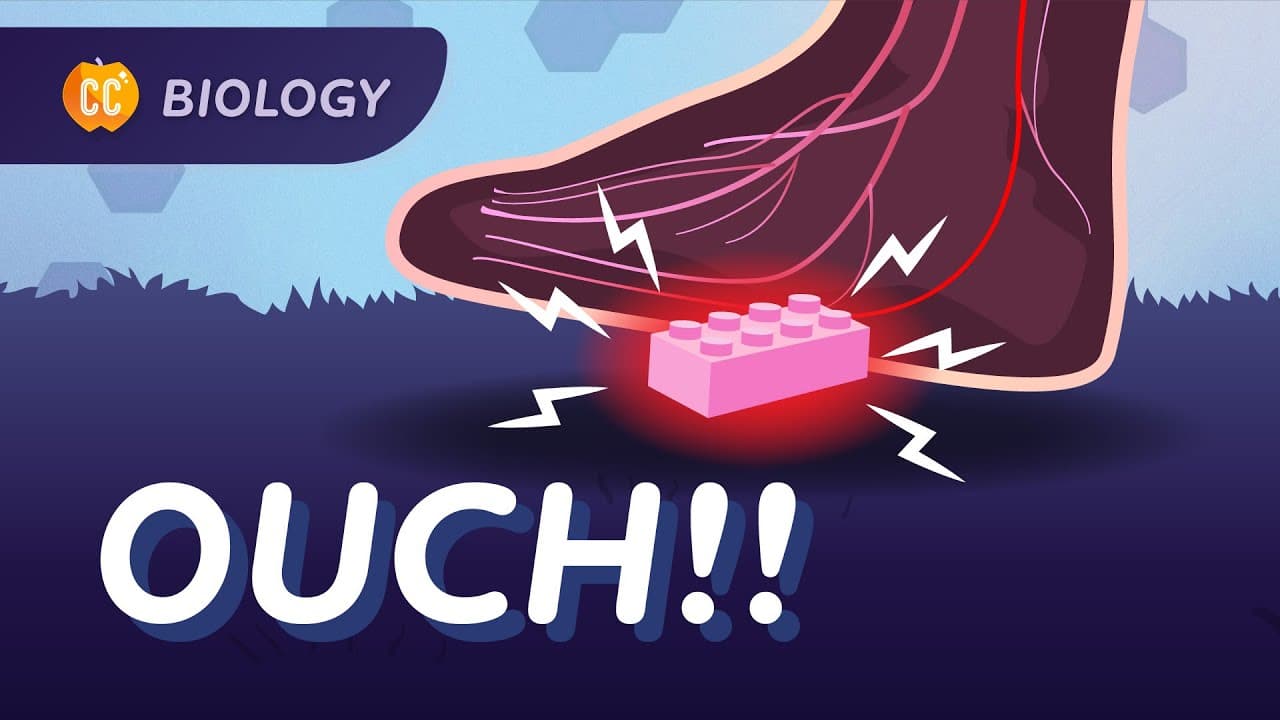
The nervous system collects, processes, and responds to information using neurons, providing quick, short-term reactions to stimuli. For example, when stepping on a LEGO, sensory receptors send pain signals through neurons to the brain, resulting in a rapid response to move away.
-
The endocrine system uses hormones to communicate, offering slower but more sustained responses. Hormones like adrenaline prepare the body for stressful situations by increasing heart rate and energy, taking longer to activate but lasting longer than nervous signals.
-
Both systems collaborate to regulate the body's responses, with some hormones acting as neurotransmitters. This collaboration is evident in the fight or flight response, where the nervous system initiates immediate action while the endocrine system sustains the reaction.
Read in Other Languages (beta)
Share This Summary 📚
Summarize YouTube Videos and Get Video Transcripts with 1-Click
Try YouTube Summary with ChatGPT & Claude or YouTube Transcript Generator
Explore More Summaries from CrashCourse 📚






Summarize YouTube Videos and Get Video Transcripts with 1-Click
Try YouTube Summary with ChatGPT & Claude or YouTube Transcript Generator