Electron Configuration - Basic introduction
TL;DR
This video provides a simple explanation of how to write the electron configuration of an element, using examples of nitrogen, aluminum, and the Fe2+ and chloride ions.
Transcript
In this video i'm gonna give You a Simple Introduction on how to write the Electron Configuration of an Element so Let's talk about Nitrogen so how can we write the Electron Configuration for an atom of Nitrogen So That's how Nitrogen Looks like on a Periodic table? So the higher these two numbers is the mass Number and the smaller of the two numbe... Read More
Key Insights
- 🎚️ The electron configuration of an element is determined by the sublevels in each energy level.
- 🧑🤝🧑 The S sublevel can hold 2 electrons, the P sublevel can hold 6 electrons, and higher sublevels can hold more electrons.
- 😑 Writing the electron configuration for ions involves adjusting the electron configuration of the parent atom based on the charge.
Install to Summarize YouTube Videos and Get Transcripts
Explore YouTube Video Summarizer or Get YouTube Transcript Extractor
Questions & Answers
Q: How is the electron configuration of an atom determined?
The electron configuration of an atom is determined by the sublevels in each energy level. The S sublevel is found in the first energy level, the S and P sublevels are found in the second energy level, and additional sublevels are found in higher energy levels.
Q: What is the electron configuration of an atom of nitrogen?
The electron configuration of nitrogen is 1s2 2s2 2p3. The 1s sublevel holds 2 electrons, the 2s sublevel holds 2 electrons, and the 2p sublevel holds 3 electrons.
Q: How can we write the electron configuration for an atom of aluminum?
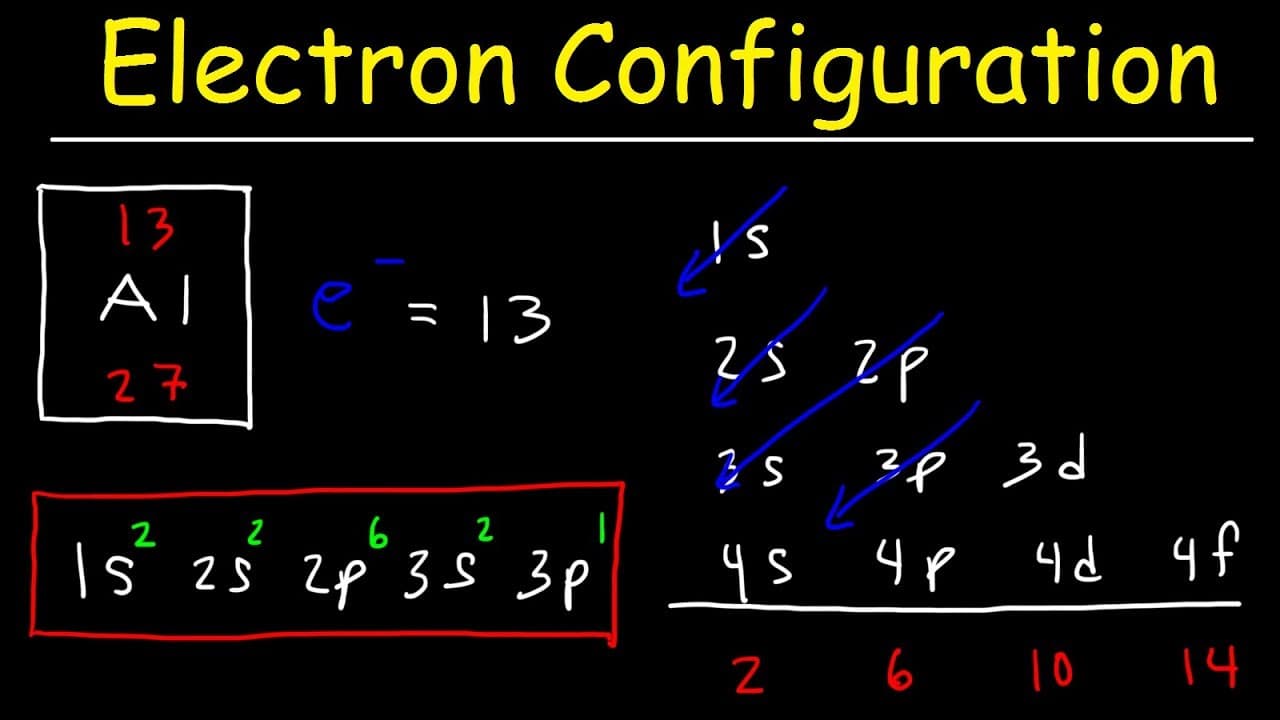
The electron configuration of aluminum is 1s2 2s2 2p6 3s2 3p1. The 3p sublevel holds 1 electron.
Q: How do we write electron configurations for ions?
To write electron configurations for ions, we adjust the electron configuration of the parent atom based on the charge. For positive ions, we remove electrons from the highest energy level, and for negative ions, we add electrons.
Summary & Key Takeaways
-
The video explains that the electron configuration of an element is determined by the sublevels in each energy level, with the S sublevel in the first energy level, S and P sublevels in the second, and additional sublevels in higher energy levels.
-
The electron configuration of an atom of nitrogen is 1s2 2s2 2p3, with the 1s sublevel holding 2 electrons, the 2s sublevel holding 2 electrons, and the 2p sublevel holding 3 electrons.
-
The electron configuration of an atom of aluminum is 1s2 2s2 2p6 3s2 3p1, with the 3p sublevel holding 1 electron.
-
The video also explains how to write electron configurations for ions, using the example of Fe2+ and the chloride ion.
Read in Other Languages (beta)
Share This Summary 📚
Summarize YouTube Videos and Get Video Transcripts with 1-Click
Try YouTube Summary with ChatGPT & Claude or YouTube Transcript Generator
Explore More Summaries from The Organic Chemistry Tutor 📚


Summarize YouTube Videos and Get Video Transcripts with 1-Click
Try YouTube Summary with ChatGPT & Claude or YouTube Transcript Generator