What Is Conditional Probability and Bayes' Theorem?
TL;DR
Conditional probability measures the likelihood of an event based on prior knowledge of related outcomes, while Bayes' Theorem provides a framework to update these probabilities as new information becomes available. Understanding these concepts is crucial for calculating probabilities in various scenarios.
Transcript
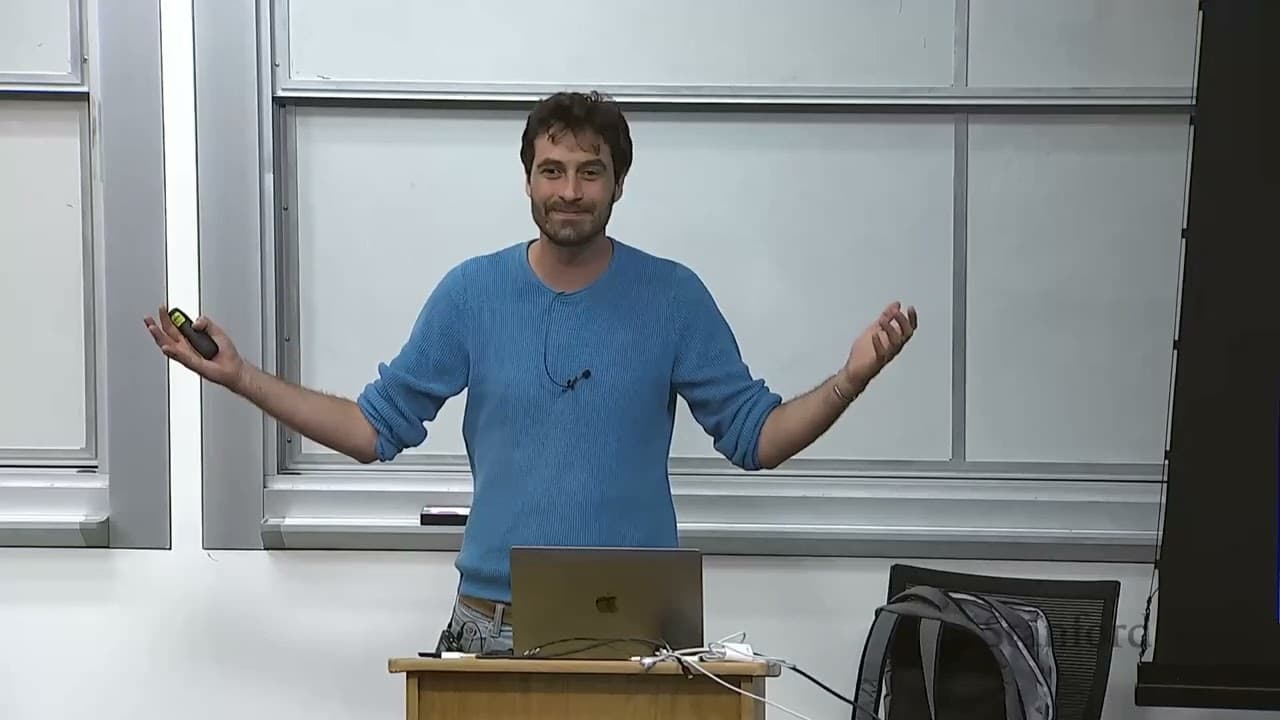
good afternoon cs109 we are live and back in class I hope you had a fantastic weekend and I hope you're ready for a little bit more popularity education ah yeah feeling the probability of us okay we are going to be learning some very cool things today before we jump into any of that though a couple quick announcements as you probably know problem s... Read More
Key Insights
- 🎓 Probability education includes topics such as combinations, permutations, and axioms.
- 👻 Conditional probability allows for the calculation of probabilities based on new information or conditions.
- 👮 The law of total probability provides a framework for calculating probabilities when background events or conditions are involved.
Install to Summarize YouTube Videos and Get Transcripts
Explore YouTube Video Summarizer or Get YouTube Transcript Extractor
Questions & Answers
Q: What is conditional probability?
Conditional probability refers to the probability of one event occurring given that another event has already occurred. It allows for the updating of beliefs based on new information.
Q: How can the law of total probability be used in probability calculations?
The law of total probability states that the probability of an event can be calculated by considering all possible background events and summing the probabilities of the event occurring under each background event.
Q: Can conditional probability and the law of total probability be used together?
Yes, conditional probability and the law of total probability are related concepts. Conditional probability can be used to calculate the probabilities of different events given certain conditions, while the law of total probability can be used to calculate probabilities when background events are involved.
Q: How can the Bayes Theorem be applied in real-world scenarios?
The Bayes Theorem can be used to update beliefs based on new information. It allows for the calculation of the probability of a certain state or event given the occurrence of specific observations or conditions.
Summary & Key Takeaways
-
The video discusses probability education, including topics such as problem sets, section assignments, and interactive learning features.
-
The concept of combinations, permutations, and probability axioms are explained, with examples provided.
-
Conditional probability is introduced, highlighting the relationship between events and the probability of one event given the occurrence of another event.
-
The concept of the law of total probability is discussed, showing how it can be used to calculate probabilities in different scenarios.
Read in Other Languages (beta)
Share This Summary 📚
Summarize YouTube Videos and Get Video Transcripts with 1-Click
Try YouTube Summary with ChatGPT & Claude or YouTube Transcript Generator
Explore More Summaries from Stanford Online 📚

Summarize YouTube Videos and Get Video Transcripts with 1-Click
Try YouTube Summary with ChatGPT & Claude or YouTube Transcript Generator