Decimal Number System to Hexadecimal Number System | Number System and Code | Digital Circuit Design
TL;DR
This video explains how to convert decimal numbers to hexadecimal numbers using successive division and multiplication methods.
Transcript
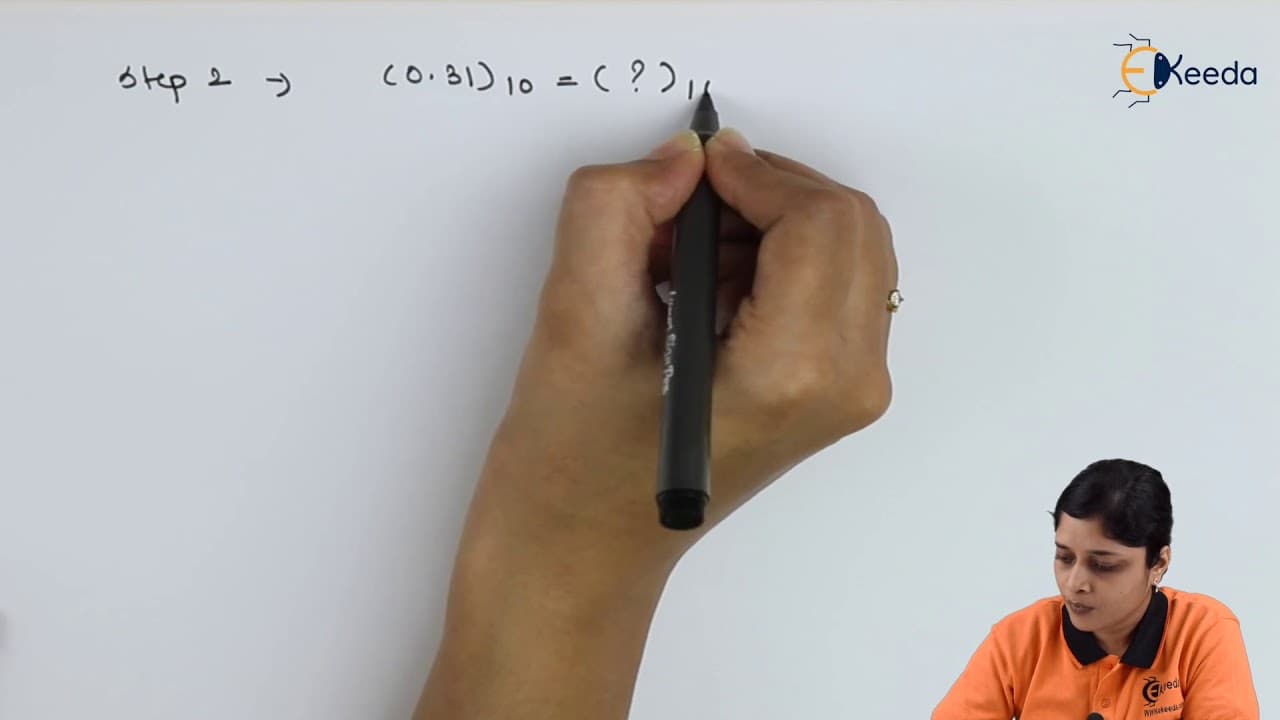
click the Bell icon to get latest videos from akira hello friends we are going to see conversion of decimal number system to hexadecimal number system let's start with our first example before that we will write our aim conversion of decimal number to hexadecimal number here you have to apply successive division method approach for that you have to... Read More
Key Insights
- 🥳 Conversion from decimal to hexadecimal involves both integer and fractional parts of a decimal number.
- ✖️ The successive division method is used for the integer part, while the successive multiplication method is applied to the fractional part.
- 🧡 The base of the hexadecimal number system is 16, and its digits range from 0 to F (representing values 0 to 15).
- 🥳 The conversion process involves drawing tables, performing divisions or multiplications, and noting remainders or integer parts as the hexadecimal digits.
- 🥳 The final answer combines the converted integer and fractional parts in the hexadecimal number system.
- 💻 Understanding how to convert decimal numbers to hexadecimal is essential in computer science and digital systems.
- 🔀 The use of the arrow notation helps in keeping track of the steps in the conversion process.
Install to Summarize YouTube Videos and Get Transcripts
Explore YouTube Video Summarizer or Get YouTube Transcript Extractor
Questions & Answers
Q: What is the aim of converting a decimal number to a hexadecimal number?
The aim is to represent a decimal number in the base-16 hexadecimal number system, which is commonly used in computer science and digital systems.
Q: How is the successive division method used for converting decimal numbers to hexadecimal?
The successive division method involves repeatedly dividing the decimal number by 16 and writing down the remainders until the division quotient becomes zero. The remainders, read from bottom to top, form the hexadecimal equivalent.
Q: How is the successive multiplication method used for converting fractions of decimal numbers to hexadecimal?
The successive multiplication method involves multiplying the fractional part of the decimal number by 16 and noting down the integer part of the result. This process is repeated until the fractional part becomes zero or the desired precision is achieved.
Q: Why is it important to specify the base of the final answer when converting decimal numbers to hexadecimal?
Specifying the base is essential because it distinguishes the representation of numbers in different number systems. In this case, the base-10 decimal number is being converted to the base-16 hexadecimal number.
Summary & Key Takeaways
-
The video demonstrates the conversion of a decimal number to a hexadecimal number using the successive division method.
-
It provides an example of converting the decimal number 17 to its hexadecimal equivalent, which is 11.
-
The video also shows the conversion of a decimal number with a fractional part, 354.31, to its hexadecimal representation, which is 162.4F5C.
Read in Other Languages (beta)
Share This Summary 📚
Summarize YouTube Videos and Get Video Transcripts with 1-Click
Try YouTube Summary with ChatGPT & Claude or YouTube Transcript Generator
Explore More Summaries from Ekeeda 📚



Summarize YouTube Videos and Get Video Transcripts with 1-Click
Try YouTube Summary with ChatGPT & Claude or YouTube Transcript Generator