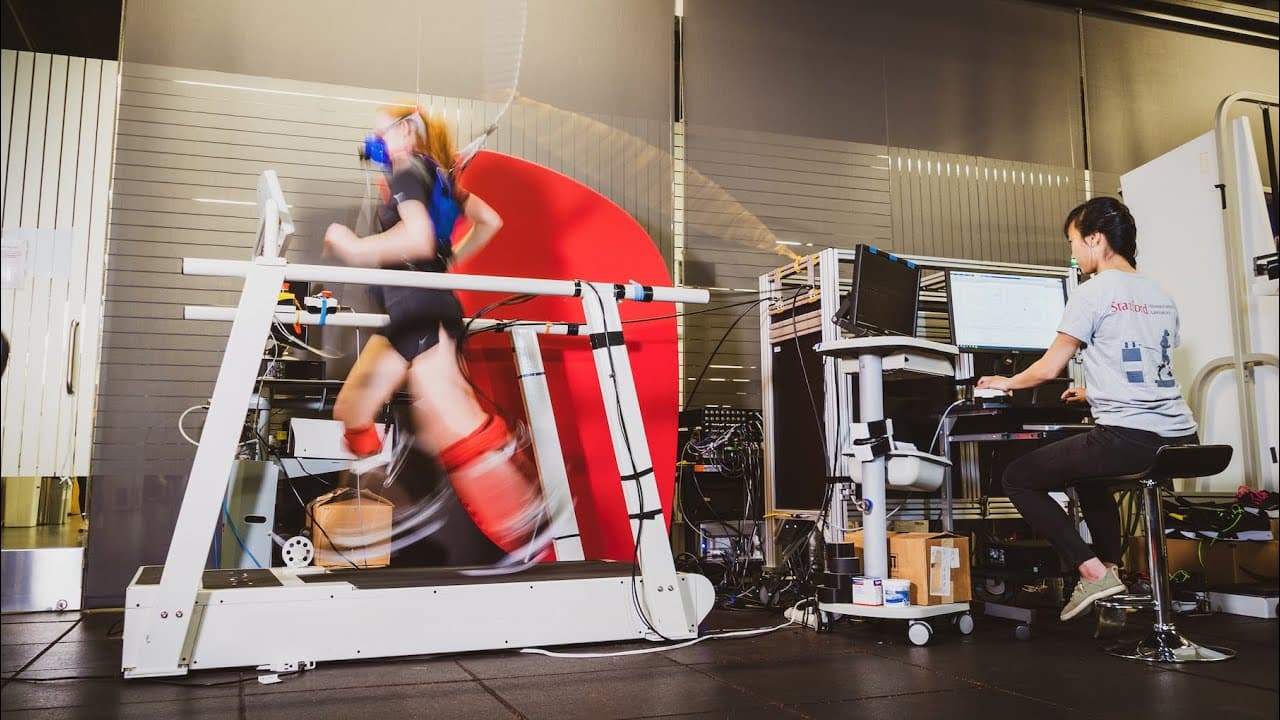
Stanford researchers find ankle exoskeleton makes running easier
TL;DR
The use of exoskeletons in running can make the activity easier and more enjoyable, potentially encouraging more people to engage in physical activity.
Transcript
[MUSIC PLAYING] One way I've described running with the exoskeletons is you imagine someone was running behind you and holding little ropes that were attached to your heels. And every time you pushed off the ground, instead of having you do all the work, someone else lifted your foot for you. Feels very springy and very bouncy compared to normal ru... Read More
Key Insights
- 👟 The perception of not being athletic or skilled at running discourages many individuals from engaging in the activity.
- 🙂 Exoskeletons can reduce the energy cost of running by assisting with the movement, making it feel lighter and more enjoyable.
- 🏃 Exoskeletons for running can be beneficial for first responders and other professionals who need to run for their work.
- 🏃 By reducing the energy cost of running, individuals have more energy to allocate to other tasks.
- 😒 The use of exoskeletons can help individuals keep pace with faster runners during recreational activities.
- 😀 Exoskeletons can potentially solve the first/last mile problem in commuting and make short-distance travel more efficient and convenient.
- 🏃 Exoskeletons for running offer the largest improvements in energy economy compared to other devices used for assistance.
Install to Summarize YouTube Videos and Get Transcripts
Explore YouTube Video Summarizer or Get YouTube Transcript Extractor
Questions & Answers
Q: How can exoskeletons make running easier?
Exoskeletons reduce the energy cost of running by assisting with the pushing off the ground and the work of the calf muscles. This makes the running movement feel lighter and springier.
Q: Who can benefit from using exoskeletons for running?
Any individual who needs to run for work or those who want to improve their running ability can benefit from exoskeletons. It can also help individuals keep up with faster runners, such as during recreational activities.
Q: How much improvement in energy cost can be achieved with exoskeletons?
Research has shown that using exoskeletons for running can lead to a 15% improvement in energy cost compared to running in normal shoes. This reduction in effort makes running feel easier and more efficient.
Q: Can exoskeletons be used for commuting?
Yes, exoskeletons can potentially be used for the first/last mile problem in commuting. By attaching the exoskeleton to shoes, individuals can cover short distances without breaking a sweat, making it a convenient and time-saving tool.
Summary & Key Takeaways
-
Only 20% of Americans have gone for a jog in the last year, often due to not feeling athletic or skilled at running.
-
Exoskeletons can make running easier by reducing the energy cost associated with pushing off the ground and the work of the calf muscles.
-
An exoskeleton for running consists of a carbon fiber frame attached to the ankle, with a lever connected to the shoe that extends the ankle and reduces the effort required.
Read in Other Languages (beta)
Share This Summary 📚
Summarize YouTube Videos and Get Video Transcripts with 1-Click
Try YouTube Summary with ChatGPT & Claude or YouTube Transcript Generator
Explore More Summaries from Stanford 📚





Summarize YouTube Videos and Get Video Transcripts with 1-Click
Try YouTube Summary with ChatGPT & Claude or YouTube Transcript Generator