What is a Block Diagram in Control System - Transfer Function - Control Systems
TL;DR
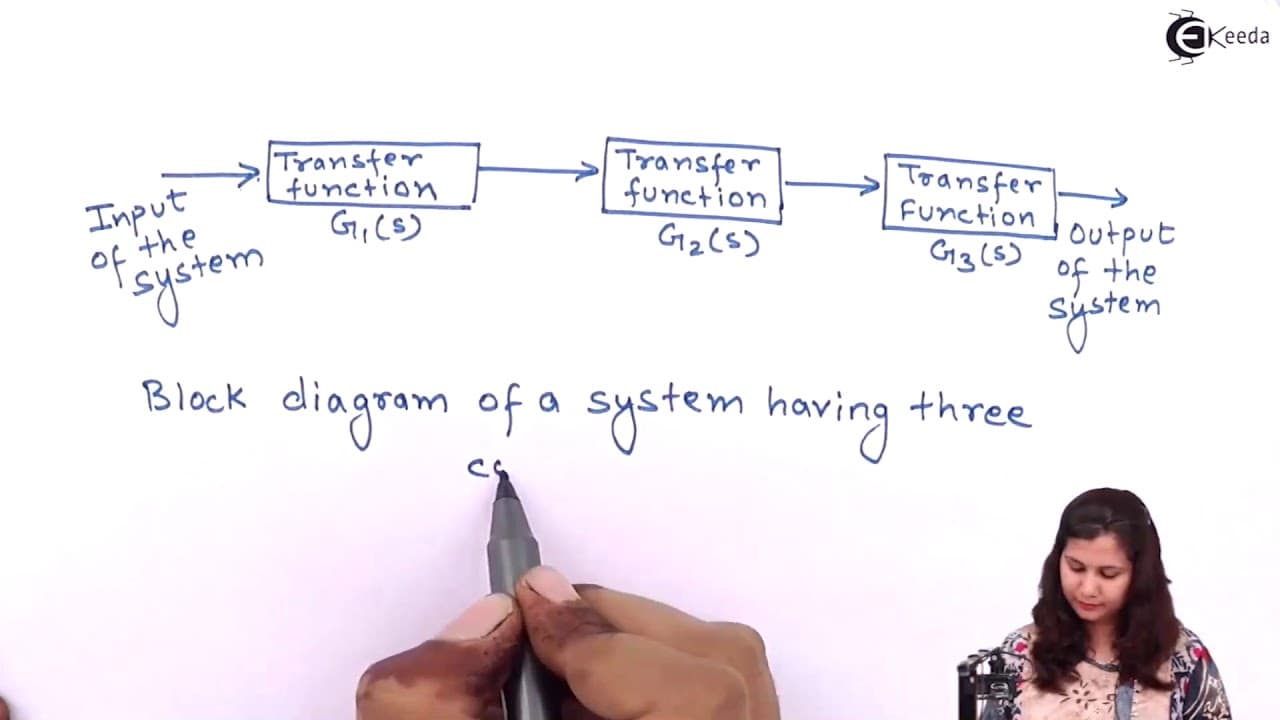
A block diagram is a symbolic representation of the functions performed by each component in a system, showing the direction of signal flow.
Transcript
hello friends in this video we are going to study that what is a block diagram we know that a system consists of many number of components and these components are connected together to perform some operations so if you want to express the function of each component then the transfer function of each component of the system it is represented by a b... Read More
Key Insights
- 🚫 A block diagram is a symbolic representation of a system's components and their functions.
- 🚫 Components in a block diagram are represented by blocks, with arrows indicating the flow of signals.
- 🚫 Blocks can be connected in series or parallel to represent different system configurations.
- 😥 Summing points are used to combine input signals, while take-off points allow a signal to be used by multiple blocks.
- 💘 Branches and arrows are used to connect components and indicate the direction of signal flow.
- 👻 Block diagrams are simple to construct and allow for easy visualization of system functions.
- ❓ They can be used to calculate the overall transfer function of a system and analyze its performance.
Install to Summarize YouTube Videos and Get Transcripts
Explore YouTube Video Summarizer or Get YouTube Transcript Extractor
Questions & Answers
Q: What is a block diagram?
A block diagram is a visual representation of a system, showing the functions performed by each component and the flow of signals between them.
Q: How are components represented in a block diagram?
Components are represented by blocks, with arrows indicating the input and output signals. The transfer function of each component is written in the corresponding block.
Q: How are blocks connected in a block diagram?
Blocks can be connected in series or parallel. In series, the output of one block becomes the input of the next. In parallel, multiple blocks receive the same input.
Q: What are the basic elements of a block diagram?
The basic elements are blocks (representing components), summing points (to combine input signals), take-off points (to share input signals), branches (connecting blocks), and arrows (indicating signal flow).
Summary & Key Takeaways
-
A block diagram is a visual representation of a system's components and their functions.
-
Components in a block diagram are represented by blocks, with arrows indicating the flow of signals.
-
Block diagrams can be used to represent individual components and the overall system.
Read in Other Languages (beta)
Share This Summary 📚
Summarize YouTube Videos and Get Video Transcripts with 1-Click
Try YouTube Summary with ChatGPT & Claude or YouTube Transcript Generator
Explore More Summaries from Ekeeda 📚




Summarize YouTube Videos and Get Video Transcripts with 1-Click
Try YouTube Summary with ChatGPT & Claude or YouTube Transcript Generator