What Happened During the Bum La Pass Charge?
TL;DR
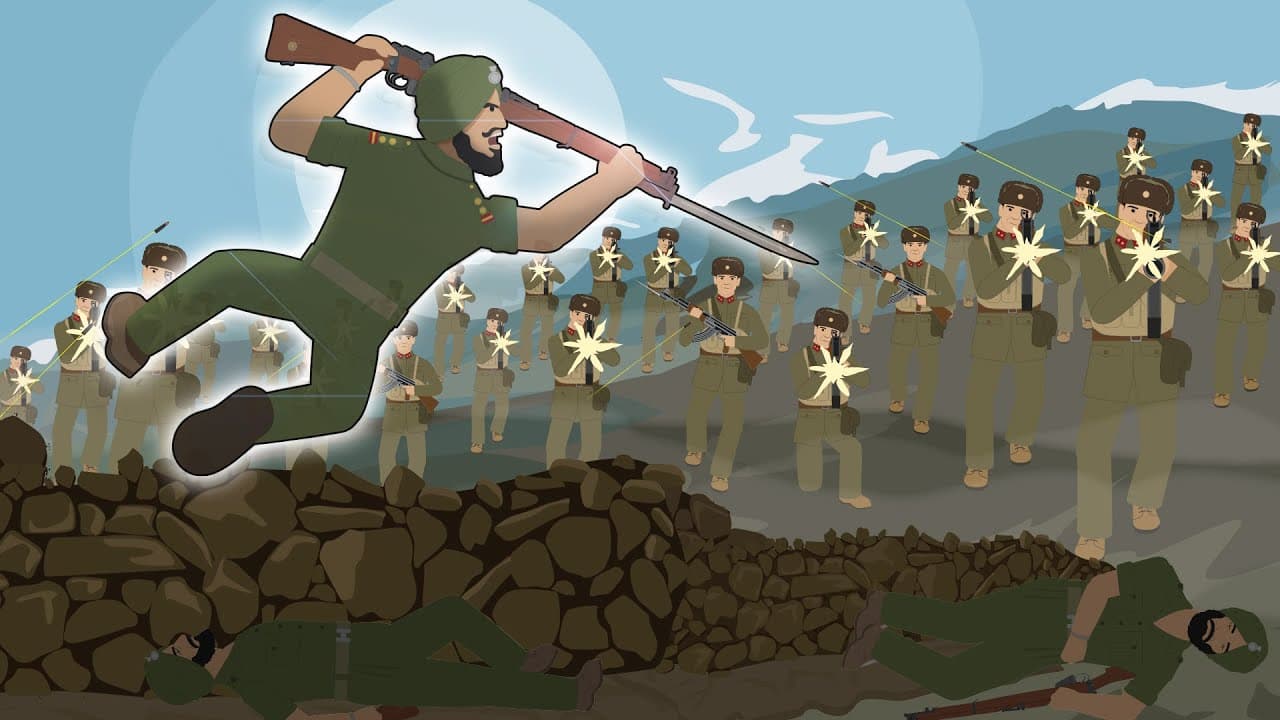
Jokinder Singh led a small Indian platoon at Bum La Pass during the Sino-Indian War in 1962, bravely defending against a much larger Chinese force. Despite being outgunned and outnumbered, Singh's heroic charge and leadership became legendary, earning him India's highest military honour posthumously. His story reflects the immense sacrifice and valor shown by soldiers under dire circumstances.
Transcript
- in october of 1962 during the sino-indian conflict the chinese people's liberation army deployed vast numbers of troops across the border between china and india high up in the inhospitable himalaya mountain range this was in response to an ongoing dispute with india over territory a fierce and bloody battle took place at boom la pass as the ... Read More
Key Insights
- 🇮🇴 The Sino-Indian conflict of 1962 resulted in significant territorial gains for China and led to the deaths of 1,383 Indian and 722 Chinese troops.
- 🫡 Jokinder Singh's leadership, bravery, and sacrifice during the battle earned him the admiration and respect of his comrades and the Indian people.
- 🛟 Singh's story serves as a reminder of the valor and sacrifices made by soldiers during times of conflict.
- 😮 The Chinese forces capitalized on the element of surprise and the vulnerabilities of the Indian troops to swiftly overrun their positions.
- 🥳 Singh's platoon, armed with outdated rifles and lacking winter clothing and proper rations, faced not only the Chinese forces but also the harsh Himalayan weather.
- ❣️ Singh's tactical decision to dig a defensive trench network on an elevated ridge proved vital in hindering the enemy's advance and inflicting heavy casualties.
- 🥺 The final charge led by Singh and his men, though valiant, was ultimately futile against the overwhelming Chinese forces.
Install to Summarize YouTube Videos and Get Transcripts
Explore YouTube Video Summarizer or Get YouTube Transcript Extractor
Questions & Answers
Q: What led to the Sino-Indian conflict in 1962?
The Sino-Indian conflict arose from an ongoing border dispute between China and India in the Himalayan mountain range.
Q: How did Jokinder Singh and his platoon defend their position?
Singh ordered his men to dig a defensive trench network on an elevated ridge, giving them a tactical advantage. They resorted to a suicidal charge when they ran out of ammunition.
Q: How did Singh display exceptional leadership during the battle?
Despite being badly injured, Singh refused to be evacuated and continued inspiring his men. He sent a message affirming their decision to fight to the last man.
Q: What recognition did Jokinder Singh receive for his heroism?
Singh was posthumously awarded the Param Vir Chakra, the highest military honor in India, for his exceptional bravery and leadership during the battle.
Summary & Key Takeaways
-
Jokinder Singh, an Indian officer, fought in various conflicts, including World War II and the Indo-Pakistani conflict, before facing the Sino-Indian conflict in 1962.
-
Singh's brigade was ordered to defend the strategically important Namkachu Valley, but they were ill-prepared for the Chinese attack.
-
Singh and his small platoon heroically held their position, but ultimately ran out of ammunition and resorted to a suicidal charge before being overwhelmed.
Read in Other Languages (beta)
Share This Summary 📚
Summarize YouTube Videos and Get Video Transcripts with 1-Click
Try YouTube Summary with ChatGPT & Claude or YouTube Transcript Generator
Explore More Summaries from Simple History 📚
Summarize YouTube Videos and Get Video Transcripts with 1-Click
Try YouTube Summary with ChatGPT & Claude or YouTube Transcript Generator