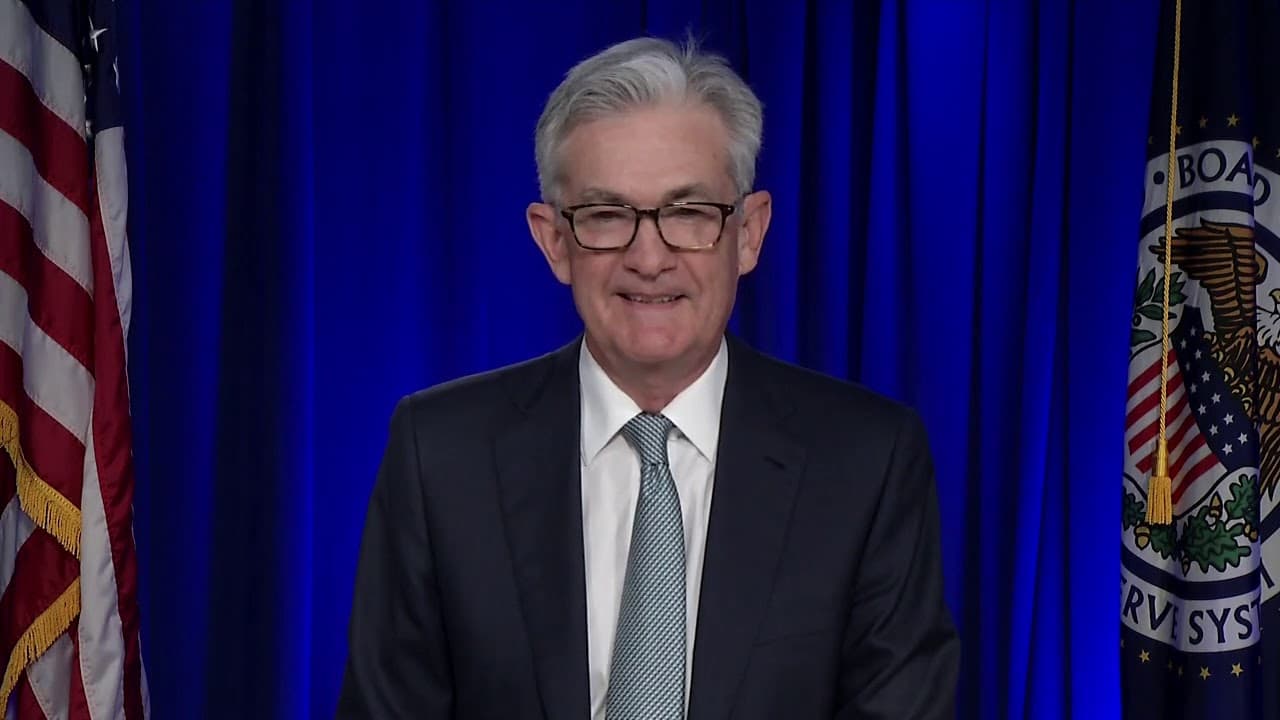
FOMC Press Conference, March 17, 2021
TL;DR
The FOMC kept interest rates near zero and maintained sizable asset purchases because the U.S. recovery remained uneven, uncertain, and far from complete. Employment was still 9.5 million below its pre-pandemic level, while inflation remained below the Fed’s 2 percent longer-run objective. Read on for Powell’s projections on unemployment and inflation and his assessment of jobs, spending, housing, and reopening risks.
Transcript
Transcript of Chair Powell's Press Conference March 17, 2021 CHAIR POWELL. Good afternoon. I would like to start by noting that it has been a full year since the pandemic arrived with force on our shores. Looking back, it was clear that addressing a fast-moving global pandemic would be plainly and primarily the realm of health-care providers and ex... Read More
Key Insights
- ❓ The U.S. economic recovery remains uneven and uncertain, with ongoing progress due to vaccination efforts and fiscal support.
- 🥅 The Federal Reserve remains committed to achieving its monetary policy goals of maximum employment and price stability.
- 😘 Unemployment and inflation have a complex relationship, and historic low unemployment rates have not necessarily led to significant inflation.
- ✳️ The Federal Reserve closely monitors financial stability risks and implements policies to strengthen the financial system.
Install to Summarize YouTube Videos and Get Transcripts
Explore YouTube Video Summarizer or Get YouTube Transcript Extractor
Questions & Answers
Q: What did the FOMC decide at its March 17, 2021 meeting?
The FOMC kept interest rates near zero and maintained its sizable asset purchases. Powell said these measures and the Fed’s guidance would continue providing powerful support until the economic recovery was complete.
Q: How did Powell describe the state of the U.S. economic recovery?
Powell said the recovery had progressed more quickly than generally expected but remained uneven, far from complete, and uncertain. Travel and hospitality remained weak, while household spending on goods, business investment, and manufacturing production had risen.
Q: What was the employment situation in February 2021?
Employment rose by 379,000 in February, with leisure and hospitality recovering about two-thirds of the jobs lost in December and January. Even so, total employment remained 9.5 million below its pre-pandemic level, and leisure and hospitality was still more than 3 million jobs below its level at the pandemic’s onset.
Q: What unemployment rate did the FOMC project?
The unemployment rate was 6.2 percent in February, though Powell said this understated the employment shortfall because labor-force participation remained below pre-pandemic levels. The median FOMC projection was 4.5 percent at the end of 2021 and 3.5 percent by the end of 2023.
Q: Why did Powell expect inflation to rise temporarily?
Powell said 12-month inflation measures would rise as the very low readings from March and April of the prior year dropped out of the calculation. Reopening-driven spending and supply bottlenecks could add price pressure, but he expected these one-time increases to have only transient effects.
Q: What inflation did FOMC participants project?
The median projection was 2.4 percent for 2021. It declined to 2 percent the following year before moving back up by the end of 2023.
Q: How did fiscal and monetary policy affect the recovery?
Powell said unprecedented fiscal and monetary actions provided essential support to households, businesses, and communities. These swift measures helped more people retain jobs, more businesses stay open, and more incomes be preserved.
Q: What factors did Powell say would determine the economic outlook?
Powell said the economy’s path depended significantly on the course of the virus and measures used to control its spread. Falling cases, hospitalizations, and deaths, ongoing vaccinations, recent fiscal policy, social distancing, and mask-wearing all figured into the outlook.
Summary & Key Takeaways
-
Chair Powell acknowledged the progress in the U.S. economic recovery but emphasized that the recovery remains uneven and uncertain. He highlighted the importance of ongoing fiscal support and the successful control of the virus through vaccination efforts for a full economic recovery.
-
He discussed the positive impact of fiscal policy in preventing further economic damage and expressed the need for long-term investment to boost productivity and raise living standards.
-
Powell highlighted the relationship between low unemployment and inflation, stating that low rates alone do not necessarily lead to high inflation. He emphasized the Federal Reserve's commitment to achieving its maximum employment and price stability goals and stated that interest rates will remain low until those goals are met.
-
He addressed concerns about financial stability risks and stated that the Federal Reserve closely monitors and regulates the financial system to ensure its strength and resilience.
-
Powell acknowledged the impact of pent-up demand and excess savings on inflation but emphasized that any increase in inflation is expected to be transitory, with inflation expectations anchored around 2 percent.
Read in Other Languages (beta)
Share This Summary 📚
Summarize YouTube Videos and Get Video Transcripts with 1-Click
Try YouTube Summary with ChatGPT & Claude or YouTube Transcript Generator
Explore More Summaries from Federal Reserve 📚


Summarize YouTube Videos and Get Video Transcripts with 1-Click
Try YouTube Summary with ChatGPT & Claude or YouTube Transcript Generator