The global goals we've made progress on -- and the ones we haven't | Michael Green
TL;DR
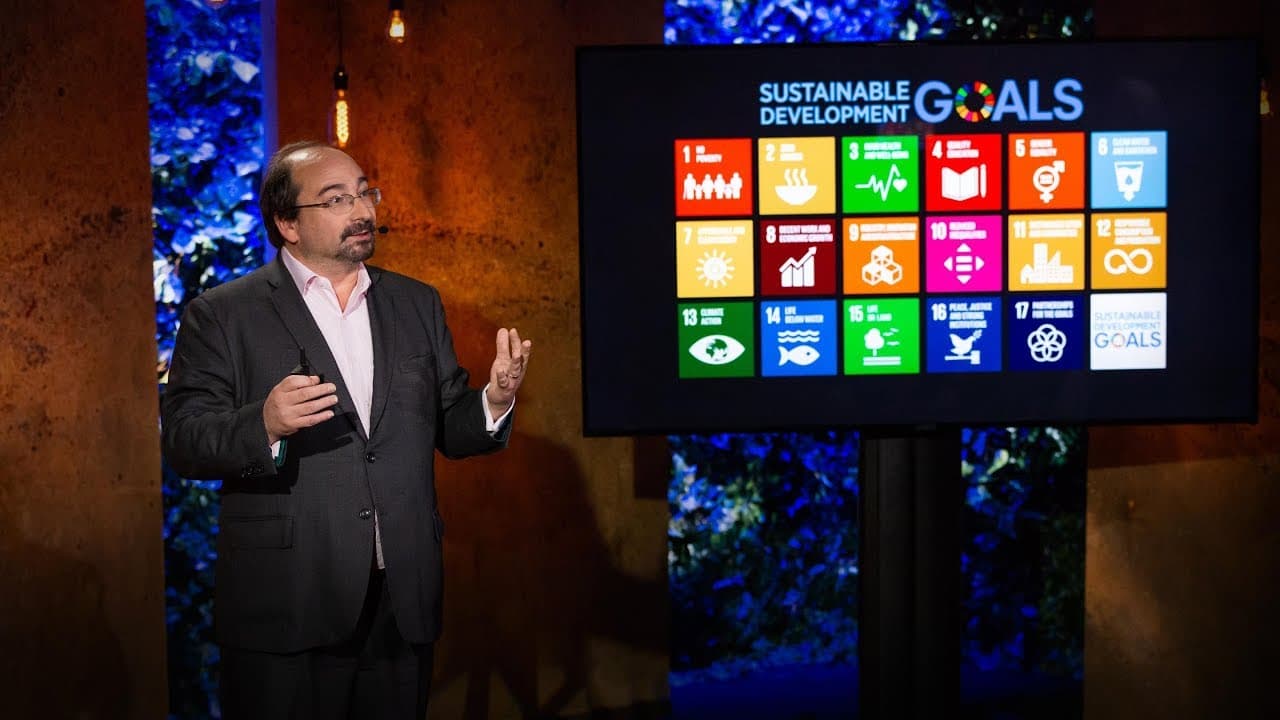
This presentation discusses the progress made on the Sustainable Development Goals (SDGs) and highlights areas where improvement is needed.
Transcript
In 2015, the leaders of the world made a big promise. A promise that over the next 15 years, the lives of billions of people are going to get better with no one left behind. That promise is the Sustainable Development Goals -- the SDGs. We're now three years in; a fifth of the way into the journey. The clock is ticking. If we offtrack now, it's goi... Read More
Key Insights
- 🌍 The Sustainable Development Goals (SDGs) were established in 2015 with the promise of improving the lives of billions of people over 15 years. We are currently three years into this journey, but progress is still needed to achieve the goals by 2030.
- 🔢 The SDGs consist of 17 goals covering various areas such as poverty, inclusive cities, and sustainable fisheries. However, there is a lack of data to properly measure progress towards these goals.
- 📊 The Social Progress Index is a measure of the quality of life of countries and can be used to track progress towards the SDGs. It includes 51 indicators to measure concepts related to survival, well-being, and opportunity.
- 📈 In 2015, the world score against the SDGs was 69.1, indicating progress but with a long way to go. Denmark is currently the closest country to achieving the SDGs, while Central African Republic has the furthest to go. Other countries fall somewhere in between.
- 🌍 In terms of the biggest countries in the world, Mexico is projected to make the most progress towards the SDGs, followed by Russia, China, Indonesia, Brazil, Philippines, India, Bangladesh, Pakistan, Nigeria, and Ethiopia. None of these countries are on track to achieve the goals.
- 📅 On current trends, the world is projected to reach a score of 75.2 by 2030, which is far below the target. At this rate, the 2030 targets won't be met until 2094.
- 🇬🇧 Among the G7 countries, Germany and Japan are on track to achieve the SDGs, while Canada, France, the UK, and Italy are falling short. The United States is also quite far behind.
- 💡 Opportunities for progress can be found in areas such as nutrition and basic medical care (SDG 2 and 3), where most of the rich world has already made substantial progress. Water and sanitation (SDG 6) remains a challenge, particularly for countries like Nigeria and the Philippines. Personal rights and inclusiveness (SDG 1, 5, 10, 11, and 16) are areas where most countries are either standing still or moving backwards.
- 🌟 It is crucial for rich countries, like those in the G7, to step up their efforts and not fall short of the SDGs. Accelerating progress in challenging areas and maintaining progress in others can bring us closer to achieving the goals by 2030. Remembering the comprehensive nature of the SDGs is essential to avoid failing on the promise of leaving no one behind.
Install to Summarize YouTube Videos and Get Transcripts
Explore YouTube Video Summarizer or Get YouTube Transcript Extractor
Questions & Answers
Q: What are the Sustainable Development Goals (SDGs)?
The Sustainable Development Goals (SDGs) are a set of 17 goals established by world leaders in 2015 with the aim of improving the lives of billions of people over the next 15 years. These goals cover a wide range of areas, from ending poverty to ensuring inclusive cities and sustainable fisheries.
Q: How are the SDGs measured?
The SDGs are measured using the Social Progress Index, which is a measure of the quality of life of countries. This index includes 51 indicators drawn from trusted sources to measure concepts such as basic needs, well-being, and opportunity. The Social Progress Index assigns an aggregate score to track progress towards the SDGs as a whole.
Q: How are countries progressing towards the SDGs?
Based on the Social Progress Index, countries vary in their progress towards the SDGs. Denmark is currently the country closest to achieving the SDGs, while the Central African Republic has the furthest to go. Other countries, such as Mexico, Germany, and Japan, are making progress but may fall short of the goals. The United States, along with some other rich countries, is quite far behind.
Q: What is the projected progress on the SDGs?
As of 2018, the world has made some progress towards the SDGs, with a score of 70.5. However, if current trends continue, it is projected that the SDGs will not be achieved until 2094, which is far beyond the 2030 target. To reach the goals by 2030, it will require significant efforts and a change in direction.
Q: Which areas of the SDGs are showing promise and which are struggling?
Areas such as nutrition and basic medical care (SDG 2 and SDG 3) are showing promise, with most rich countries and some big countries making progress towards those goals. However, water and sanitation (SDG 6) is an area where progress is not fast enough, despite being a solvable problem. Personal rights and inclusiveness (covering SDG 1, SDG 5, SDG 10, SDG 11, and SDG 16) are areas of great concern, with many countries either standing still or moving backwards.
Summary & Key Takeaways
-
The Sustainable Development Goals (SDGs) were introduced in 2015 with the aim of improving the lives of billions of people over the next 15 years.
-
The Social Progress Index is being used to track progress towards the SDGs, measuring factors like quality of life and access to basic needs.
-
While progress has been made, current projections show that many countries, including wealthy ones, are falling short of meeting the SDGs by 2030, particularly in areas of personal rights and inclusiveness.
Read in Other Languages (beta)
Share This Summary 📚
Summarize YouTube Videos and Get Video Transcripts with 1-Click
Try YouTube Summary with ChatGPT & Claude or YouTube Transcript Generator
Explore More Summaries from TED 📚





Summarize YouTube Videos and Get Video Transcripts with 1-Click
Try YouTube Summary with ChatGPT & Claude or YouTube Transcript Generator