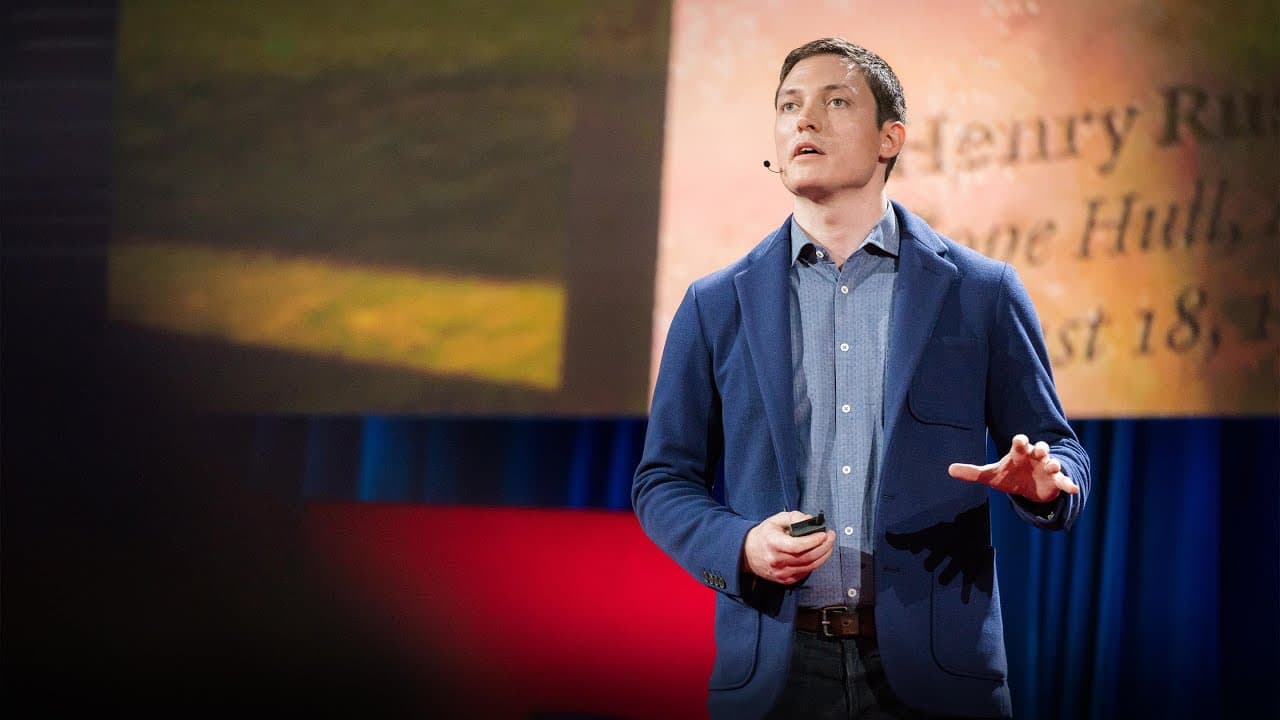
Architecture that's built to heal | Michael Murphy
TL;DR
This content explores the transformative power of architecture and how it can heal individuals, communities, and society as a whole.
Transcript
Every weekend for as long as I can remember, my father would get up on a Saturday, put on a worn sweatshirt and he'd scrape away at the squeaky old wheel of a house that we lived in. I wouldn't even call it restoration; it was a ritual, catharsis. He would spend all year scraping paint with this old heat gun and a spackle knife, and then he would r... Read More
Key Insights
- 🏠 The work of an old house is never done, but it can provide catharsis and purpose, as seen in the speaker's father's restoration of their home.
- 💪 Architecture has the power to transform and heal communities, as demonstrated by the speaker's experiences designing hospitals and other buildings in Rwanda, Haiti, Malawi, the Congo, and the United States.
- 🛠 The "lo-fab" way of building, which involves hiring locally, sourcing regionally, and investing in the dignity of communities, can lead to successful and impactful architectural projects.
- 🌍 Architecture has the potential to address global issues, such as healthcare, environmental sustainability, and social justice.
- 🔍 Architects and designers have a responsibility to prioritize functionality and the well-being of users, as evidenced by the negative impact of poorly designed hospitals.
- 🏥 Simple design choices, such as natural ventilation and views of nature, can greatly improve health outcomes in healthcare settings.
- 🌱 Architecture can revitalize communities and contribute to economic growth, as seen in the speaker's efforts to revitalize his hometown and other Rust Belt cities.
- 💔 Memorials can be powerful tools for healing and reflection, as demonstrated by the speaker's collaboration with civil rights leader Bryan Stevenson on a memorial to victims of lynching in the United States.
Install to Summarize YouTube Videos and Get Transcripts
Explore YouTube Video Summarizer or Get YouTube Transcript Extractor
Questions & Answers
Q: How did the speaker's father's ritual of restoring their old house impact his life?
The speaker's father's ritual of restoring their old house was a form of catharsis and served as a way to save his life. It gave him purpose and allowed him to fight against his terminal cancer diagnosis. The house became a symbol of hope and resilience for him.
Q: What did the speaker learn about buildings and architecture during his time in architecture school?
The speaker learned that recognition in the architecture field often goes to those who prioritize novel and sculptural forms. This bothered him because he believed that architecture should serve more than just a select few. He questioned why the best architecture is so rare and realized that there was more that architecture could do.
Q: How did Dr. Paul Farmer's lecture on architecture and healthcare impact the speaker?
Dr. Paul Farmer's lecture made the speaker realize that buildings can make people sicker, especially for the poorest communities. Inadequate designs and lack of thought about infection control can cause epidemic-level problems. This inspired the speaker to consider how architects and designers can contribute to building hospitals that prioritize healing and improve health outcomes.
Q: How did the speaker and his team approach the design and construction of the hospital in Butaro, Rwanda?
The speaker and his team embraced a locally fabricated way of building, which they called "lo-fab." This approach involved hiring locally, sourcing materials regionally, and investing in the dignity of the community. They used local volcanic stone for the hospital's walls and involved the community in the construction process. The goal was to create a hospital that healed both physically and emotionally.
Q: What impact did the speaker's architectural projects have in various locations around the world?
The speaker's architectural projects aimed to address specific challenges in different locations. In Haiti, they designed a hospital to help end the epidemic of cholera. In Malawi, they designed a birthing center to reduce maternal and infant mortality. In the Congo, they constructed an educational center to protect endangered wildlife. These projects focused on creating meaningful, site-specific designs that could have a positive impact on the communities they served.
Q: How did the speaker's collaboration with Bryan Stevenson and his team contribute to healing racial injustice in America?
The speaker collaborated with Bryan Stevenson and his team to design a national memorial to the victims of lynching in Montgomery, Alabama. This memorial aimed to change the identity of the city and the nation by acknowledging the history of racial injustice. By incorporating soil from the sites of lynchings, the memorial becomes a place of restorative justice and healing, allowing the nation to finally speak of the unspeakable acts that have scarred it.
Summary & Key Takeaways
-
The speaker's father spent years restoring their old house, finding solace in the work.
-
When the speaker's father was diagnosed with terminal cancer, the speaker took on the task of finishing the restoration project.
-
The speaker realized the potential of architecture to improve people's lives and went on to work on various projects aimed at creating healing environments, including hospitals and memorials.
Read in Other Languages (beta)
Share This Summary 📚
Summarize YouTube Videos and Get Video Transcripts with 1-Click
Try YouTube Summary with ChatGPT & Claude or YouTube Transcript Generator
Explore More Summaries from TED 📚




Summarize YouTube Videos and Get Video Transcripts with 1-Click
Try YouTube Summary with ChatGPT & Claude or YouTube Transcript Generator