Detecting Alien Biofluorescence
TL;DR
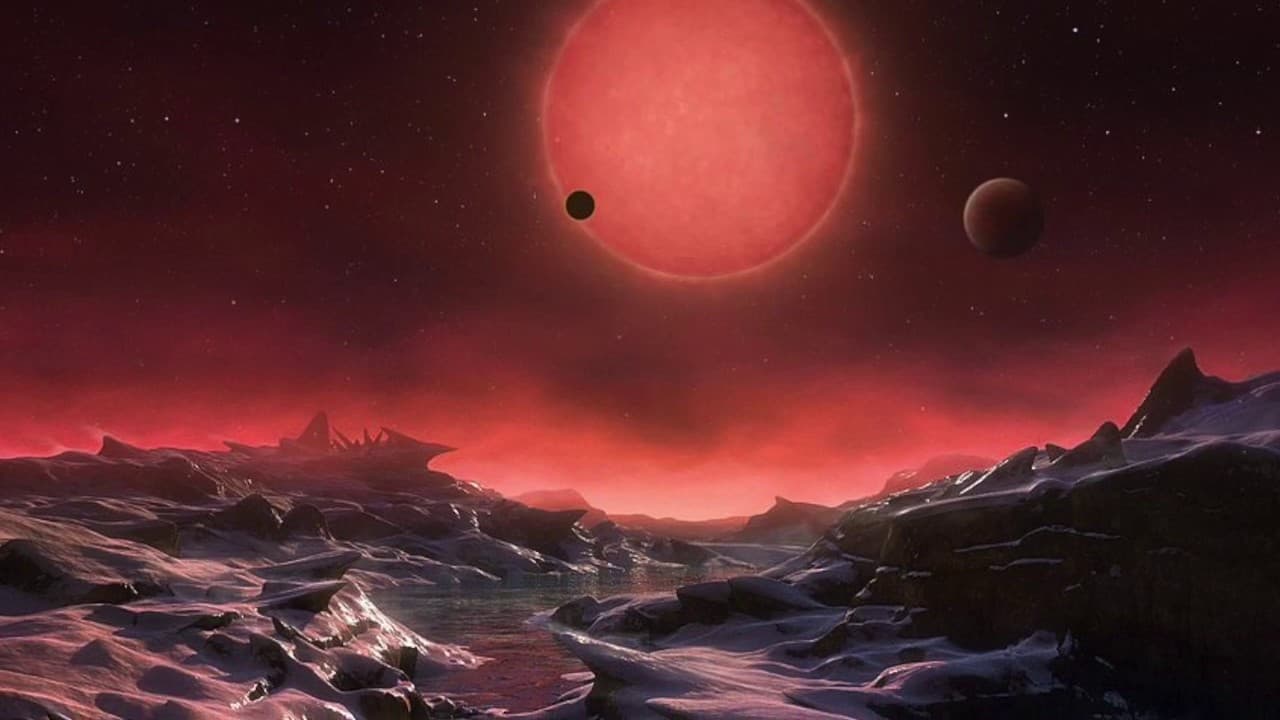
Red dwarf stars, although common and long-lived, present challenges for supporting life on exoplanets within their habitable zones, such as tidal locking, extreme temperature differences, and intense ultraviolet light. However, new research suggests that life on these planets may have evolved to produce a detectable biosignature in response to ultraviolet light.
Transcript
As thought on astrobiology has progressed over recent years along with the discovery of planets orbiting stars such as Proxima Centauri and the Trappist-1 system, it’s becoming increasingly evident that the most common type of star in the universe, Type M red dwarfs, may not be ideal for life to arise on worlds within their habitable zones, This is... Read More
Key Insights
- 🙂 Type M red dwarfs, the most common stars in the universe, may not be ideal for supporting life due to challenges such as tidal locking and intense ultraviolet light.
- 📪 The low light output of red dwarfs limits the size of their habitable zone, decreasing the chances of finding planets within it.
- 🛟 Some life on Earth has evolved to deal with intense ultraviolet light through bioflourescence, which may suggest the possibility of life on exoplanets orbiting red dwarfs.
- 😪 Exoplanets with Titan-like characteristics, such as atmospheres transparent to red and infrared light, may offer an alternative habitable zone around red dwarfs.
- 😪 Colonizing red dwarf systems could offer long-term energy sources for advanced civilizations, but the challenges would need to be mitigated.
- 😪 Detection of biosignatures or technosignatures from red dwarf systems may become possible with advancements in instrumentation and study of exoplanets.
Install to Summarize YouTube Videos and Get Transcripts
Explore YouTube Video Summarizer or Get YouTube Transcript Extractor
Questions & Answers
Q: What are the potential challenges for supporting life on planets within the habitable zones of red dwarf stars?
The challenges include tidal locking, which would cause extreme temperature differences, the effects of tidal heating, and the limited size of the habitable zone due to the red dwarf's low light output.
Q: How does intense ultraviolet light from red dwarf stars affect the habitability of exoplanets?
Intense ultraviolet light can be harmful to life, but some life on Earth, such as certain corals, has evolved to deal with it through bioflourescence, which converts ultraviolet light into harmless visible light. This adaptation may indicate the presence of life on exoplanets orbiting red dwarfs.
Q: How can the biosignature of life on red dwarf exoplanets be detected?
If the life on these exoplanets has evolved to deal with ultraviolet light through bioflourescence, the exoplanets may emit a characteristic flash or glow in response to a flare from the red dwarf, providing a detectable biosignature.
Q: Are there any alternative models for life around red dwarfs?
Two potential models for life on red dwarf exoplanets include ice shell moons, similar to Jupiter's moon Europa, which could provide liquid water and protection from the star, and Titan-like worlds with methane-based life in liquid hydrocarbon lakes.
Summary & Key Takeaways
-
Red dwarf stars, the most common type of star in the universe, may not be ideal for supporting life on planets within their habitable zones due to various factors such as tidal locking and intense ultraviolet light.
-
Tidal locking of planets around red dwarfs could lead to extreme temperature differences between the sides of the planet facing the star and the far side, while the star's gravity may also result in tidal heating.
-
The low light output of red dwarfs limits the size of their habitable zone, decreasing the chances of finding planets within it.
Read in Other Languages (beta)
Share This Summary 📚
Summarize YouTube Videos and Get Video Transcripts with 1-Click
Try YouTube Summary with ChatGPT & Claude or YouTube Transcript Generator
Explore More Summaries from John Michael Godier 📚
Summarize YouTube Videos and Get Video Transcripts with 1-Click
Try YouTube Summary with ChatGPT & Claude or YouTube Transcript Generator