Learning to Measure the Size of a Problem
TL;DR
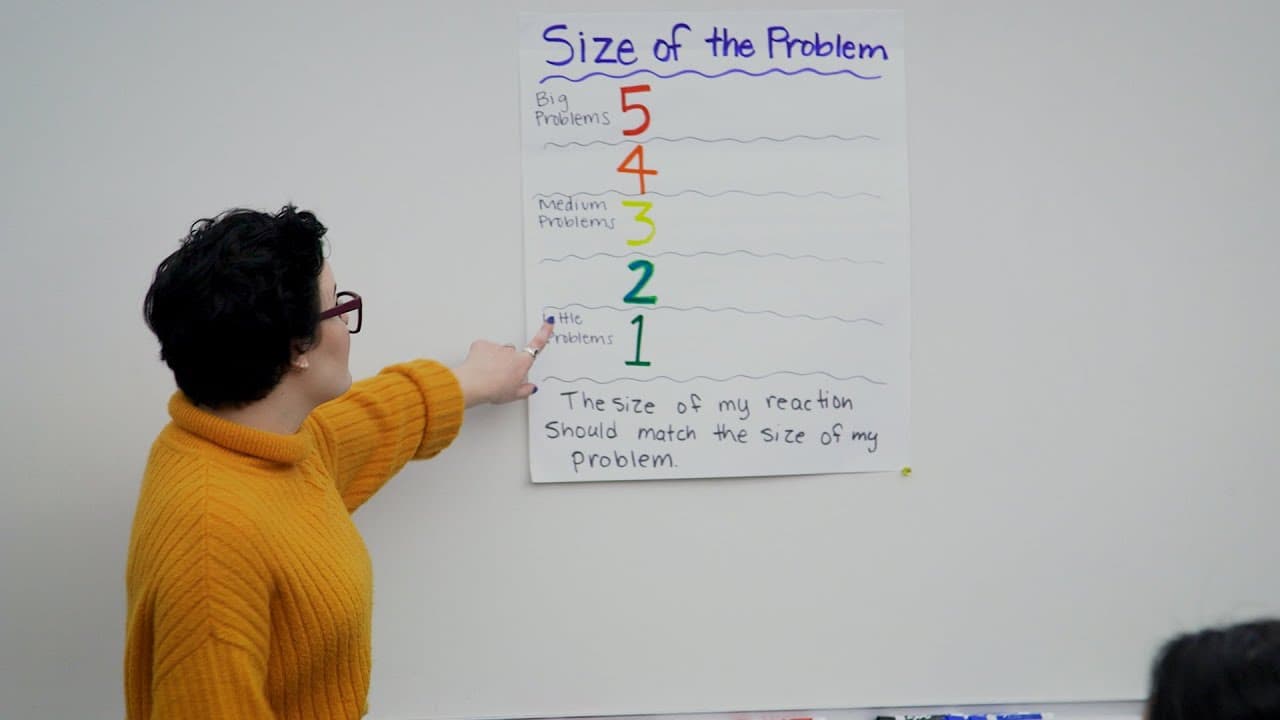
Educators emphasize the importance of teaching children how to respond appropriately to different sized problems.
Transcript
this has a bunch of situations and scenarios inside of it that could be possible problems that you might have to deal with once a month we do a family social-emotional lesson every time you have a problem you have to think to yourself how big of a problem is this and how am I going to choose to respond families didn't learn this when they were in s... Read More
Key Insights
- 👶 Teaching children how to evaluate the size of a problem and respond accordingly promotes emotional intelligence.
- 👪 Families play a vital role in reinforcing strategies and helping children manage their emotions effectively.
- 👶 Understanding the relative size of a problem helps children prioritize reactions and prevent overreactions.
- 👶 Cultivating emotional intelligence is as important as academic achievements for a child's well-rounded development.
- 👶 Reacting appropriately to different problems builds character and resilience in children.
- 👶 Teaching children to manage their emotions empowers them to navigate social situations more effectively.
- 👶 Recognizing the subjective nature of problems helps children develop empathy and perspective-taking abilities.
Install to Summarize YouTube Videos and Get Transcripts
Explore YouTube Video Summarizer or Get YouTube Transcript Extractor
Questions & Answers
Q: Why is it essential to teach children about the size of a problem?
Teaching children about the size of a problem helps them understand the importance of responding appropriately and not overreacting. It allows them to prioritize their reactions based on the severity of the issue, promoting emotional intelligence and effective problem-solving skills.
Q: How does understanding the size of a problem affect a child's behavior?
When children learn to categorize problems as large or small, they develop a perspective on the significance of each issue. This understanding helps them regulate their reactions, preventing unnecessary escalations and promoting more constructive responses.
Q: Why is it helpful for parents to see what their children are learning about managing emotions?
By witnessing the strategies and skills their children are being taught, parents can reinforce and support their emotional development at home. It allows parents to communicate and help their children navigate various situations, promoting healthy emotional growth.
Q: How does teaching the size of a problem relate to academic subjects like math and reading?
While academic subjects are crucial, teaching children how to manage their emotions and respond appropriately is equally important. Developing emotional intelligence enables students to focus and succeed in their studies, cultivate healthy relationships, and establish a strong personality.
Summary & Key Takeaways
-
As part of the social-emotional curriculum, students are taught to evaluate the size of a problem and respond accordingly.
-
Families are encouraged to understand the strategies their children are learning to manage themselves and their relationships.
-
Teaching children how to react in a good way to various problems, big or small, helps build their personality and emotional intelligence.
Read in Other Languages (beta)
Share This Summary 📚
Summarize YouTube Videos and Get Video Transcripts with 1-Click
Try YouTube Summary with ChatGPT & Claude or YouTube Transcript Generator
Explore More Summaries from Edutopia 📚


Summarize YouTube Videos and Get Video Transcripts with 1-Click
Try YouTube Summary with ChatGPT & Claude or YouTube Transcript Generator