How Ireland Became 2020's Fastest Growing Economy | Economics Explained
TL;DR
Ireland became 2020's fastest-growing economy despite global challenges.
Transcript
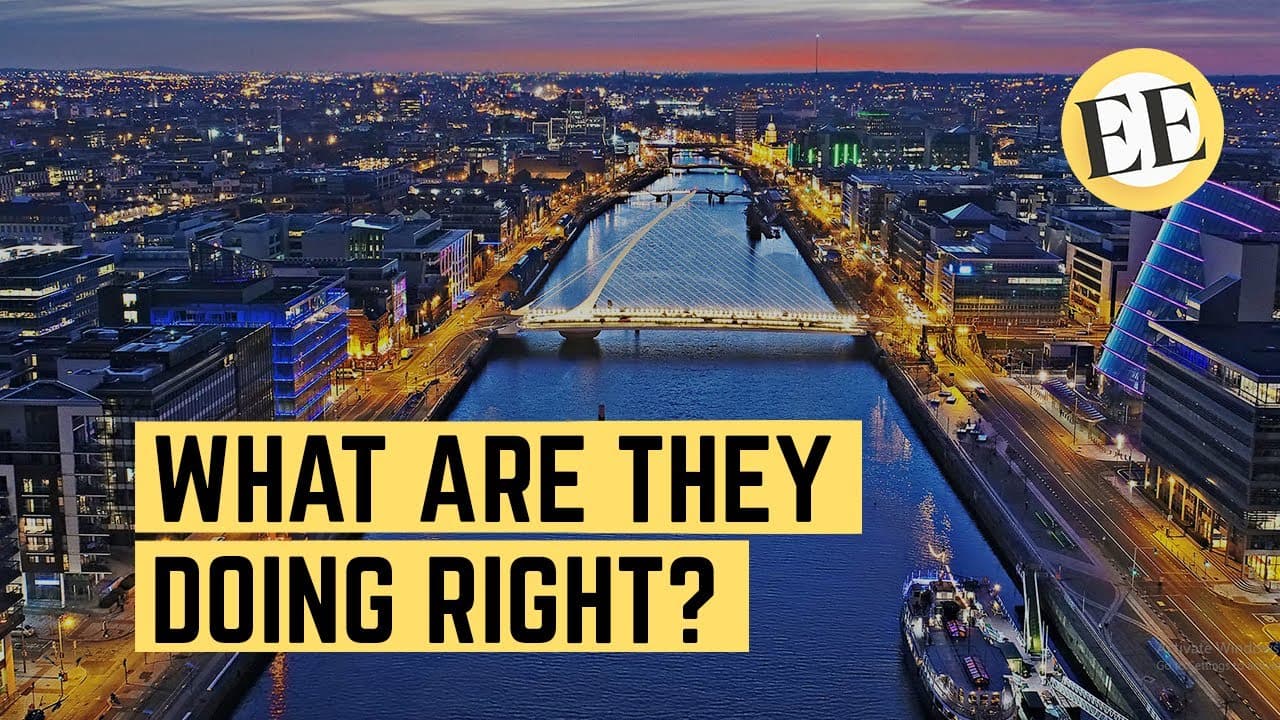
This is Ireland, or more specifically the Republic of Ireland which is a sovereign nation that is home to 5 million people who are all quickly becoming some of the wealthiest citizens in the world. Ireland now has a GDP per capita of over $90,000 meaning they are well ahead of traditionally wealthy nationals or regions like Switzerland, Hong kong a... Read More
Key Insights
- Ireland's GDP per capita exceeds $90,000, surpassing traditionally wealthy regions, making it one of the wealthiest nations globally.
- Despite global economic downturns, Ireland remained the fastest-growing economy in 2020, showcasing resilience and adaptability.
- The 'double Irish with a Dutch sandwich' was a tax loophole that attracted significant foreign investment, although it was closed in 2015.
- Ireland's economic strategy involves leveraging its EU membership, favorable tax policies, and strategic location to attract multinational corporations.
- The Shannon Free Trade Zone played a crucial role in attracting international businesses by offering tax advantages and a strategic location.
- Ireland's economic model has led to a two-speed economy, with high living costs affecting average citizens despite overall prosperity.
- The presence of multinational corporations in Ireland has created high-paying jobs, although it has also contributed to rising living costs.
- Ireland's economic success is attributed to its strategic positioning, skilled workforce, and business-friendly environment, making it a hub for technology and financial services.
Install to Summarize YouTube Videos and Get Transcripts
Explore YouTube Video Summarizer or Get YouTube Transcript Extractor
Questions & Answers
Q: How did Ireland become one of the wealthiest nations?
Ireland's wealth is attributed to its strategic economic policies, including favorable tax laws that attracted multinational corporations, its membership in the European Union, and its strategic location between Europe and the United States. These factors have contributed to a high GDP per capita and significant economic growth.
Q: What is the 'double Irish with a Dutch sandwich'?
The 'double Irish with a Dutch sandwich' was a tax avoidance strategy used by multinational corporations to shift profits to low or no-tax jurisdictions. It involved routing profits through Irish and Dutch subsidiaries to minimize tax liabilities. This loophole was closed by Irish law in 2015, but it significantly contributed to Ireland's economic growth before its closure.
Q: How has Ireland's EU membership benefited its economy?
Ireland's EU membership has provided access to a large single market, attracting foreign investment and facilitating trade. It has also offered a stable political and economic environment, making Ireland an attractive location for multinational corporations seeking to access European markets without facing trade barriers.
Q: What role did the Shannon Free Trade Zone play in Ireland's economy?
The Shannon Free Trade Zone, established in 1959, attracted international businesses by offering tax advantages and a strategic location near Shannon Airport. It allowed companies to import and export goods without paying local taxes, boosting Ireland's economy by creating jobs and attracting foreign investment.
Q: How does Ireland's economic model impact its citizens?
While Ireland's economic model has created high-paying jobs and attracted foreign investment, it has also led to a two-speed economy. Rising living costs and high rents have made it challenging for average citizens, particularly those in traditional roles, to benefit equally from the country's economic prosperity.
Q: What challenges does Ireland face despite its economic success?
Ireland faces challenges such as a two-speed economy, with high living costs and rents affecting average citizens. Additionally, while the presence of multinational corporations has created jobs, it has also contributed to economic disparities and social issues similar to those seen in other industry centers like San Francisco.
Q: Why do multinational corporations continue to operate in Ireland?
Multinational corporations continue to operate in Ireland due to its strategic location, skilled workforce, and business-friendly environment. Despite the closure of tax loopholes, the established infrastructure and favorable conditions make it costly and inefficient for companies to relocate their operations elsewhere.
Q: What is the significance of GECAS in Ireland's economy?
GECAS, a subsidiary of General Electric, is a significant player in Ireland's economy, operating as a major aircraft leasing company. Its presence in Ireland highlights the country's role as a hub for financial services and technical development, attracting international businesses and contributing to economic growth.
Summary & Key Takeaways
-
Ireland has achieved remarkable economic growth, becoming the fastest-growing economy in 2020 with a GDP per capita of over $90,000. Its success is attributed to strategic economic policies, including favorable tax laws and leveraging its EU membership.
-
The closure of the 'double Irish' tax loophole in 2015 did not deter Ireland's economic growth. Instead, the country has continued to attract multinational corporations, creating a thriving business environment and high-paying jobs.
-
Despite its economic achievements, Ireland faces challenges such as a two-speed economy and rising living costs. However, its strategic location, skilled workforce, and business-friendly policies continue to attract international investment.
Read in Other Languages (beta)
Share This Summary 📚
Summarize YouTube Videos and Get Video Transcripts with 1-Click
Try YouTube Summary with ChatGPT & Claude or YouTube Transcript Generator
Explore More Summaries from Economics Explained 📚



Summarize YouTube Videos and Get Video Transcripts with 1-Click
Try YouTube Summary with ChatGPT & Claude or YouTube Transcript Generator