What Are Dark Stars and How Could They Exist?
TL;DR
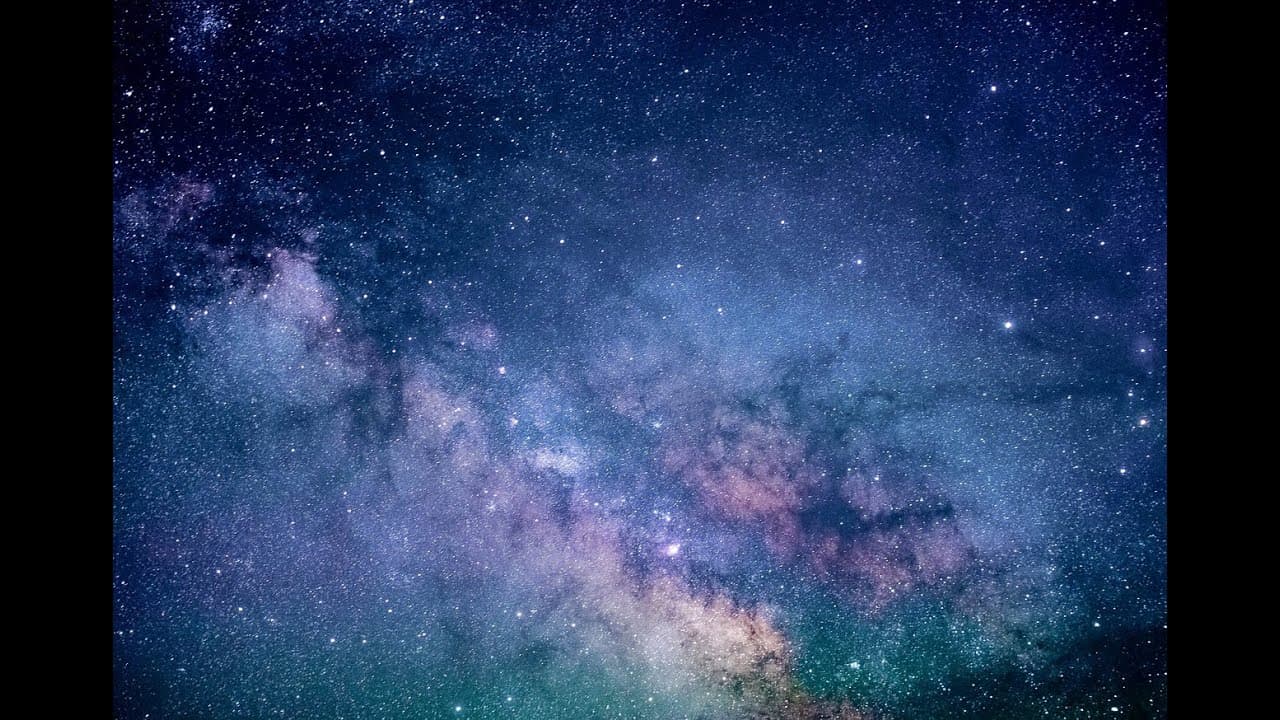
Dark stars are theorized to be massive early stars powered by dark matter rather than nuclear fusion, potentially existing in the universe shortly after the Big Bang. They emit radiation primarily in non-visible wavelengths, making them challenging to detect. The James Webb Space Telescope may aid in this search, providing insights into these elusive stars and their implications for understanding dark matter.
Transcript
Stars are normally considered to be immensely bright balls of nuclear fury. At least until they go into a post-normal star state, such as collapsing into a black hole, or becoming a neutron star, or cooling white dwarf. But in the early universe, things were a little different as far as star formation, and recent thinking has envisioned another typ... Read More
Key Insights
- 🕶️ The early universe may have had a unique situation that allowed for the formation of dark stars, powered by dark matter instead of nuclear fusion.
- 🤩 Dark stars would be physically larger and more massive than normal stars, emitting radiation in non-visible wavelengths.
- ✴️ Detecting dark stars is challenging due to their lack of emissions in the visual spectrum.
Install to Summarize YouTube Videos and Get Transcripts
Explore YouTube Video Summarizer or Get YouTube Transcript Extractor
Questions & Answers
Q: What are dark stars, and how do they differ from normal stars?
Dark stars are early stars that were powered by dark matter instead of nuclear fusion. They emitted radiation in non-visible wavelengths and would have been physically larger and more massive than normal stars.
Q: Why is it difficult to detect dark stars?
Dark stars do not emit visible light, making them challenging to detect. They would likely emit gamma rays, neutrinos, and possibly even antimatter, but not in the visual spectrum.
Q: What evidence suggests the existence of antistars?
The detection of antihelium nuclei and the presence of unexplained gamma ray sources point to the possible existence of antistars. These observations raise the possibility that antistars may be relatively common in the universe.
Q: How could antistars have survived for so long?
If antistars exist, they would be relics from the early universe. The clouds they formed out of would have likely annihilated on contact with normal matter. The survival of antistars in such large numbers would require further investigation.
Summary & Key Takeaways
-
In the early universe, dark matter may have fueled the formation of early stars, known as "dark stars," which emitted radiation in non-visible wavelengths.
-
Detecting dark stars is challenging due to their lack of emissions in the visual spectrum.
-
The James Webb Space Telescope offers hope in detecting dark stars by observing longer infrared wavelengths.
-
Antihelium detections and strange gamma ray sources may be evidence of the existence of antistars.
Read in Other Languages (beta)
Share This Summary 📚
Summarize YouTube Videos and Get Video Transcripts with 1-Click
Try YouTube Summary with ChatGPT & Claude or YouTube Transcript Generator
Explore More Summaries from John Michael Godier 📚


Summarize YouTube Videos and Get Video Transcripts with 1-Click
Try YouTube Summary with ChatGPT & Claude or YouTube Transcript Generator