How Can Genetic Algorithms Solve the Knapsack Problem?
TL;DR
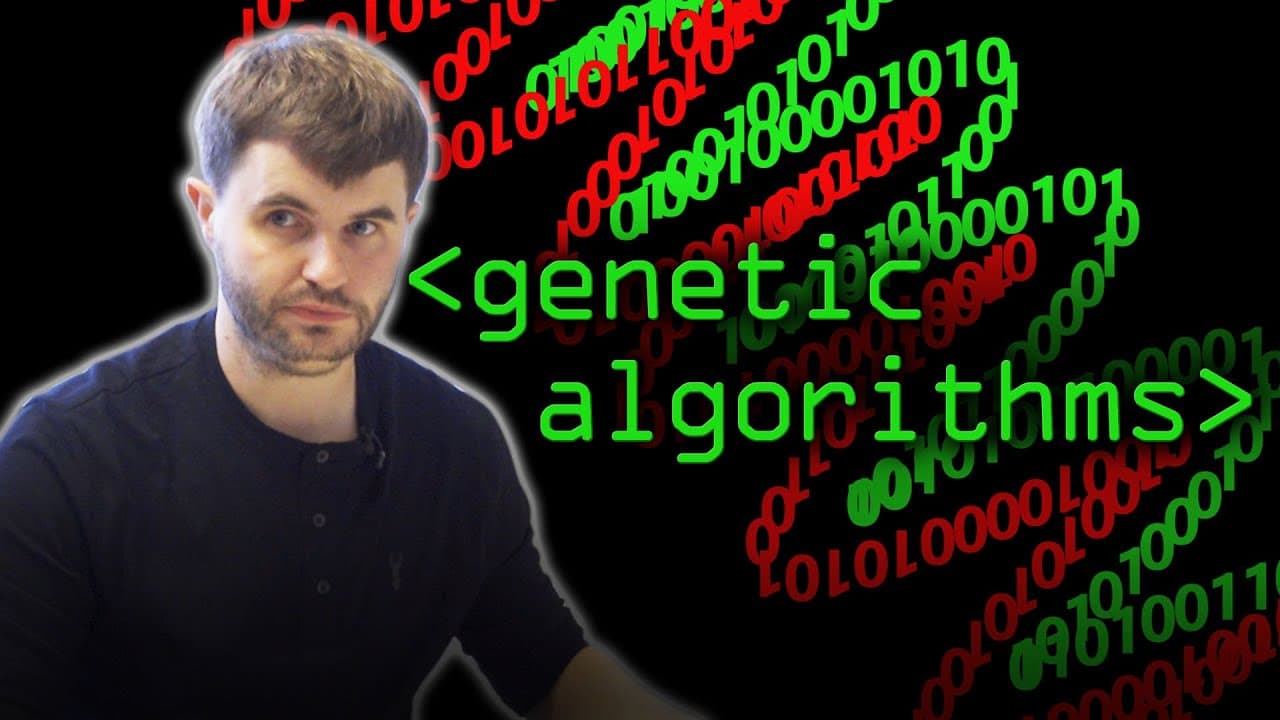
Genetic algorithms are powerful tools that can tackle complex optimisation problems like the knapsack problem, which involves selecting valuable items without exceeding a weight limit. By evolving solutions over generations through selection, crossover, and mutation, these algorithms can yield effective solutions even in intricate scenarios with multiple variables.
Transcript
i would like to talk about genetic algorithms they were particularly useful for me during my phd and i think in terms of being able to build something yourself and experiment with them i think they're quite good bang for buck and i think you can solve a lot of problems using them which would otherwise be able to do so and even if you can't solve th... Read More
Key Insights
- 💨 Genetic algorithms can be a cost-effective way to experiment and solve problems that may have been challenging using traditional methods.
- ❓ The knapsack problem is a well-known example used to illustrate the concept of genetic algorithms.
- ☠️ Parameters such as population size, crossover rate, and mutation rate can significantly impact the performance of genetic algorithms.
- ❓ Tournament selection, crossover, and mutation are essential operators used in genetic algorithms to evolve solutions over generations.
- 😚 Elitism, the practice of preserving the best solution from each generation, can be employed to ensure promising solutions are not lost.
- 🍵 Genetic algorithms can handle problems with multiple parameters, making them versatile problem-solving tools.
- 👻 The effectiveness of genetic algorithms can be visualized and plotted in search spaces, allowing users to track their progress.
Install to Summarize YouTube Videos and Get Transcripts
Explore YouTube Video Summarizer or Get YouTube Transcript Extractor
Questions & Answers
Q: What are genetic algorithms?
Genetic algorithms are problem-solving approaches that simulate biological evolution to find optimal solutions. By evolving potential solutions through crossover and mutation operations, they can progressively improve the fitness of solutions over multiple generations.
Q: How is the knapsack problem represented using genetic algorithms?
The knapsack problem is represented by assigning four bits to each box, with each bit indicating whether the corresponding box is included in the knapsack. Different combinations of bits represent different solutions, and their fitness is evaluated based on their value and weight.
Q: How does selection work in genetic algorithms?
In genetic algorithms, selection involves choosing individuals from the population to propagate to the next generation. One popular approach is tournament selection, where pairs of solutions compete, and the fitter solution is selected. This process is repeated until a new population is formed.
Q: What is the role of crossover and mutation in genetic algorithms?
Crossover involves combining genetic information from two parent solutions to create new offspring solutions. It is performed by swapping parts of the parent solutions. Mutation introduces random changes by flipping certain bits in the offspring solutions, promoting diversity in the population and allowing exploration of new solutions.
Summary & Key Takeaways
-
Genetic algorithms, a type of evolutionary algorithm, can be used to solve a wide range of problems by evolving solutions in a way that imitates biological evolution.
-
A toy problem called the knapsack problem is introduced as an example. The goal is to fill a knapsack with the most valuable items without exceeding a specified weight limit.
-
Solutions to the knapsack problem can be represented with four bits, with each bit corresponding to one box. Different combinations of the bits represent different solutions and their fitness is evaluated based on their value and weight.
Read in Other Languages (beta)
Share This Summary 📚
Summarize YouTube Videos and Get Video Transcripts with 1-Click
Try YouTube Summary with ChatGPT & Claude or YouTube Transcript Generator
Explore More Summaries from Computerphile 📚


Summarize YouTube Videos and Get Video Transcripts with 1-Click
Try YouTube Summary with ChatGPT & Claude or YouTube Transcript Generator