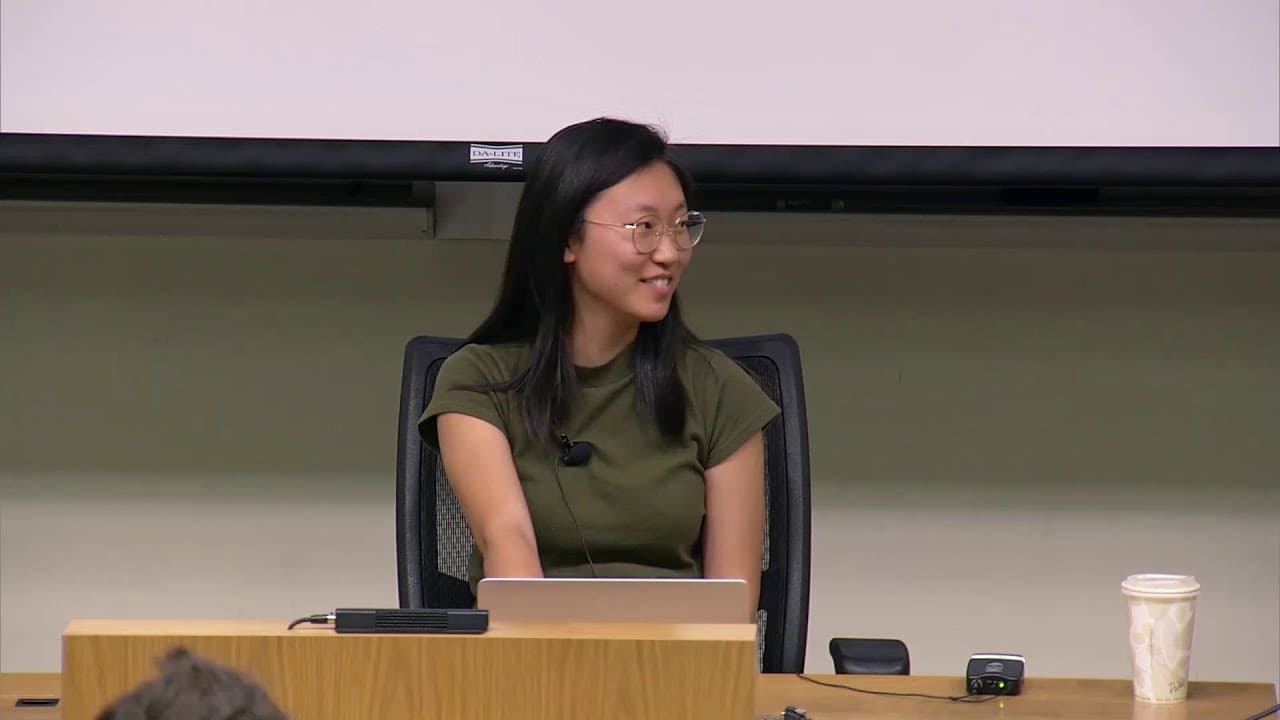
Lecture 8 – NLI 1 | Stanford CS224U: Natural Language Understanding | Spring 2019
TL;DR
The sentiment analysis bake-off results showed that deep learning approaches using BERT and ELMo performed better than hand-built feature functions, indicating a shift in the field towards deep learning models.
Transcript
Hi everyone, happy Monday. Um, we're going to go ahead and start off today by reviewing the bake-off results from last week. Um, so just as a refresher, last week's bake-off was on the task of sentiment analysis. Um, yeah. So it was the three class task, positive, neutral and negative. Um, we're evaluating on the Stanford Sentiment Treebank Test Se... Read More
Key Insights
- 🤗 The sentiment analysis bake-off demonstrated the superiority of deep learning models, specifically those leveraging BERT and ELMo, over traditional hand-built feature functions.
- ❓ Imbalanced datasets can affect model performance, highlighting the importance of preprocessing techniques such as oversampling.
- ⏮️ Basic unigrams can still achieve decent accuracy in sentiment analysis, but deep learning models have surpassed previous winning approaches.
Install to Summarize YouTube Videos and Get Transcripts
Explore YouTube Video Summarizer or Get YouTube Transcript Extractor
Questions & Answers
Q: What was the evaluation metric used in the sentiment analysis bake-off?
The evaluation metric used was the Macro F1 Score, which measures the weighted average of the F1 scores for each class.
Q: What was the main finding from the bake-off results?
The main finding was that deep learning approaches using BERT and ELMo significantly outperformed hand-built feature functions, suggesting a shift in the field towards deep learning models for sentiment analysis.
Q: How did the top teams distinguish themselves in the bake-off?
The top two teams used BERT-based models for sentiment classification, with the first-place team employing data preprocessing techniques such as balanced dataset oversampling and reversing preprocessing steps for improved performance.
Q: Did any teams use feature engineering in the bake-off?
Some teams attempted feature engineering strategies, but these approaches did not perform as well as the deep learning models utilizing BERT representations.
Summary & Key Takeaways
-
Last week's bake-off focused on sentiment analysis and the evaluation was based on the Macro F1 Score using the Stanford Sentiment Treebank Test Set.
-
The results showed that deep learning approaches leveraging BERT and ELMo performed better than hand-built feature functions.
-
The top two teams used BERT-based models for sentiment classification, with the first-place team employing balanced data preprocessing and fine-tuning BERT end-to-end.
Read in Other Languages (beta)
Share This Summary 📚
Summarize YouTube Videos and Get Video Transcripts with 1-Click
Try YouTube Summary with ChatGPT & Claude or YouTube Transcript Generator
Explore More Summaries from Stanford Online 📚
Summarize YouTube Videos and Get Video Transcripts with 1-Click
Try YouTube Summary with ChatGPT & Claude or YouTube Transcript Generator