How to Analyze Student Housing Investment
TL;DR
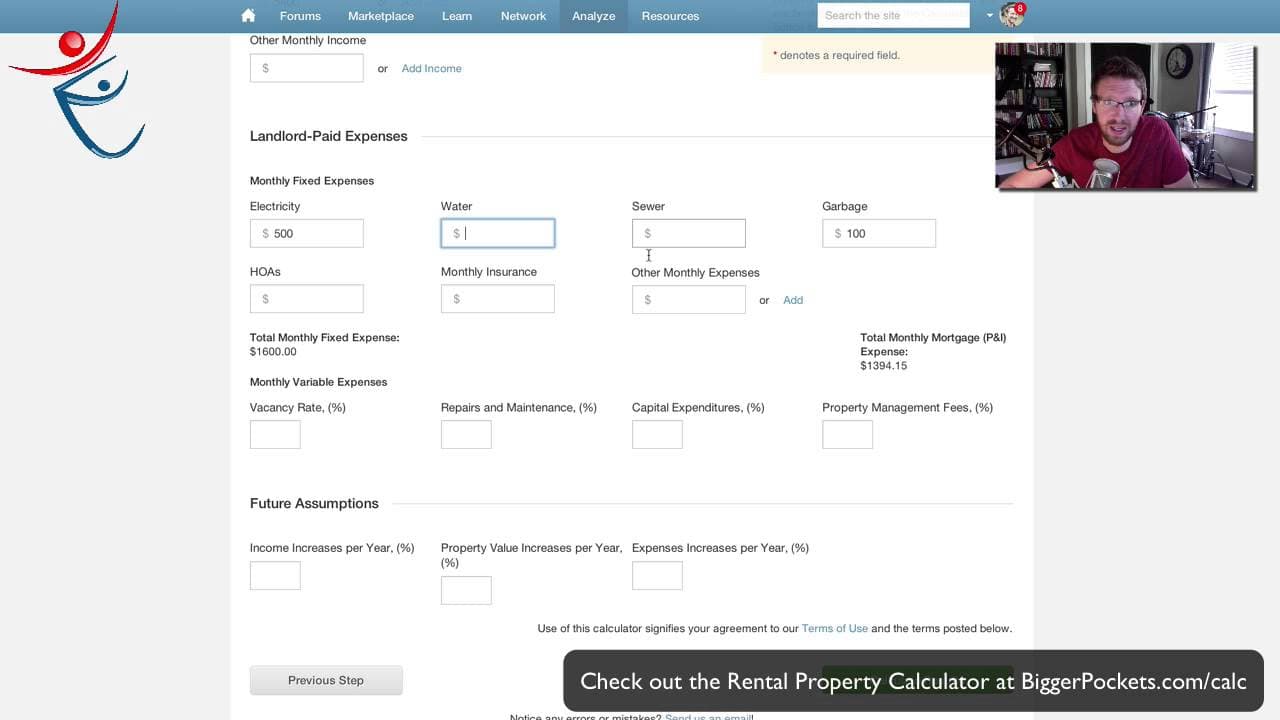
The investment in student housing with nine rooms at $600 each results in a monthly cash flow of $975 with a 10.94% cash-on-cash ROI. Factoring in management fees, the ROI drops to 3.07%, making it a less attractive investment compared to other options like the stock market. Consider potential property value appreciation over time.
Transcript
hey bigger pockets this is brandon and i am going to help uh hopefully anyway try to shed some insight for christian lincoln here on an uh analyze my deal sort of post so uh he had asked i'm looking for some analysis of my first deal thank you a two structured property student housing nine total rooms room 600 a month each a total of 5400 a month t... Read More
Key Insights
- Student housing investment yields $975 monthly cash flow with self-management.
- Cash-on-cash ROI is 10.94% without management fees.
- Including management fees, ROI drops to 3.07%.
- Property management estimated at 13% due to student housing complexity.
- Potential equity growth to $264,000 over 15 years.
- Initial equity is $100,000 with a debt coverage ratio of 1.7.
- Property value expected to increase by 2% annually.
- Investment decision hinges on management strategy and local market conditions.
Install to Summarize YouTube Videos and Get Transcripts
Explore YouTube Video Summarizer or Get YouTube Transcript Extractor
Questions & Answers
Q: How to calculate cash flow for student housing?
To calculate cash flow for student housing, start by determining the total monthly income from rent. Subtract all monthly expenses, including taxes, insurance, utilities, and maintenance costs, from the income. The result is the net cash flow. In this case, the property generates $5,400 in rent, with $4,424 in expenses, resulting in a $975 monthly cash flow.
Q: What is cash-on-cash ROI and how is it calculated?
Cash-on-cash ROI measures the return on investment in terms of cash flow relative to the cash invested. It's calculated by dividing the annual pre-tax cash flow by the total cash invested. For this student housing investment, the cash-on-cash ROI is 10.94% without management fees, based on the $975 monthly cash flow and $100,000 down payment.
Q: Why does including management fees affect ROI?
Including management fees affects ROI because it increases the total expenses, thereby reducing the net cash flow. In this analysis, adding a 13% management fee lowers the cash-on-cash ROI from 10.94% to 3.07%. Management fees account for the cost of hiring a property manager, which is essential for maintaining and operating the property efficiently.
Q: What are the key expenses in student housing investment?
Key expenses in student housing investment include property taxes, insurance, utilities (such as heat, electricity, and water), maintenance, and potential property management fees. These expenses must be deducted from the rental income to calculate the net cash flow. In this case, expenses totaled $4,424 monthly.
Q: How does property management complexity affect student housing?
Property management complexity in student housing affects costs and ROI due to frequent tenant turnover, additional maintenance needs, and the potential for higher wear and tear. These factors can lead to higher management fees, estimated at 13% in this analysis, compared to typical residential properties, impacting the overall profitability of the investment.
Q: What is the impact of property value appreciation?
Property value appreciation can significantly impact the long-term profitability of a real estate investment. In this analysis, a 2% annual increase in property value contributes to equity growth. Over 15 years, equity could rise to $264,000, enhancing the investment's overall return beyond immediate cash flow considerations, especially if market conditions are favorable.
Q: How does the debt coverage ratio influence investment decisions?
The debt coverage ratio (DCR) measures the property's ability to cover its debt obligations with its net operating income. A DCR above 1 indicates sufficient income to cover debts. In this analysis, a DCR of 1.7 suggests a comfortable margin, providing a buffer against income fluctuations and enhancing the investment's financial stability.
Q: What factors should be considered before investing in student housing?
Before investing in student housing, consider factors such as location, market demand, property management complexity, potential for property value appreciation, and the investor's willingness to manage the property or hire a manager. These elements influence the investment's profitability, risk, and long-term potential, as demonstrated by the impact of management fees on ROI in this analysis.
Summary & Key Takeaways
-
Analyzing a student housing investment shows that self-managing can yield a monthly cash flow of $975 and a cash-on-cash ROI of 10.94%. However, when factoring in property management fees, the ROI significantly drops to 3.07%, making it a less appealing investment compared to the stock market.
-
The investment involves a property with nine rooms rented at $600 each, generating a total monthly income of $5,400. Monthly expenses are $4,424, including owner-paid utilities and insurance, leading to the net cash flow. The potential for equity growth exists, with an estimated $264,000 in equity after 15 years.
-
Key factors affecting the investment include property management complexity, local market conditions, and potential property value appreciation. The decision to invest should consider whether the investor is willing to manage the property or hire a management company, which significantly impacts the ROI.
Read in Other Languages (beta)
Share This Summary 📚
Summarize YouTube Videos and Get Video Transcripts with 1-Click
Try YouTube Summary with ChatGPT & Claude or YouTube Transcript Generator
Explore More Summaries from BiggerPockets 📚






Summarize YouTube Videos and Get Video Transcripts with 1-Click
Try YouTube Summary with ChatGPT & Claude or YouTube Transcript Generator