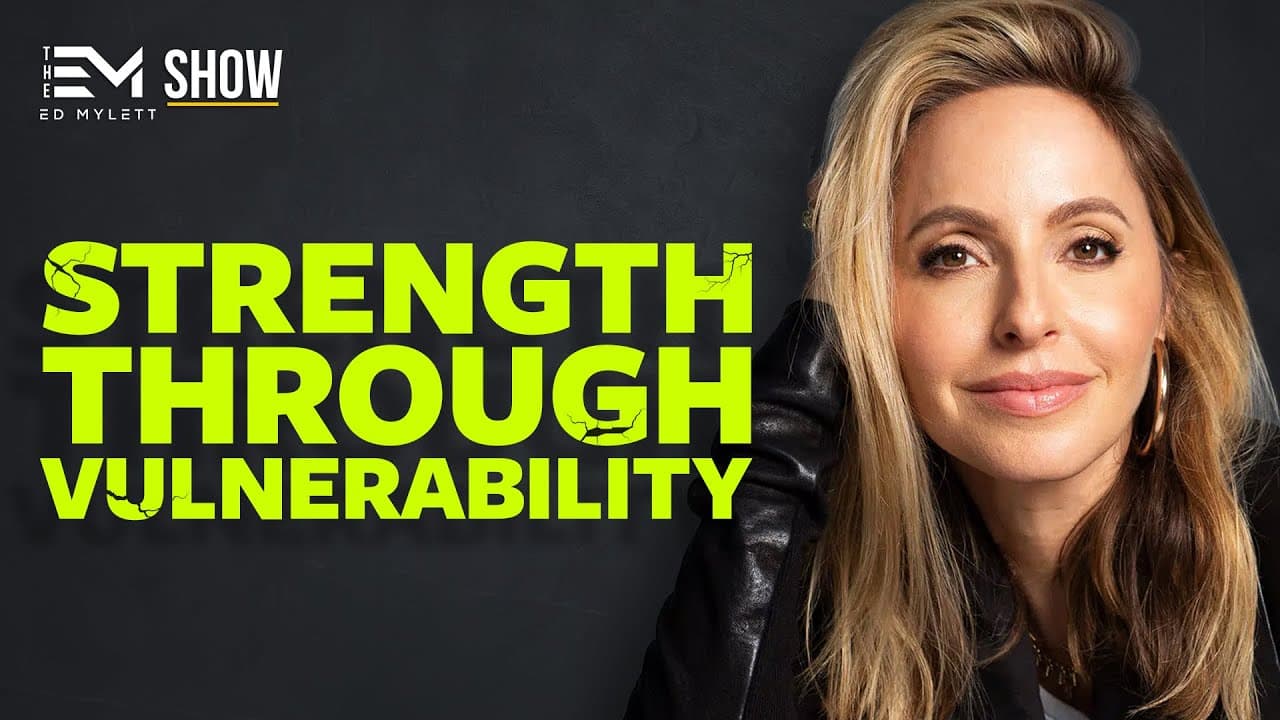
Recovering from PAIN and TRAUMA | Gabby Bernstein
TL;DR
Gabby Bernstein discusses overcoming trauma and finding inner peace.
Transcript
when we have trauma one of the trauma responses because there's so much shame wrapped up in the trauma and so we have a lot of different shame responses and one of them is to deny is to say oh well i wasn't beaten up it wasn't that i was straight up would do that i'd be like well you know i wasn't like living in poverty and like living through a wa... Read More
Key Insights
- Trauma often leads to shame and denial, causing individuals to minimize their experiences to avoid confronting the pain.
- Gabby Bernstein's book 'Happy Days' explores her journey from trauma to finding profound freedom and inner peace.
- Vulnerability can be a powerful tool for healing, allowing individuals to connect with their true selves and others.
- Triggers and patterns from past traumas can manifest in various ways, affecting everyday life and mental health.
- Internal Family Systems (IFS) therapy helps individuals connect with their 'inner child' and manage protective parts of their psyche.
- Somatic experiencing therapy focuses on the physical manifestations of trauma, helping individuals process emotions through their body.
- Tapping, or Emotional Freedom Technique, is a self-soothing method that can alleviate stress and anxiety.
- Creating a vision for one's life involves focusing on desired feelings rather than external achievements.
Install to Summarize YouTube Videos and Get Transcripts
Explore YouTube Video Summarizer or Get YouTube Transcript Extractor
Questions & Answers
Q: What is the main focus of Gabby Bernstein's book 'Happy Days'?
Gabby Bernstein's book 'Happy Days' focuses on her personal journey from experiencing trauma to achieving profound freedom and inner peace. It offers insights into how individuals can heal from their own traumas by embracing vulnerability, understanding their triggers, and connecting with their inner selves.
Q: How does Gabby Bernstein describe the role of vulnerability in healing?
Gabby Bernstein emphasizes that vulnerability is crucial for healing as it allows individuals to connect with their true selves and others. By being open about one's experiences and emotions, people can break down barriers of shame and denial, leading to greater self-awareness and emotional freedom.
Q: What therapeutic approach does Gabby Bernstein recommend for managing trauma?
Gabby Bernstein recommends Internal Family Systems (IFS) therapy, which involves understanding and connecting with different parts of oneself, including the 'inner child' and protective parts. This approach helps individuals manage their responses to trauma and fosters a sense of internal harmony and self-compassion.
Q: How does somatic experiencing therapy help in trauma recovery?
Somatic experiencing therapy helps individuals process trauma by focusing on the physical sensations associated with their emotions. By tuning into their body's responses, individuals can release stored tension and emotional energy, leading to a sense of relief and healing from trauma.
Q: What is the significance of 'tapping' in managing stress and trauma?
Tapping, or Emotional Freedom Technique, is a self-soothing technique that involves tapping on specific energy meridian points. It helps reduce stress and anxiety by calming the nervous system and allowing individuals to process their emotions more effectively, making it a valuable tool in trauma management.
Q: How can individuals create a vision for their life according to Gabby Bernstein?
Gabby Bernstein advises individuals to create a vision for their life based on how they want to feel rather than external achievements. By focusing on desired emotional states, such as peace and happiness, individuals can align their actions and decisions with these feelings, leading to a more fulfilling life.
Q: What impact does unresolved trauma have on individuals?
Unresolved trauma can lead to recurring triggers and patterns that affect an individual's mental and emotional well-being. These unresolved issues can be more traumatic over time than the initial event, as they continuously manifest in various aspects of a person's life, causing ongoing distress.
Q: Why is it important to address both big T and small t traumas?
Addressing both big T (significant traumatic events) and small t (less severe but impactful experiences) traumas is crucial because both can have lasting effects on an individual's mental health and behavior. Understanding and healing from these traumas can lead to improved emotional resilience and overall well-being.
Summary & Key Takeaways
-
Gabby Bernstein discusses the impact of trauma and the importance of addressing it to achieve inner peace. She shares insights from her book 'Happy Days' and emphasizes the role of vulnerability in healing.
-
The conversation explores how unresolved trauma can manifest as triggers and patterns, affecting mental health. Gabby introduces Internal Family Systems therapy as a method to connect with one's inner child.
-
Gabby highlights the significance of somatic experiencing therapy and tapping to address the physical aspects of trauma. The discussion encourages creating a vision centered on emotional well-being.
Read in Other Languages (beta)
Share This Summary 📚
Summarize YouTube Videos and Get Video Transcripts with 1-Click
Try YouTube Summary with ChatGPT & Claude or YouTube Transcript Generator
Explore More Summaries from Ed Mylett 📚





Summarize YouTube Videos and Get Video Transcripts with 1-Click
Try YouTube Summary with ChatGPT & Claude or YouTube Transcript Generator