What Were the Horrors of the Hanoi Hilton Prison?
TL;DR
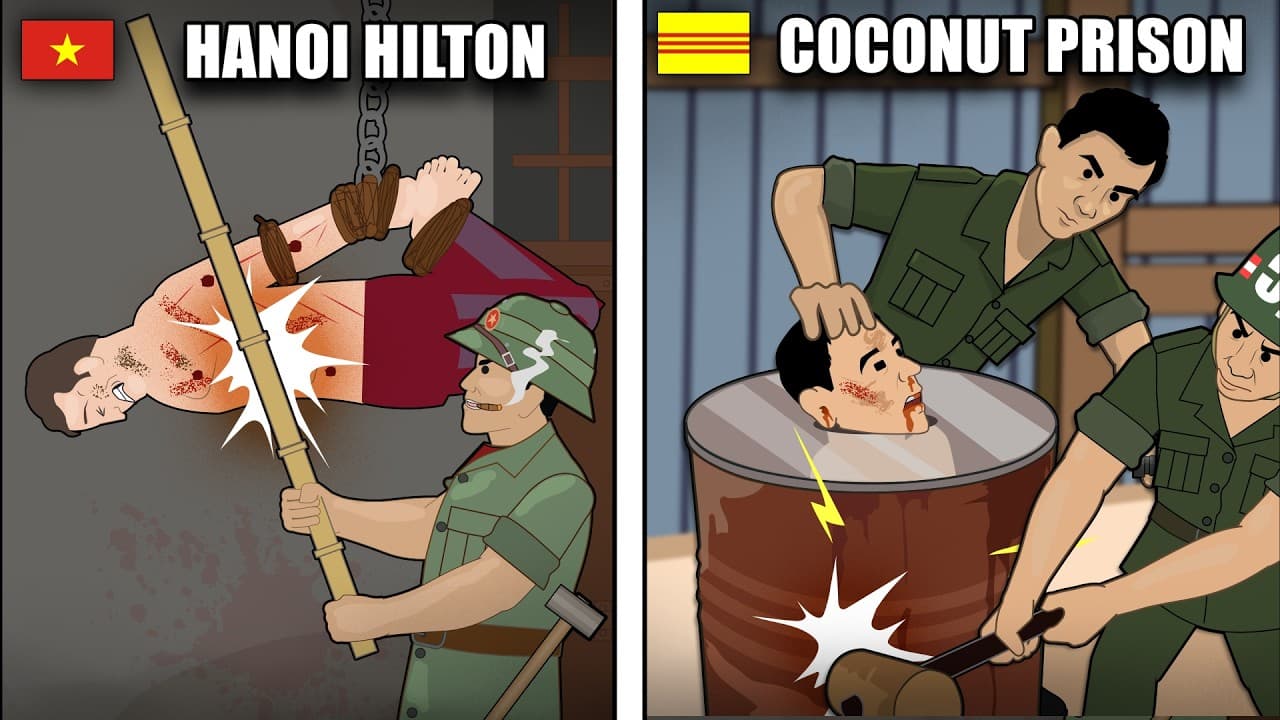
The Hanoi Hilton, infamous for its brutal conditions, housed American POWs during the Vietnam War who endured extreme torture and dehumanisation. Despite the harsh environment, prisoners created a tap code for clandestine communication, fostering unity and morale even amidst severe psychological and physical suffering.
Transcript
the Hanoi Hilton while out prison Hanoi the Vietnam War during the Vietnam war around 2500 American soldiers were reported as being prisoners of war or missing an action when the war ended for the United States in 1973 only 591 of them returned home the rest remained in prison camps across North and South Vietnam the majority of American PS were ca... Read More
Key Insights
- 💝 The Hanoi Hilton was built by the French in the late 19th century, primarily for political prisoners, and repurposed during the Vietnam War.
- 😋 Prisoners were subjected to severe food deprivation, often surviving on minimal, nutritionally inadequate rations that contributed to significant health issues.
- 🛀 Despite oppressive conditions, prisoners showed resilience through covert communications that fostered camaraderie and support.
- 😪 Torture included psychological tactics like sleep deprivation and physical abuse, often designed for entertainment rather than information extraction.
- 👂 Not all prisoners were American; the treatment of Vietnamese revolutionaries at Fu Quoc prison was even more brutal with tens of thousands tortured.
- 🇼🇫 The prison tactics used at Fu Quoc prison violated many articles of the Geneva Convention, showcasing the disregard for humane treatment by the captors.
- 🛀 Effective escapes from prisons like Fu Quoc showed the courage and ingenuity of captives, often risking their lives for freedom.
Install to Summarize YouTube Videos and Get Transcripts
Explore YouTube Video Summarizer or Get YouTube Transcript Extractor
Questions & Answers
Q: What conditions did American POWs face in the Hanoi Hilton?
American POWs in the Hanoi Hilton endured horrendous conditions, including overcrowded and filthy cells with little to no sanitation. They faced constant psychological and physical torture, malnutrition, and severe violations of their basic human rights, contributing to immense physical and emotional trauma during and after their captivity.
Q: How did the prisoners communicate in secret?
To maintain communication among themselves despite harsh prohibitions, prisoners devised a tap code similar to Morse code. It allowed them to send messages about their situations and share knowledge, including information about interrogation techniques, enhancing their morale and sense of unity despite dire circumstances.
Q: What were the main torture methods used against POWs?
Various torture methods were employed against POWs, including psychological tactics like isolation and sleep deprivation, as well as brutal physical techniques. Torture varied from beatings, being hung from meat hooks, to extreme punishments such as tying hands and feet while subjecting them to severe pain, leading to lasting physical damage.
Q: Who were some notable POWs that endured captivity in the Hanoi Hilton?
Notable POWs included Lieutenant Everett Alvarez Jr., the first American POW at the Hilton, who spent eight years in captivity, and Senator John McCain, who was also severely tortured but later became a prominent U.S. politician. Their experiences represent the extreme courage and resilience of American servicemen during the Vietnam War.
Q: How did the Vietnamese government justify their treatment of POWs?
The North Vietnamese government justified mistreating American POWs by designating them as common criminals rather than soldiers. This allowed their guards to impose brutal treatment and torture while ignoring the Geneva Conventions that mandated humane treatment for prisoners, showcasing a blatant disregard for international law.
Q: What was the fate of American POWs after their release?
After their release in 1973, many American POWs struggled with physical and psychological issues stemming from their time in captivity, including PTSD, depression, and numerous health ailments due to malnutrition and torture. Their testimonies highlighted the severe impacts of their experiences on their post-war lives.
Q: What does the term "Hanoi Hilton" signify in historical context?
The term "Hanoi Hilton" used ironically refers to the infamous Hoa Lo Prison where American POWs were held during the Vietnam War. It signifies the stark contrast between the luxurious image of a hotel and the brutal realities of prison life, encapsulating the horrors faced by prisoners during their captivity.
Q: How did the Hanoi Hilton impact public awareness of war crimes?
The experiences shared by former POWs in the Hanoi Hilton after the war raised significant awareness about war crimes committed against American soldiers. Their accounts documented torture, inhumane conditions, and psychological abuse, leading to greater recognition of the need for adherence to international human rights standards in wartime.
Summary & Key Takeaways
-
The Hanoi Hilton, officially known as Hoa Lo Prison, housed American POWs during the Vietnam War, where they faced brutal conditions and psychological and physical torture.
-
Prisoners developed a tap code to communicate secretly despite strict regulations against talking, helping maintain morale and solidarity among them.
-
Gregarious torture methods and dehumanizing treatment led to severe physical and mental health issues for the American POWs, with some suffering from long-term effects even after their release.
Read in Other Languages (beta)
Share This Summary 📚
Summarize YouTube Videos and Get Video Transcripts with 1-Click
Try YouTube Summary with ChatGPT & Claude or YouTube Transcript Generator
Explore More Summaries from Simple History 📚



Summarize YouTube Videos and Get Video Transcripts with 1-Click
Try YouTube Summary with ChatGPT & Claude or YouTube Transcript Generator