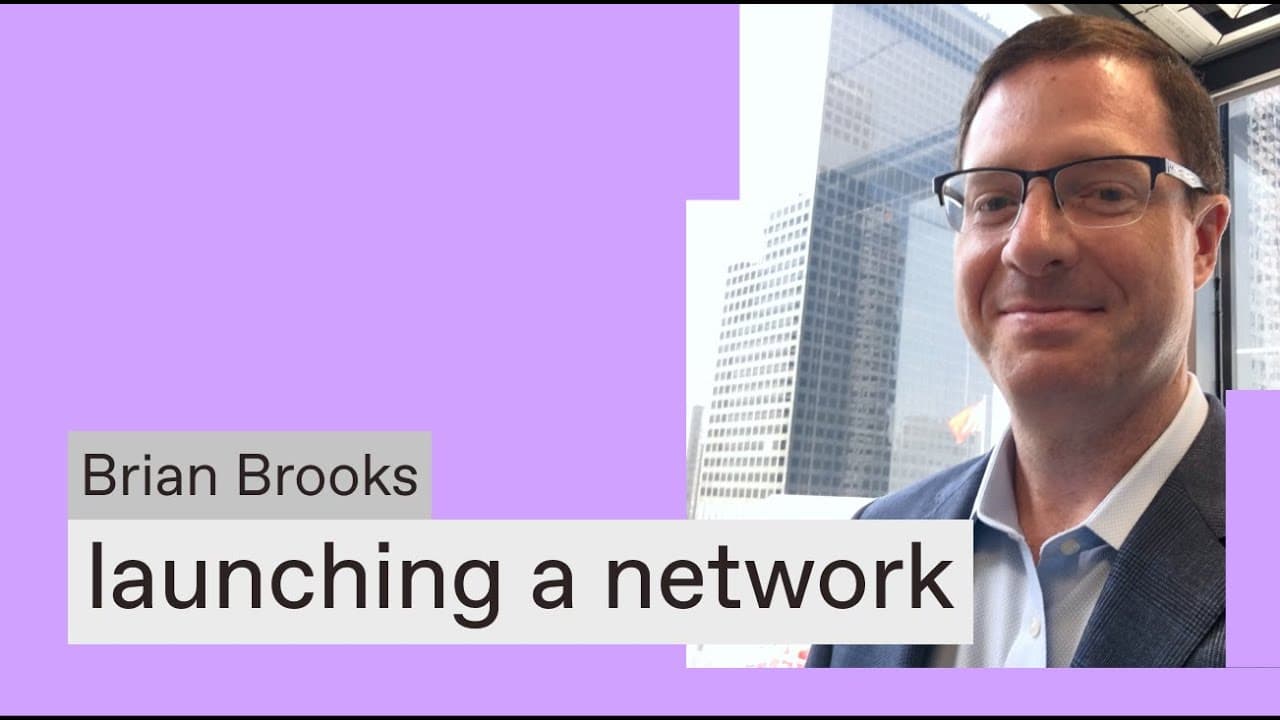
Brian Brooks: Token Securities Framework and Launching a Network
TL;DR
This content provides an overview of the legal regulations and considerations for launching crypto projects, including the Securities Law framework and the concept of membership tokens.
Transcript
thank you today is is really two things one is I want to give you a quick orientation to the framework and especially the Securities Law framework that you will encounter as you launch your various businesses and networks and then I want to talk about some choices that you'll all confront from a legal perspective as you launch your various kinds of... Read More
Key Insights
- 🚀 Understanding the legal framework and compliance requirements is crucial when launching a crypto project.
- 🧑🏭 The Securities Law regime is a central concern and involves the Howey Test, which assesses various factors to determine if a token is considered a security.
- 🔨 The Crypto Rating Council provides a tool to navigate Securities Law by rating tokens on a risk scale.
- 🤨 The membership model, limiting secondary trading, offers potential legal compliance and the ability to raise funds while building a network.
- 🤑 Compliance with different regulations, such as money transmission, privacy, fataf, and tax reporting, is essential to operate a successful crypto project.
Install to Summarize YouTube Videos and Get Transcripts
Explore YouTube Video Summarizer or Get YouTube Transcript Extractor
Questions & Answers
Q: How does the Howey Test determine if a token is considered a security?
The Howey Test is a four-part test that determines if a transaction is a security. It assesses factors such as whether someone invests money in the token, whether there is a common enterprise, whether profits are expected, and if the value is based on efforts of others. If these factors are satisfied, the token may be classified as a security.
Q: Can a burn model affect the classification of a token as a security?
No, a burn model, where tokens are destroyed to increase the value of other tokens, by itself does not classify a token as a security. The Securities Law focuses on the investment of money and the expectation of profits based on the efforts of others. Burning tokens does not necessarily trigger these factors.
Q: Can membership tokens be traded on secondary markets or listed on platforms like Coinbase?
Membership tokens can be limited to trading within a defined network or community, which does not exclude the possibility of listing on platforms like Coinbase. The concept relies on establishing a clear membership boundary, providing a safe harbor exemption from securities regulations.
Q: How can a decentralized network reward participants without causing adverse tax effects?
Rewarding participants in a decentralized network can have tax implications, particularly regarding phantom income and determining tax basis. It is advisable to consult tax counsel to ensure compliance with tax regulations and understand the tax treatment of rewards and compensation in a specific context.
Q: How are existing projects held responsible for potential regulatory violations?
Existing projects can be held responsible for regulatory violations even if they haven't conducted token sales or investments. Law enforcement agencies, such as the Department of Homeland Security, may investigate privacy token projects if they facilitate criminal activities. Compliance with money laundering laws and aiding and abetting violations should be considered.
Q: What are the considerations for tokens used in video or social games?
Tokens used in video or social games may have their own regulatory considerations. These projects should navigate financial crimes, anti-money laundering, and other regulations to ensure compliance. It is essential to understand the specific legal requirements and consult legal counsel to address any potential challenges.
Summary & Key Takeaways
-
The speaker, Brian, discusses the regulatory framework for crypto projects, emphasizing the importance of understanding the multiple legal regimes and agencies involved.
-
He explains the concept of Securities Law and clarifies that being deemed a security doesn't mean a project is illegal but rather requires compliance with disclosure rules and other regulations.
-
Brian introduces the Crypto Rating Council, a tool created to help navigate Securities Law, and highlights the importance of considering trade-offs and prioritizing legal compliance when launching a project.
Read in Other Languages (beta)
Share This Summary 📚
Summarize YouTube Videos and Get Video Transcripts with 1-Click
Try YouTube Summary with ChatGPT & Claude or YouTube Transcript Generator
Explore More Summaries from a16z crypto 📚



Summarize YouTube Videos and Get Video Transcripts with 1-Click
Try YouTube Summary with ChatGPT & Claude or YouTube Transcript Generator